
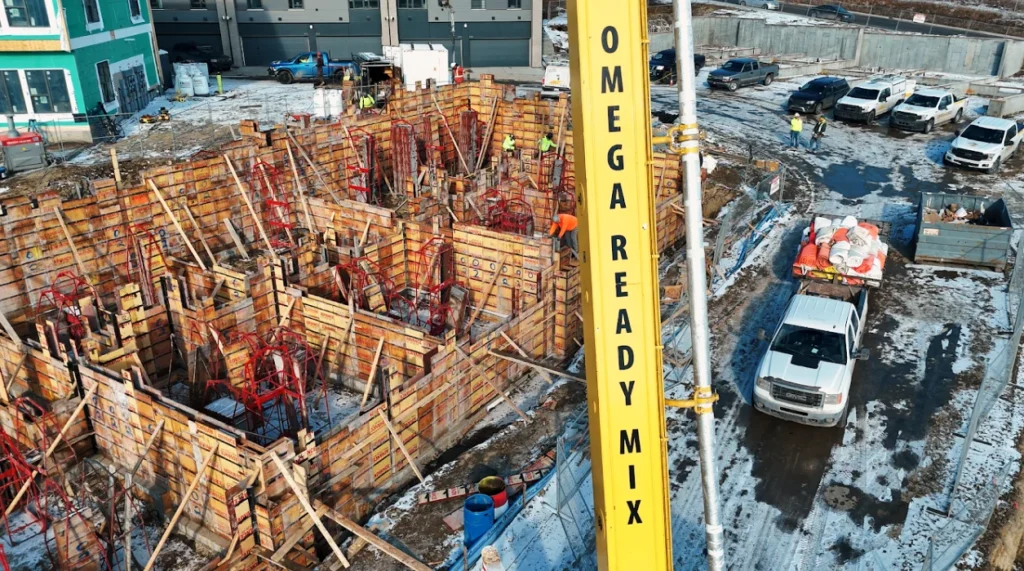
A senior PM on a 64-unit Mahogany multi-family build reviews the foundation spec in February 2026. The template, inherited from the last project, still cites the 13th-edition exposure classes — no N-CF, the interior-finished-floor class the 14th edition added in May 2024. He updates the template before the bid set goes out. Picking the class is a decision tree, not a lookup.
That moment is the whole problem in miniature. The exposure class is the single most consequential line in a concrete spec — it sets strength, maximum water-to-cementing-materials ratio (w/cm), air content, cement family, and curing — yet it is the line most often copied forward from a prior project without re-checking it against the standard or the geotech.
This article walks the 11 general-building exposure classes in CSA A23.1:24 (the 14th edition), explains the two specialty families that sit beyond them, and ends with a four-question decision tree you can run against any Calgary project. We use the real values, and where Calgary’s ground does something counterintuitive — like the sulphate severity ordering that runs opposite to the American convention — we flag it.
1. The C-class family: chloride exposure (C-XL, C-1, C-2, C-3, C-4)
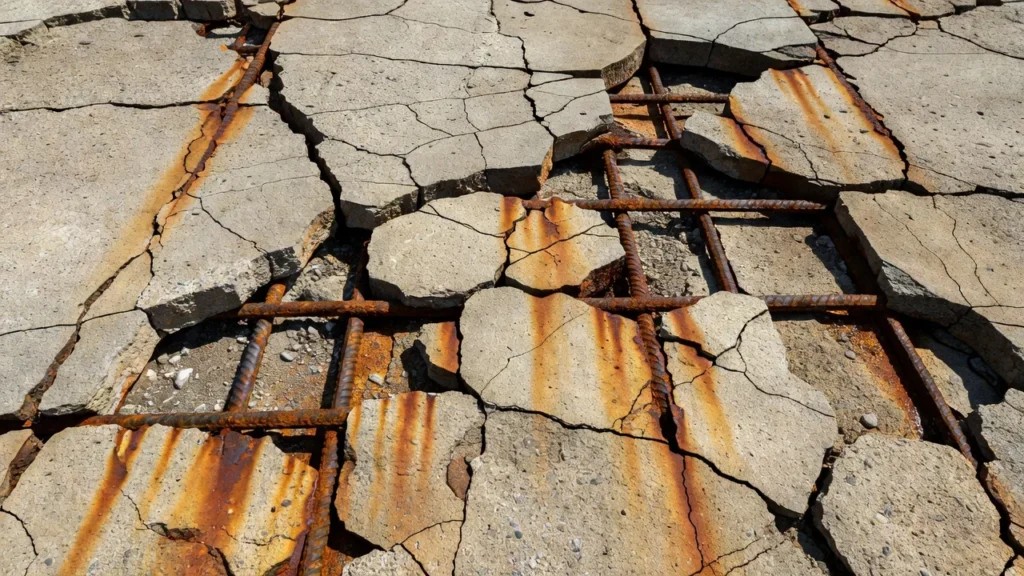
The C classes govern exposure to chlorides — primarily de-icing salts, but also marine and brackish environments. Chloride attack is a reinforcement problem: chloride ions migrate through the cover concrete, depassivate the steel, and drive corrosion that cracks and spalls the member from the inside out. CSA A23.1:24 lists five C classes, and they are ordered by severity, so a higher level of chloride exposure plus a structural role pushes you up the ladder.
C-XL is the most demanding: structurally reinforced concrete exposed to chlorides or other severe environments where a very low permeability and an extended service life are required — think parking structures and bridge elements. The spec is 50 MPa at 28 days, w/cm ≤ 0.37, with air entrainment (the chloride classes are freeze-thaw exposed by definition in Calgary, so air comes along).
C-1 is structurally reinforced concrete exposed to chlorides with or without freeze-thaw: 35 MPa at 28 days, w/cm ≤ 0.40, 5–8% air. C-2 is non-structurally reinforced (or plain) concrete exposed to chlorides and freeze-thaw — 32 MPa at 28 days, w/cm ≤ 0.45, 5–8% air. C-3 is continuously submerged concrete exposed to chlorides but not to freeze-thaw — 30 MPa at 28 days, w/cm ≤ 0.50, no air required. C-4 is concrete exposed to chlorides under non-freezing conditions (for example, interior salted floors that never freeze) — 25 MPa at 28 days, w/cm ≤ 0.55.
For most Calgary residential and light-commercial work, C-2 is the workhorse chloride class: the driveway, the garage apron, the sidewalk, the exterior steps — anything that will see road salt or de-icer and the Chinook freeze-thaw cycle but is not carrying structural reinforcement against chloride attack.
C-2’s 32 MPa / 5–8% air / w/cm ≤ 0.45 / 28-day specification is the number a Calgary spec writer reaches for on flatwork that gets salted. The distinction between C-1 and C-2 is whether the member is structurally reinforced against the chloride environment — that is an engineering call, not a finish call, and it is the kind of line you confirm with the structural drawings rather than inheriting from a template.
A note on durability test methods: chloride classes have historically referenced de-icer scaling resistance, and the test most specs cite — ASTM C672 — was withdrawn in 2021.
It is not an active standard, and the pending reinstatement (tracked as work item WK76964) had not been published as a current edition at the time of writing. If your spec still calls C672 by name, treat that as a flag to verify the current durability acceptance criteria with your supplier rather than a live requirement.
2. The F-class family: freeze-thaw without de-icers (F-1, F-2)
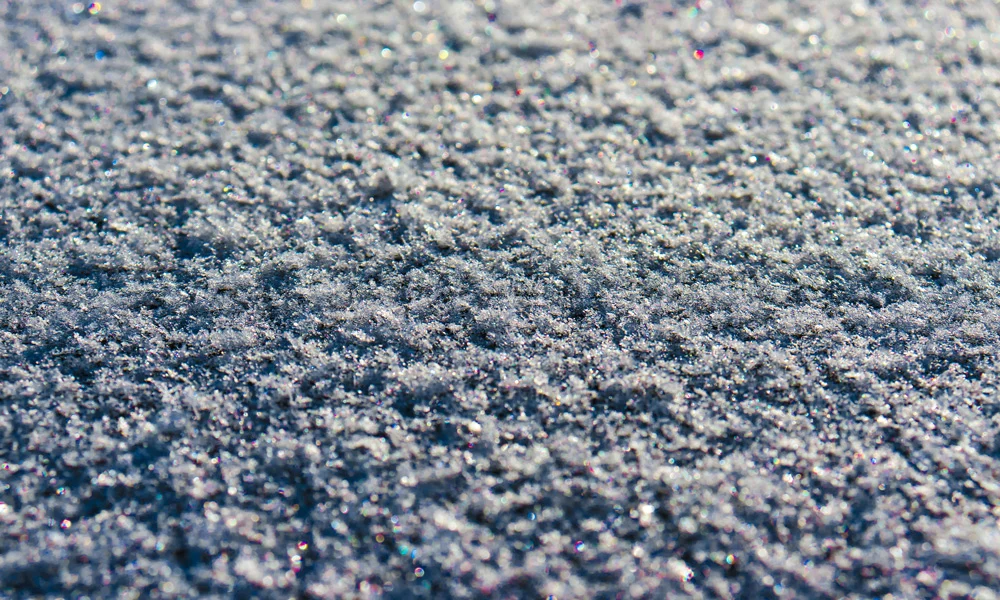
The F classes cover concrete that is saturated and subject to freezing and thawing but is not exposed to chlorides or de-icing chemicals. This is the distinction people miss: F-class and C-class both involve freeze-thaw, but the C family adds the chloride load. If salt touches it, it is a C class; if it freezes wet but never sees de-icer, it is an F class.
F-1 is concrete exposed to freezing and thawing in a saturated condition but not to de-icing chemicals: 32 MPa at 28 days, 5–8% air, w/cm ≤ 0.55. Think of a retaining wall, an exterior foundation wall, or a footing that sits in saturated soil and cycles through the frost line but is never salted.
F-2 is concrete in a less critically saturated condition exposed to freezing and thawing but not to de-icing chemicals — and here CSA A23.1:24 tightens the w/cm: 32 MPa at 28 days, 5–8% air, w/cm ≤ 0.45. (The F-2 w/cm is the same 0.45 as C-2; the difference between F-2 and C-2 is the chloride exposure, not the water ratio.)
The non-negotiable in both F classes is air entrainment at 5–8%. Entrained air gives the freezing water somewhere to expand into; without it, saturated concrete in a Calgary winter will scale and crack regardless of strength. A 40 MPa mix with no air will fail freeze-thaw faster than a properly air-entrained 32 MPa mix.
Strength does not buy freeze-thaw durability — the air-void system does. This is why the air-content tolerance on the delivery ticket matters as much as the strength on a Calgary exterior pour, and why a knock-down or hard-trowel finish on an air-entrained exterior slab has to be handled carefully (over-finishing drives the surface air out).
For a fuller treatment of how F-1, F-2, and the sulphate classes interact on a typical Calgary foundation — where a single wall can face both freeze-thaw and sulphate soil — see our companion piece, F-1 vs F-2 vs S-2 vs S-3: 4 Calgary concrete exposure classes decoded (CSA A23.1:24).
3. The N class: no aggressive exposure (plus the N-CF interior-finished-floor variant)
N is the “no exposure” class: concrete not exposed to chlorides, freezing and thawing, or sulphates. It is the interior, conditioned, sheltered concrete that lives its whole life in a heated building — interior columns, interior slabs-on-grade in a heated space, footings below the frost line in non-aggressive soil that never freeze. Because N concrete faces no durability threat, CSA A23.1:24 sets no minimum strength, no maximum w/cm, and no air requirement from a durability standpoint. The strength is whatever the structural engineer requires for the load; durability does not drive it.
That sounds simple, and it mostly is — but the 14th edition added a wrinkle that the inherited template in our opening scene was missing. CSA A23.1:24 introduced N-CF, a finishing-floor variant of the N class for interior floors that must be steel-trowelled to a hard, dense, abrasion-resistant finish. The “CF” signals a concrete-finish requirement: these floors are not air-entrained, because entrained air at the surface ruins a hard trowel finish (the air rises, the trowel seals it in, and you get blistering and delamination).
N-CF is the class you specify for a warehouse floor, a heated-shop slab, or any interior floor where the finisher will close the surface tight and abrasion resistance matters. Specifying a standard air-entrained class for a floor that has to be hard-trowelled is one of the most common and most expensive exposure-class mistakes, because the conflict between air and a hard trowel finish does not show up until the floor starts to delaminate months later.
We scope N-CF as a variant of N rather than a 12th general class, because that is how it reads in the standard — it is the no-aggressive-exposure class with a finishing requirement layered on, not a separate durability environment. But it is a real, citable distinction in the 14th edition, and it is exactly the kind of update that separates a current spec from a copied-forward one. If your template predates May 2024 and your project has trowel-finished interior floors, N-CF is the line to add.
4. The S-class family: sulphate exposure (S-1 very severe, S-2 severe, S-3 moderate — lower number is more severe)
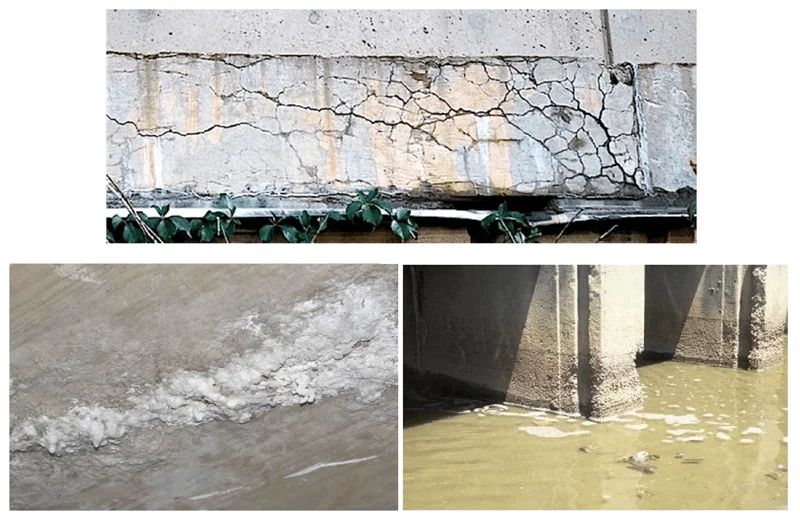
Here is where Calgary specs go wrong most often, and the error has a specific cause. The S classes govern sulphate exposure — sulphate ions in soil and groundwater that attack the cement paste, forming expansive products (ettringite, gypsum) that crack concrete from the matrix outward.
In CSA A23.1:24, a lower S-number means a more severe exposure. S-1 is the worst; S-3 is the mildest. This is the opposite of the ACI / ASTM C150 convention, where the numbering runs the other way — and that single inversion is the source of most mis-specified sulphate concrete in the region. Do not invert it.
The three classes, with the values from CSA A23.1:24 Table 1:
- S-1 — very severe. Soil water-soluble sulphate greater than 2.0% by mass, or groundwater sulphate above 10,000 ppm. Specification: 35 MPa at 56 days, w/cm ≤ 0.40, HS-family cement (Type HS / HSL / HSb / HSLb / HSe).
- S-2 — severe. Soil sulphate 0.20–2.0%, or groundwater 1,500–10,000 ppm. Specification: 32 MPa at 56 days, w/cm ≤ 0.45, HS-family cement.
- S-3 — moderate (this class also covers seawater and seawater spray). Soil sulphate 0.10–0.20%, or groundwater 150–1,500 ppm. Specification: 30 MPa at 56 days, w/cm ≤ 0.50, MS-family cement (Type MS / MSL / MSb / MSe / MSLb) — or any HS-type may be substituted.
Two things to hold onto. First, all three S classes are accepted at 56 days, not 28, because the sulphate-resisting cements (HS and MS families, defined in CSA A3000 / A3001) gain strength more slowly than ordinary GU cement; testing at 56 days is the standard allowance for these mixes and is not a quality concession.
Second, the cement family is tied to the class: Type MS (moderate sulphate-resistant) is permitted for S-3 only; Type HS (high sulphate-resistant) is required for S-2 and S-1. Because one HS-family mix safely covers all three classes, HS-type is the conservative default when a project spans uncertain ground.
What does this mean for a Calgary project? Calgary sulphate exposure is site-specific and is set by the soluble-sulphate test in your geotechnical report — it ranges from S-3 (moderate) to S-1 (very severe), commonly falls in the S-3/S-2 band, and because sulphate-bearing soils are widespread across the region, HS-type (Type HS / HSb / HSe) cement is the established, conservative default for Calgary foundations.
That is the honest version. The wrong version — the one we see on inherited templates — is a blanket “Calgary is S-2” stamp applied without reading the report, or, worse, the inversion error: a geotech that returns 0.31% soil sulphate gets labelled S-3 because someone assumed the higher number was more severe. A reading of 0.31% sits in the 0.20–2.0% band — that is S-2 (severe), requiring HS-family cement at 32 MPa / w/cm ≤ 0.45, not the S-3 moderate spec. The number in the report sets the class. The template does not.
For why HS-type is the regional default and how it behaves in a Calgary mix, see Why Calgary foundations need Type HS cement.
5. Beyond the 11: the A-class (agricultural, incl. A-XL) and R-class (residential) specialty families
The “11” in this article’s title is deliberate and scoped: five C classes, two F classes, the N class, and three S classes total eleven general-building exposure classes, and those eleven cover the overwhelming majority of ordinary Calgary building work — foundations, slabs, flatwork, structures. But CSA A23.1:24 defines more than eleven classes in total, and an honest spec writer should know the other two families exist so they are not surprised when an agricultural or a residential-specialty project lands on the desk.
The A class is the agricultural family. It governs concrete in agricultural environments where the threat is not (only) road salt or frost but the aggressive chemistry of manure, silage, and the gases and acids they generate — sulphuric and other acids, ammonia, and the wet-dry abrasion of livestock environments.
The A family includes a high-severity member, A-XL, paralleling the C-XL logic for the most aggressive agricultural exposures (manure-tank interiors, silage bunkers, feedlot floors). These classes carry their own strength, w/cm, and material requirements tuned to acid and abrasion resistance rather than chloride or sulphate ingress. They are not a Calgary residential concern, but they matter on acreage, farm, and ag-industrial work in the surrounding region.
The R class is the residential family. It provides exposure classes calibrated specifically for housing applications, recognizing that not every residential element warrants a full commercial-structure durability spec. Where the R classes apply, they give the designer a residential-appropriate path rather than forcing a general-building class onto, say, a house footing in benign soil.
The key discipline here is not to default residential work to R blindly: a residential driveway that gets salted is still a chloride-and-freeze-thaw exposure (C-2 territory), and a house foundation in sulphate soil is still a sulphate exposure (an S class set by the geotech). The R family is a tool, not a blanket downgrade.
The takeaway: the standard is bigger than eleven classes, but for general building work in Calgary, those eleven C/F/N/S classes are the ones you specify ninety-plus percent of the time. Know the A and R families exist; reach for them only when the project actually sits in an agricultural or residential-specialty environment.
6. The decision tree: four questions that pick your class
Picking the class is a decision tree, not a lookup — and four questions resolve almost every general-building element. Run them in order, because the order encodes severity.
Question 1 — Will it see chlorides (de-icing salt, marine, or salted interior)? If yes, you are in the C family. Now ask whether it is structurally reinforced against that chloride environment (C-1 or C-XL for the most severe structural cases), non-structural and freeze-thaw exposed (C-2 — the Calgary flatwork default), continuously submerged without freezing (C-3), or salted but non-freezing interior (C-4).
For the typical Calgary salted driveway, sidewalk, or apron, this question lands you at C-2: 32 MPa, 5–8% air, w/cm ≤ 0.45, 28-day.
Question 2 — If no chlorides, will it freeze wet (saturated freeze-thaw)? If yes, you are in the F family. Critically saturated and cycling through frost → F-1 (32 MPa, 5–8% air, w/cm ≤ 0.55); less critically saturated → F-2 (32 MPa, 5–8% air, w/cm ≤ 0.45). Either way, the air entrainment at 5–8% is the requirement that actually buys the durability — confirm it on the ticket.
Question 3 — What did the geotechnical soluble-sulphate test return? This is the question that sets the S class, and it is a measured number from the report, not a template default. Greater than 2.0% (or groundwater above 10,000 ppm) → S-1, very severe (35 MPa @ 56 d, w/cm ≤ 0.40, HS-family). 0.20–2.0% (groundwater 1,500–10,000 ppm) → S-2, severe (32 MPa @ 56 d, w/cm ≤ 0.45, HS-family).
0.10–0.20% (groundwater 150–1,500 ppm) → S-3, moderate (30 MPa @ 56 d, w/cm ≤ 0.50, MS-family or HS). Remember the ordering: lower number, more severe. If the report is in front of you, read that number, not the last project’s spec — that single habit prevents the most common and most expensive sulphate mis-spec in Calgary.
Question 4 — None of the above, but does it need a hard trowel finish? If the element faces no chloride, freeze-thaw, or sulphate exposure, it is N — strength set by structure, no durability minimums. But if it is an interior floor that must be steel-trowelled to a dense, abrasion-resistant surface (warehouse, heated shop, hard-finished slab), specify the N-CF finishing variant — and remember it is not air-entrained, because air ruins a hard trowel finish.
Once you’ve selected the correct exposure class, the next question is whether the production method can consistently deliver it. Read 9 Things a Spec Writer Should Know Before Allowing a Volumetric Mixer on the Project to understand how volumetric concrete fits CSA A23.1:24 specifications, QC documentation, and project acceptance.
Two elements can land in two families at once — a Calgary foundation wall in sulphate soil that also cycles through frost is both an F exposure and an S exposure, and the governing spec is the more demanding of the two on each property (highest strength, lowest w/cm, plus air for the freeze-thaw side). When classes stack, you take the worst case of each requirement, and an HS-family air-entrained mix is usually the clean way to satisfy both at once. That is also why a single well-chosen mix can serve multiple exposure classes — and why getting the class right on paper, before the bid set goes out, is the cheapest durability decision on the entire project.
For the line items that make a Calgary foundation quote actually comparable — including where the exposure class and its 56-day testing show up in the price.
If your project is considering on-site batching, our volumetric mixer specification guide explains what engineers, consultants, and project managers should verify before approving a volumetric supplier for commercial work.
FAQ
Q1: How many exposure classes does CSA A23.1:24 have? For general building work, CSA A23.1:24 defines 11 exposure classes: five chloride classes (C-XL, C-1, C-2, C-3, C-4), two freeze-thaw classes (F-1, F-2), the N “no aggressive exposure” class, and three sulphate classes (S-1, S-2, S-3).
The standard also defines two specialty families beyond these 11 — the A class (agricultural, including A-XL) and the R class (residential) — so the total is larger, but the 11 C/F/N/S classes cover the vast majority of ordinary Calgary building projects.
Q2: When did the CSA A23.1 14th edition come into force? CSA A23.1:24 is the 14th edition, published and effective in 2024 (May 2024). It superseded the 13th edition (A23.1:19).
Among other updates, the 14th edition introduced the N-CF finishing-floor variant for hard-trowelled interior floors — a class that does not appear in 13th-edition templates, which is why specs copied forward from before May 2024 should be re-checked against the current standard.
Q3: What is new in CSA A23.1:24 versus the 13th edition? The most visible exposure-class change is the addition of the N-CF variant — a no-aggressive-exposure class with a hard-trowel finishing requirement (no air entrainment) for interior floors needing abrasion resistance.
The 14th edition also refined material and durability provisions across the standard. For any given project, the safest approach is to confirm the exact class definitions and mix requirements against CSA A23.1:24 itself (or a current licensed reproduction such as RMCAO TS03) rather than a prior edition.
Q4: Can one mix design serve multiple exposure classes? Yes. When an element faces more than one exposure — for example, a Calgary foundation wall in sulphate soil that also cycles through freeze-thaw — you take the most demanding requirement for each property (highest strength, lowest w/cm, and add air entrainment for the freeze-thaw side).
An HS-family, air-entrained mix often satisfies both a sulphate class and a freeze-thaw class at once, which is why a single well-chosen mix can cover multiple classes. Confirm the combined requirement with your ready-mix supplier so the submitted mix meets every governing limit.
Q5: Which CSA A23.1:24 exposure class does my Calgary project need? Run four questions in order: (1) Will it see de-icing salt or chlorides? If yes, a C class — usually C-2 for salted residential flatwork. (2) If not, will it freeze while saturated? If yes, an F class (F-1 or F-2). (3) What soluble-sulphate value did the geotechnical report return?
That number sets the S class — 0.20–2.0% is S-2 (severe), 0.10–0.20% is S-3 (moderate), above 2.0% is S-1 (very severe). (4) Otherwise it is N, plus N-CF if the interior floor needs a hard trowel finish. The geotech number, not the previous project’s template, sets the sulphate class.
Q6: In CSA A23.1:24, is S-1 or S-3 the most severe sulphate class? S-1 is the most severe (very severe sulphate exposure: soil sulphate above 2.0%, 35 MPa at 56 days, w/cm ≤ 0.40, HS-family cement), and S-3 is the mildest (moderate exposure: soil sulphate 0.10–0.20%, 30 MPa at 56 days, w/cm ≤ 0.50).
In CSA A23.1, a lower S-number means a more severe exposure — the opposite of the ACI / ASTM C150 convention. This inversion is a frequent source of mis-specified Calgary sulphate concrete, so confirm the class from the measured geotech value, never by assuming a higher number is worse.
Sources
- CSA A23.1:24 / A23.2:24 — Concrete materials and methods of concrete construction / Test methods and standard practices for concrete; Table 1 + Table 2 exposure classes (14th edition) — https://www.csagroup.org
- CSA A3000 / A3001 — Cementitious materials compendium (Type GU / MS-family / HS-family cement definitions) — https://www.csagroup.org
- CSA A23.2-27A / A23.2-28A — Alkali-aggregate reactivity test methods — https://www.csagroup.org
- ACI 201.2R-16 — Guide to Durable Concrete (durability and exposure background) — https://www.concrete.org
- ASTM C672 — Standard test method for scaling resistance of concrete surfaces exposed to de-icing chemicals (WITHDRAWN 2021; pending reinstatement tracked as WK76964) — https://www.astm.org
- ASTM C685/C685M-25a — Standard specification for concrete made by volumetric batching and continuous mixing — https://www.astm.org
- Concrete Alberta — Alberta mix-design and exposure-class resources and technical bulletins — https://concretealberta.ca
- RMCAO TS03 (2025) — Technical bulletin reproducing CSA A23.1:24 Tables 1–3 under CSA licence — https://www.rmcao.org
About Omega Ready Mix
Omega Ready Mix (est. 2023) is a Calgary-area ready-mix concrete supplier serving residential, commercial, and multi-family builders across the region. We supply mixes designed to the current CSA A23.1:24 exposure classes and help spec writers, engineers, and project managers match the right class to the project and the geotechnical report.