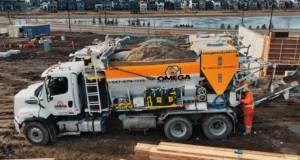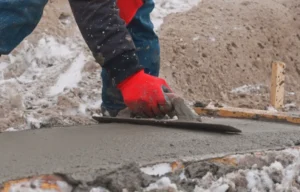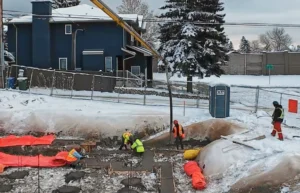
Concrete is one of the most durable construction materials in the world—but in Calgary and across Alberta, durability is constantly tested. Rapid temperature swings, frequent freeze-thaw cycles, snowmelt, and de-icing salts can turn even well-poured concrete into a cracked, scaling surface within just a few winters. This is where air-entrained concrete becomes not just beneficial, but essential.
For homeowners, builders, and contractors in Alberta, understanding why air-entrained concrete is critical can mean the difference between a driveway that lasts 25–30 years and one that needs repair after five. In this article, we break down how air-entrained concrete works, why it’s specifically suited for Calgary’s harsh climate, and how professional ready-mix suppliers design mixes that stand up to Alberta weather.
Understanding Calgary & Alberta’s Concrete-Killing Climate

Freeze-Thaw Cycles Explained
Concrete is a porous material. Even after it has fully cured, microscopic pores and capillaries allow water to enter the concrete matrix. In mild climates, this moisture is rarely a problem. In Calgary and Edmonton, however, that trapped water freezes repeatedly throughout the winter.
When water freezes, it expands by approximately 9%. Inside concrete, that expansion creates internal pressure. If the concrete has nowhere to relieve that pressure, it leads to microcracking. Over time, those microcracks grow into visible surface damage such as:
- Scaling (flaking or peeling of the surface)
- Spalling (chunks breaking away)
- Random cracking and corner breaks
According to industry studies, concrete exposed to more than 30 freeze-thaw cycles per year without proper air entrainment experiences dramatically reduced service life. Calgary routinely exceeds this threshold.
Why Alberta Is One of Canada’s Toughest Environments for Concrete
Alberta’s climate is uniquely harsh for exterior concrete. Calgary, in particular, is known for Chinook winds—rapid warm spells that melt snow during winter, followed by sudden temperature drops that refreeze moisture inside concrete. This repeated thawing and freezing accelerates deterioration.
Additional factors that intensify concrete damage in Alberta include:
- Heavy use of de-icing salts on driveways, sidewalks, and roads
- Large daily temperature swings, even in shoulder seasons
- Extended winter durations compared to most Canadian regions
These conditions mean that standard, non-air-entrained concrete simply cannot perform reliably over time in Calgary or Edmonton.
Real-World Example: Driveway Failure in Alberta
A common example seen across Alberta neighborhoods is a residential driveway poured without adequate air entrainment. The first year may look fine. By the second or third winter, surface scaling begins to appear. By year five, exposed aggregate, cracking, and crumbling edges often require patching or replacement.
In contrast, properly designed air-entrained concrete driveways routinely perform for decades with minimal maintenance.
What Is Air-Entrained Concrete?
A Simple Definition
Air-entrained concrete is concrete that contains billions of tiny, intentionally created air bubbles evenly distributed throughout the hardened material. These air voids are microscopic—far too small to see with the naked eye—but they play a critical structural role.
Rather than weakening the concrete, these controlled air pockets significantly increase its durability in freeze-thaw environments.
How Air Entrainment Works
The purpose of air entrainment is to provide pressure relief. When moisture inside the concrete freezes and expands, the tiny air bubbles act like expansion chambers. Water can move into these voids instead of cracking the cement paste.
This mechanism dramatically reduces internal stress during freezing and thawing cycles, preventing the progressive damage that leads to surface failure.
The Air Void System (AVS)
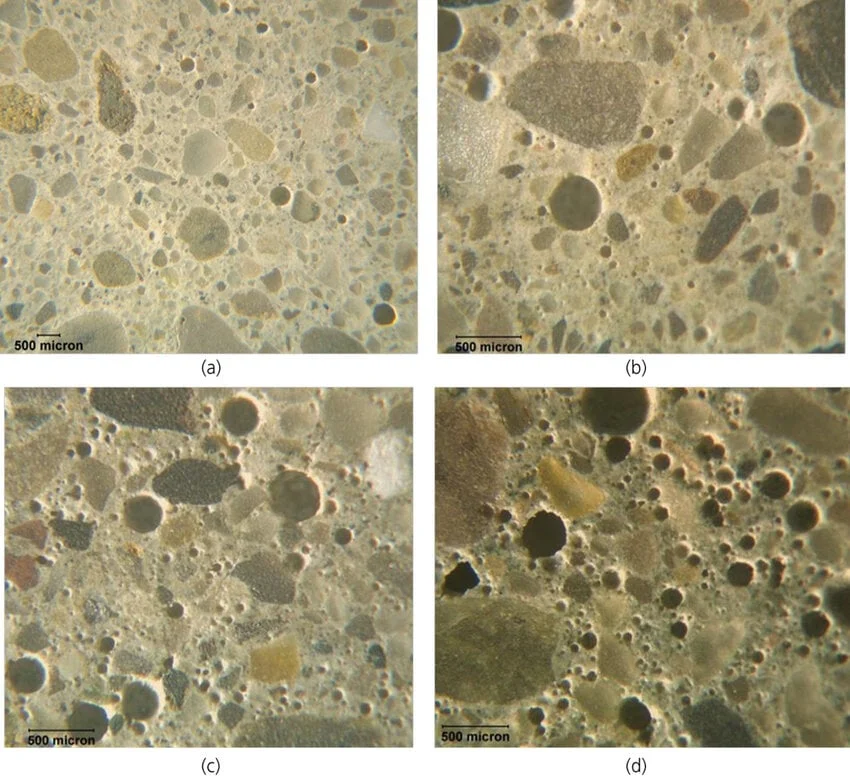
In professional concrete production, it’s not just the amount of air that matters—it’s how that air is distributed. This is known as the air void system (AVS), which is defined by:
- Bubble size – small, consistent bubbles perform best
- Spacing factor – bubbles must be close enough to relieve pressure
- Uniform distribution throughout the mix
Poorly controlled air entrainment can be just as problematic as having none at all. This is why experience, testing, and modern batching equipment are critical.
Why Air-Entrained Concrete Is Essential for Calgary & Edmonton
Superior Freeze-Thaw Resistance
Air-entrained concrete is specifically engineered to withstand repeated freeze-thaw cycles. In Alberta, this isn’t a luxury—it’s a requirement. Exterior concrete without air entrainment is far more likely to suffer premature deterioration.
Laboratory testing has shown that air-entrained concrete can survive several hundred freeze-thaw cycles with minimal loss of strength, while non-air-entrained mixes often fail much earlier.
Improved Durability and Service Life
Durability is about more than compressive strength. In cold climates, long-term performance depends on how well concrete resists environmental stress. Air-entrained concrete offers:
- Reduced cracking and surface scaling
- Improved resistance to moisture intrusion
- Longer overall service life
For homeowners, this means fewer repairs. For builders and municipalities, it means lower lifecycle costs and better long-term value.
Resistance to De-Icing Salts
De-icing salts are a major contributor to concrete damage in Alberta. Salts lower the freezing point of water, increasing the number of freeze-thaw cycles while also penetrating concrete surfaces.
Air-entrained concrete performs significantly better under salt exposure, making it the preferred choice for driveways, sidewalks, parking lots, and public infrastructure.
Code Requirements and Industry Standards
Canadian and municipal standards recognize the necessity of air entrainment in exterior concrete. Organizations such as the Canadian Standards Association (CSA) specify air content requirements for concrete exposed to freezing and moisture.
In practical terms, this means that most exterior flatwork in Calgary and Edmonton must use air-entrained concrete to meet best practices and long-term performance expectations.
Key Benefits of Air-Entrained Concrete
Structural and Performance Benefits
Air-entrained concrete delivers several technical advantages that are especially important in Alberta’s climate:
- Enhanced freeze-thaw durability
- Improved workability during placement
- More uniform finishing results
Contrary to common myths, properly designed air-entrained mixes maintain excellent structural performance when produced by experienced ready-mix suppliers. For additional crack control and structural reinforcement, air entrainment can be combined with fiber mesh reinforcement.
Financial and Practical Benefits
While air-entrained concrete may have a slightly higher upfront cost, the long-term savings are substantial. Reduced repairs, fewer replacements, and longer service life make it the most cost-effective choice for exterior concrete in Alberta.
| Feature | Air-Entrained Concrete | Non-Air-Entrained Concrete |
|---|---|---|
| Freeze-Thaw Resistance | Excellent | Poor |
| Resistance to Scaling | High | Low |
| Expected Lifespan in Alberta | 25–30+ years | 5–10 years |
This comparison clearly shows why air-entrained concrete is the standard for cold-climate construction.
In the next section of this guide, we’ll explore common applications of air-entrained concrete in Alberta, how it’s produced by professional ready-mix suppliers, and why choosing the right concrete partner makes all the difference.
Common Applications of Air-Entrained Concrete in Alberta
Residential Applications
In Calgary, Edmonton, and surrounding Alberta communities, air-entrained concrete is the standard for nearly all exterior residential concrete. These applications are directly exposed to moisture, freezing temperatures, and de-icing salts.
- Driveways: Repeated vehicle loads combined with freeze-thaw cycles make air entrainment essential for long-term performance.
- Sidewalks and Walkways: Air-entrained concrete resists surface scaling caused by foot traffic and ice melt products.
- Garage Slabs: Vehicles bring snow and ice into garages, introducing moisture that benefits from air entrainment.
- Patios, Steps, and Front Entrances: Prevents cracking, chipping, and unsafe surface deterioration.
Commercial and Municipal Applications
Commercial and public infrastructure projects demand even higher durability due to traffic loads, safety requirements, and long service-life expectations.
- Parking lots and loading areas
- Curbs, gutters, and sidewalks
- Industrial slabs exposed to weather
- Public pathways and municipal flatwork
For these applications, air-entrained concrete is not optional—it is a proven necessity for performance and safety.
How Air-Entrained Concrete Is Produced
The Role of Air-Entraining Admixtures
Air entrainment is achieved by adding specialized chemical admixtures during batching. These air-entraining admixtures create stable, microscopic air bubbles that remain evenly distributed throughout the concrete.
Precision is critical. Too little air reduces durability, while too much air can negatively affect strength and finish quality. Professional concrete suppliers carefully control dosage based on mix design, aggregate type, temperature, and application.
Quality Control and Modern Batching
Consistent air-entrained concrete requires modern equipment and experienced technicians. Professional ready-mix operations continuously monitor:
- Air content percentages
- Slump and workability
- Aggregate moisture and grading
- Weather conditions at time of delivery
Field testing, including air content tests, ensures that the concrete delivered to site meets Alberta performance standards.
Why Experience Matters
Air entrainment is not a “set and forget” process. Temperature changes, hauling time, and placement methods can all affect air content. This is why working with an experienced concrete supplier makes a measurable difference in final results.
Common Myths About Air-Entrained Concrete
Myth: Air-Entrained Concrete Is Weaker
This is one of the most common misconceptions. While air entrainment slightly reduces compressive strength on paper, properly designed mixes easily meet structural PSI requirements for residential and commercial flatwork.
In Alberta, durability—not just compressive strength—is the true measure of performance.
Myth: Air Entrainment Is Only Needed for Winter Pours
Freeze-thaw damage occurs long after concrete is placed. Even concrete poured in summer will experience Alberta winters. Air entrainment protects concrete for its entire lifespan, not just during curing.
Myth: All Ready-Mix Concrete Is the Same
Mix design, quality control, and experience vary widely between suppliers. Proper air-entrained concrete requires more than adding an admixture—it requires understanding Alberta conditions and how concrete behaves over time.
Choosing the Right Air Content for Alberta Projects
Typical Air Content Ranges
For most exterior flatwork in Alberta, air content typically falls between 5% and 8%, depending on aggregate size and exposure conditions.
Factors That Influence Air Content
- Maximum aggregate size
- Type of cement and supplementary materials
- Weather during placement
- Transportation and handling time
Coordination With Finishers
Proper finishing techniques are essential when working with air-entrained concrete. Overworking the surface or improper timing can reduce air content near the surface, diminishing freeze-thaw resistance.
This highlights the importance of coordination between the concrete supplier and finishing crew.
Why Omega Ready Mix Delivers Reliable Air-Entrained Concrete
Alberta-Optimized Mix Designs
At Omega Ready Mix, concrete mixes are designed specifically for Alberta’s demanding climate. Air-entrained concrete is engineered to withstand freeze-thaw cycles, moisture exposure, and de-icing salts common in Calgary and Edmonton.
Modern Equipment and On-Site Flexibility
Using modern batching technology and experienced operators, air content and workability are carefully controlled. When conditions change, adjustments can be made to ensure consistent quality.
Experienced, Professional Team
With extensive experience supplying concrete for residential, commercial, and specialty projects, Omega Ready Mix understands what long-lasting concrete requires in Alberta—not just in theory, but in real-world conditions.
Real-World Performance in Alberta Conditions
Residential Driveway Longevity
Air-entrained driveways supplied and placed correctly routinely perform for decades in Alberta, showing minimal surface damage even after repeated winters.
Commercial Flatwork Reliability
For commercial projects, air-entrained concrete reduces maintenance costs, minimizes safety hazards, and extends service life—critical benefits for property owners and municipalities.
Frequently Asked Questions About Air-Entrained Concrete
Is air-entrained concrete required in Calgary and Edmonton?
For exterior concrete exposed to moisture and freezing temperatures, air entrainment is considered best practice and is widely required by standards and specifications.
Does air-entrained concrete cost more?
The initial cost difference is minimal. Over the lifespan of the concrete, air-entrained mixes are significantly more cost-effective due to reduced repairs and replacements.
Can air content be adjusted on site?
Yes, within controlled limits. Professional suppliers can make adjustments based on testing and conditions to ensure performance requirements are met.
Does air-entrained concrete affect finishing?
Air-entrained concrete finishes well when handled properly. Experienced finishers understand timing and techniques that preserve surface durability.
Is air-entrained concrete used year-round in Alberta?
Yes. Air entrainment protects concrete for its entire service life, regardless of when it is poured.
Conclusion: Air-Entrained Concrete Is Non-Negotiable in Alberta
Alberta’s climate places extraordinary stress on exterior concrete. Freeze-thaw cycles, moisture, and de-icing salts can quickly destroy improperly designed mixes. Air-entrained concrete provides the durability, resilience, and long-term value needed to build with confidence in Calgary and Edmonton.
By choosing air-entrained concrete from an experienced supplier, homeowners and builders protect their investment and ensure concrete performs as intended for decades.
Get the Right Concrete for Alberta Conditions
If you’re planning a driveway, sidewalk, patio, or commercial flatwork project in Calgary or Edmonton, choosing the right concrete mix matters.
Contact Omega Ready Mix today to request a quote and get professional, climate-engineered air-entrained concrete designed specifically for Alberta’s demanding conditions.