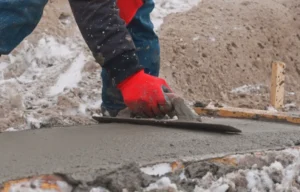
Concrete might look simple once it’s poured, but what happens before it reaches the forms determines whether it will last for decades—or start failing within a few seasons. One of the most overlooked yet critical factors in concrete performance is slump control in concrete. Slump directly affects workability, strength, durability, and long-term performance, especially in demanding climates like Northern Alberta.
In Edmonton and surrounding areas, we regularly see driveways cracking early, slabs scaling after winter, or flatwork wearing faster than expected. In many cases, the root cause isn’t the finishing or curing—it’s improper slump control at the batching and delivery stage. This article explains what concrete slump really means, why controlling it matters, and how professional ready mix suppliers ensure consistent, high-quality results.
What Is Concrete Slump?
Definition of Concrete Slump
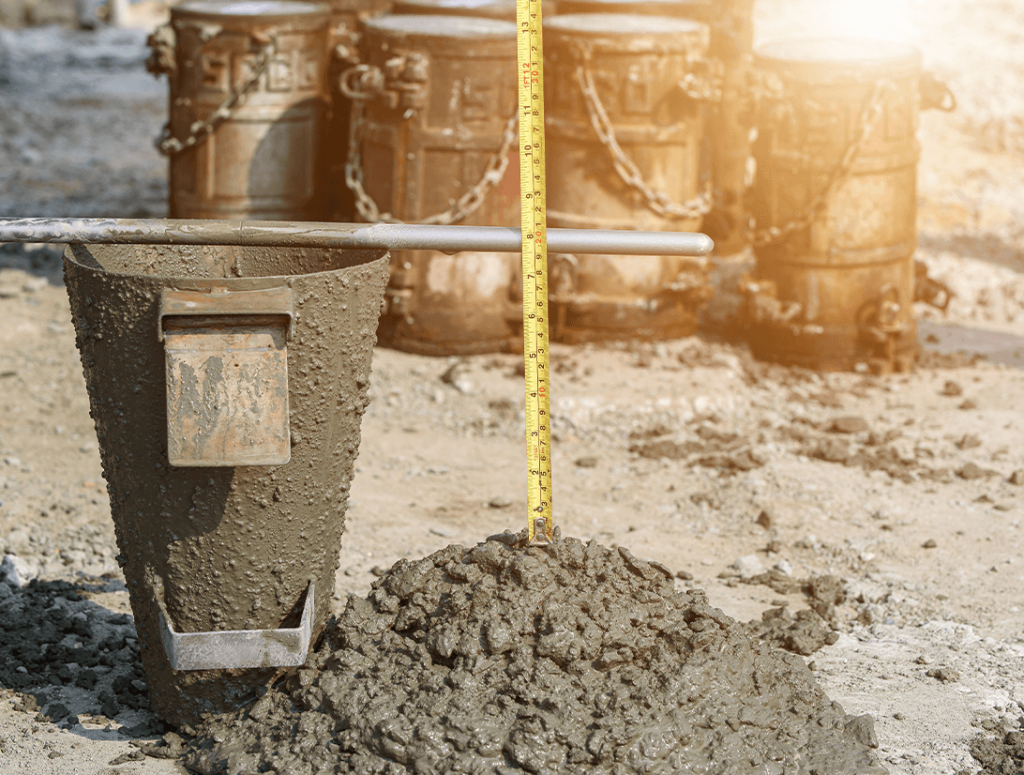
Concrete slump is a measurement of how workable or fluid fresh concrete is before placement. In simple terms, it tells us how easily concrete flows and consolidates under its own weight. Slump is measured in inches or millimeters and reflects the consistency of the mix—not its strength.
A higher slump means the concrete is wetter and flows more easily. A lower slump means the mix is stiffer and holds its shape. Neither is inherently good or bad—what matters is whether the slump is appropriate for the specific application.
A common misconception is that “wetter concrete is better.” While higher slump concrete may be easier to place, excessive water can seriously compromise strength and durability. That’s why controlled slump—not maximum slump—is the goal.
The Concrete Slump Test (ASTM C143)

The standard method for measuring slump is the concrete slump test, governed by ASTM C143, which is widely used across Canada and North America. This test provides a quick, reliable snapshot of concrete consistency at the job site.
According to the American Concrete Institute, slump testing is one of the most effective quality control tools for verifying that delivered concrete matches the approved mix design and placement requirements.
How the Slump Test Is Performed
- The slump cone is placed on a rigid, level surface
- Fresh concrete is added in three equal layers
- Each layer is rodded 25 times to remove air pockets
- The cone is lifted vertically and slowly
- The vertical drop of the concrete is measured
The measured drop is the “slump.” For example, a 100 mm (4-inch) slump means the concrete settled 100 mm after the cone was removed.
Why Slump Control Is Critical to Concrete Quality
Slump vs. Concrete Strength
Research published by the American Concrete Institute shows that increasing the water-cement ratio from 0.45 to 0.60 can reduce compressive strength by more than 30%. That loss of strength can significantly affect load-bearing capacity, surface hardness, and resistance to cracking.
In residential applications such as driveways or garage slabs, this can mean premature cracking under vehicle loads—even if the concrete was “easy to place” on pour day. Learn more about how PSI specifications affect concrete performance in our guide to 3000 vs 4000 vs 5000 PSI concrete.
Slump and Long-Term Durability
Durability is where slump control becomes especially important in Canadian climates. Concrete with excessive water content has higher porosity, allowing moisture and de-icing salts to penetrate the surface more easily.
In areas like Edmonton and Northern Alberta, concrete is exposed to repeated freeze–thaw cycles. When water inside the concrete freezes and expands, it creates internal pressure that leads to scaling, spalling, and surface delamination.
Well-controlled slump, combined with proper air entrainment, significantly improves resistance to freeze–thaw damage and helps concrete maintain its integrity over many winters.
Slump and Finishability
Slump also plays a major role in how concrete finishes. Flatwork such as sidewalks, patios, and interior slabs requires a balance: workable enough to place and finish efficiently, but stiff enough to prevent surface defects.
Concrete that is too wet may appear smooth initially, but it often leads to:
- Excessive bleeding (water rising to the surface)
- Weak surface paste
- Dusting or flaking after curing
Experienced finishers know that properly proportioned concrete with controlled slump produces a stronger, more uniform surface—even if it requires slightly more effort during placement.
Recommended Slump Ranges for Common Concrete Applications
Different concrete applications require different slump ranges. Below is a general guideline used by professional ready mix suppliers and contractors. Actual requirements may vary based on reinforcement, placement method, and weather conditions.
| Application | Typical Slump Range | Reason |
|---|---|---|
| Driveways & Exterior Flatwork | 75–100 mm (3–4 in) | Balances strength, durability, and finishability |
| Garage & Basement Slabs | 75–100 mm (3–4 in) | Minimizes cracking and surface dusting |
| Sidewalks & Patios | 75–125 mm (3–5 in) | Allows easier placement with good surface control |
| Footings | 75 mm (3 in) | Maintains shape and proper consolidation |
| Walls & Foundations | 100–150 mm (4–6 in) | Improves flow around reinforcement |
Why “One Slump Fits All” Doesn’t Work
Using the same slump for every pour is a common mistake. Concrete placed into heavily reinforced walls needs different flow characteristics than concrete poured for a driveway or slab-on-grade.
Other factors that influence optimal slump include:
- Rebar density and spacing
- Placement method (chute, pump, wheelbarrow)
- Ambient temperature and wind conditions
- Finishing timeline
Professional concrete suppliers adjust mix designs and admixtures to achieve the required workability without compromising strength or durability.
What Happens When Slump Is Too High or Too Low
Risks of High Slump Concrete
Excessively high slump is often the result of adding water on site—a practice strongly discouraged by concrete professionals. While it may make placement easier in the moment, it introduces long-term risks.
- Lower compressive strength
- Increased shrinkage and cracking
- Segregation of aggregates
- Weak, dusty surfaces
According to industry data, every additional 10 litres of water per cubic meter can reduce concrete strength by up to 5%. Over time, that reduction becomes visible in the form of surface wear and structural deficiencies.
Risks of Low Slump Concrete
Concrete with too low a slump presents a different set of problems. While it may be strong on paper, poor workability can prevent proper consolidation.
- Honeycombing around reinforcement
- Voids and trapped air
- Cold joints between placements
Inadequate consolidation can be just as damaging as excess water, particularly in structural elements where full contact with rebar is essential for load transfer and durability.
How Professional Ready Mix Suppliers Control Slump

Engineered Mix Design, Not Guesswork

True slump control starts long before the concrete reaches the job site. It begins with a properly engineered mix design that balances cement content, aggregate gradation, water, and admixtures. Each component plays a role in how concrete flows, consolidates, and performs after curing.
Professional ready mix producers design mixes based on:
- Required compressive strength (PSI or MPa)
- Exposure conditions (freeze–thaw, de-icing salts)
- Placement method and reinforcement density
- Seasonal temperature considerations
This engineering-first approach ensures slump targets are met without relying on excess water, which weakens concrete.
Using Admixtures Instead of Adding Water
Modern concrete relies heavily on chemical admixtures to achieve workability while preserving strength. Plasticizers and superplasticizers allow concrete to flow more easily without increasing the water-cement ratio.
For example, a superplasticizer can increase slump from 75 mm to 150 mm while maintaining—or even improving—compressive strength. This is especially valuable for reinforced walls, foundations, or pours requiring longer placement times.
Air-entraining admixtures are also critical in Canadian climates. They create microscopic air bubbles that give freezing water room to expand, significantly improving freeze–thaw durability without affecting slump consistency.
Quality Control at the Batch Plant
Consistent slump control depends on tight quality control during batching. Automated batching systems precisely measure water, cement, aggregates, and admixtures to ensure every load matches the approved mix design.
Experienced batch operators monitor moisture content in aggregates and make real-time adjustments to maintain consistency across loads—especially important during changing weather conditions.
Slump Control in Edmonton’s Climate
Cold Weather Concreting Challenges
Cold temperatures present unique challenges for concrete slump and workability. As temperatures drop, concrete stiffens more quickly, leading to rapid slump loss and reduced finishing time.
In winter conditions common throughout the Edmonton region, uncontrolled slump can result in:
- Difficult placement and consolidation
- Increased risk of cold joints
- Inconsistent surface finish
Professional suppliers address this by adjusting mix designs, using heated aggregates or water, and selecting admixtures that maintain workability without sacrificing early strength development.
Summer Heat and Rapid Slump Loss
Hot, dry summer days create the opposite problem. High temperatures and wind accelerate evaporation, causing concrete to lose slump faster than expected.
Without proper planning, this can lead to rushed finishing, surface tearing, or the temptation to add water on site. Retarding admixtures and careful scheduling help extend workable time while preserving concrete quality.
Why Local Experience Matters
Slump control isn’t just about laboratory theory—it’s about understanding how concrete behaves in real-world conditions. Suppliers with local experience know how seasonal temperature swings, wind exposure, and jobsite logistics affect concrete performance.
Slump Control for Flatwork and Driveways
Why Driveways Demand Tight Slump Control
Driveways experience repeated vehicle loads, temperature fluctuations, and exposure to de-icing salts. Excessively wet concrete may look good on pour day, but it often leads to premature cracking, surface scaling, and reduced lifespan.
For residential driveways, controlled slump combined with proper air entrainment and finishing practices provides:
- Higher load resistance
- Improved surface durability
- Better long-term appearance
Flatwork Finishing Best Practices
Proper slump allows finishers to work efficiently without overworking the surface. Concrete that holds its shape reduces the risk of trapping bleed water beneath the surface—a common cause of scaling and delamination.
Experienced crews understand that slightly stiffer concrete often produces a stronger, longer-lasting slab, even if it requires more skill during placement.
How Omega Ready Mix Ensures Consistent Slump Control
Modern Equipment and Precise Batching
At Omega Ready Mix, slump control is built into every stage of production. Modern batching equipment ensures precise measurement of materials, while automated systems reduce variability between loads.
Experienced Team and Job-Specific Adjustments
Concrete isn’t a one-size-fits-all product. Each project—whether it’s a driveway, slab, or structural pour—has unique requirements. Experienced dispatchers and batch operators work closely with contractors to match slump targets to placement conditions.
Commitment to Quality and Accountability
Consistent quality builds trust. By maintaining strict quality control procedures and transparent communication, professional suppliers help ensure that what arrives on site performs as expected—not just during placement, but for years afterward.
Frequently Asked Questions About Slump Control
Is higher slump always easier to work with?
Higher slump may flow more easily, but it often comes at the cost of strength and durability. Properly designed mixes use admixtures to improve workability without adding water.
Can slump be adjusted after delivery?
Minor adjustments may be possible using approved admixtures, but adding water on site is strongly discouraged as it reduces concrete performance.
What slump is best for residential driveways?
Most residential driveways perform best with a slump between 75–100 mm (3–4 inches), combined with proper air entrainment and finishing.
Does slump affect curing time?
Indirectly, yes. Higher water content can increase drying shrinkage and slow strength gain, while properly controlled slump supports more predictable curing.
How do I know my concrete supplier controls slump properly?
Look for suppliers who use engineered mix designs, modern batching equipment, and clear quality control procedures—and who discourage adding water on site.
Conclusion: Slump Control Is the Foundation of Quality Concrete
Slump control is far more than a technical detail—it’s one of the most important factors determining concrete strength, durability, and long-term performance. Whether you’re pouring a driveway, slab, or foundation, controlling slump protects your investment and ensures concrete performs as intended.
By working with an experienced, professional ready mix supplier that understands local conditions and prioritizes quality, you reduce risk, improve outcomes, and extend the life of your concrete.
Key Takeaways
- Slump measures workability, not strength—but directly affects both
- Excess water is one of the leading causes of concrete failure
- Admixtures allow workability without sacrificing durability
- Local climate experience is essential for consistent results
Ready to Get Concrete You Can Trust?
If you’re planning a concrete project in the Edmonton area and want consistent, high-quality results, work with a supplier that takes slump control seriously. Contact Omega Ready Mix today to discuss your project and get concrete engineered for long-term performance—not short-term convenience.