
A basement concrete floor is one of the most critical slabs in a Calgary home, and mistakes made during design or pouring can lead to cracking, cold floors, and long-term moisture problems.. Between freeze–thaw cycles, clay-heavy soils, and strict Alberta building codes, a basement slab that’s poorly designed or rushed can lead to cracking, cold floors, moisture problems, and costly repairs down the road. Homeowners often don’t see these issues until months—or years—after the concrete has cured.
This guide is written from real, hands-on experience supplying and working with basement concrete across Calgary and Southern Alberta. Whether you’re building a new home, finishing an existing basement, or planning a renovation, this article walks you through what actually matters: slab design, thickness, insulation, vapor barriers, and concrete mix selection—explained clearly and practically. The goal is simple: help you pour it once, and pour it right.
What Is a Basement Concrete Floor?
Purpose of a Basement Slab
A basement concrete floor—often called a basement slab—is a structural and functional surface poured over a prepared base inside your foundation walls. While it’s typically not load-bearing like footings or foundation walls, it still plays a critical role in the performance of your home.
- Structural stability: Provides a flat, durable surface that supports interior walls, mechanical equipment, and finishes.
- Moisture control: Works with vapor barriers and drainage systems to prevent ground moisture from entering the living space.
- Thermal comfort: Acts as part of the home’s thermal envelope when properly insulated.
- Finish readiness: Serves as the base for flooring such as laminate, tile, carpet, or polished concrete.
In Calgary homes, basement slabs are often poured with the intention of future development. That means decisions made during the pour—like flatness, insulation, and joint layout—can significantly impact how easy and affordable it is to finish the space later.
How Basement Floors Differ from Garage & Exterior Slabs
Not all concrete slabs are created equal. A common mistake is assuming basement floors can be built the same way as garage slabs or sidewalks. In reality, basement concrete has very different performance requirements. While garage slab design prioritizes load-bearing capacity for vehicles and resistance to de-icing chemicals and concrete driveways in Calgary must withstand freeze-thaw cycling and de-icing salts, basement slabs focus on moisture control, thermal insulation, and comfort. Because basement slabs are inside the home, these factors matter more than surface traction or drainage slope.
| Feature | Basement Floor | Garage / Exterior Slab |
|---|---|---|
| Exposure to Weather | Interior, protected | Direct exposure to freeze–thaw |
| Insulation Required | Yes (critical in Calgary) | Usually optional |
| Vapor Barrier | Mandatory | Often optional |
| Surface Finish | Smooth / level for flooring | Broomed or textured |
Because basement slabs are inside the home, comfort, moisture control, and long-term durability matter more than surface traction or drainage slope.
Calgary Climate Considerations for Basement Concrete
Freeze–Thaw Cycles in Alberta
Calgary experiences some of the most aggressive freeze–thaw conditions in Canada. While basement slabs are protected from direct exposure, the surrounding soil is not. As the ground freezes and thaws seasonally, it expands and contracts, creating movement beneath the slab.
According to Natural Resources Canada, Southern Alberta can experience over 50 freeze–thaw cycles per year. Without proper sub-base preparation and crack control, this movement often results in slab cracking or uneven settlement.
Soil Conditions in Calgary
Much of Calgary is built on clay-based soils, which are known for holding moisture and expanding when wet. This makes proper base preparation non-negotiable for basement floors.
- Clay soils expand when wet and shrink when dry
- Poor drainage increases hydrostatic pressure under slabs
- Inadequate gravel bases amplify soil movement
A well-designed basement slab in Calgary always includes a compacted granular base to separate the concrete from unstable native soil.
Building Code Requirements (Alberta)
Alberta’s building code sets minimum standards for basemeFnt slab construction, but experienced builders often exceed these requirements for performance and longevity.
Typical code-driven requirements include:
- Minimum concrete thickness (commonly 100 mm / 4 inches)
- Continuous polyethylene vapor barrier
- Insulation beneath the slab or at slab edges
- Proper drainage and moisture control measures
Meeting code is the baseline. Designing beyond it is how you avoid cold floors, moisture issues, and premature cracking.
Basement Concrete Floor Thickness & Design
Standard Basement Slab Thickness
For most residential projects in Calgary, a basement floor slab is poured at 4 inches (100 mm) thick. This thickness is sufficient for typical residential loads when combined with proper base preparation. However, thicker slabs may be recommended when heavy mechanical equipment will be installed, interior load-bearing walls sit directly on the slab, or the basement will be used for workshops or storage. Understanding concrete slab thickness standards for various applications helps homeowners and builders make informed decisions about structural specifications. Increasing thickness slightly is often a low-cost upgrade that improves durability and reduces long-term risk.
Reinforcement Options
Concrete is strong in compression but weak in tension. Reinforcement helps control cracking and improves overall slab performance.
- Wire mesh: Common, economical crack control when properly placed.
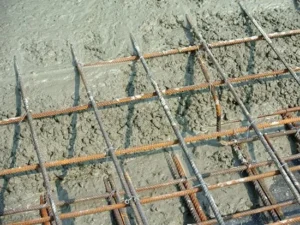
- Rebar grid: Better crack control and structural performance.
- Fiber-reinforced concrete: Reduces plastic shrinkage cracking and improves surface durability.
In many Calgary basements, fiber reinforcement combined with control joints provides excellent performance without the complexity of rebar placement.
Control Joints & Crack Management
All concrete cracks—it’s not a question of if, but where. Control joints are intentional weak points that guide cracking into clean, planned lines.
Best practices include:
- Cutting joints within 6–12 hours of finishing
- Spacing joints 8–12 feet apart
- Aligning joints with walls and future finishes
Proper joint planning makes cracks nearly invisible once flooring is installed.
Sub-Base Preparation: The Most Overlooked Step
Gravel Base Requirements
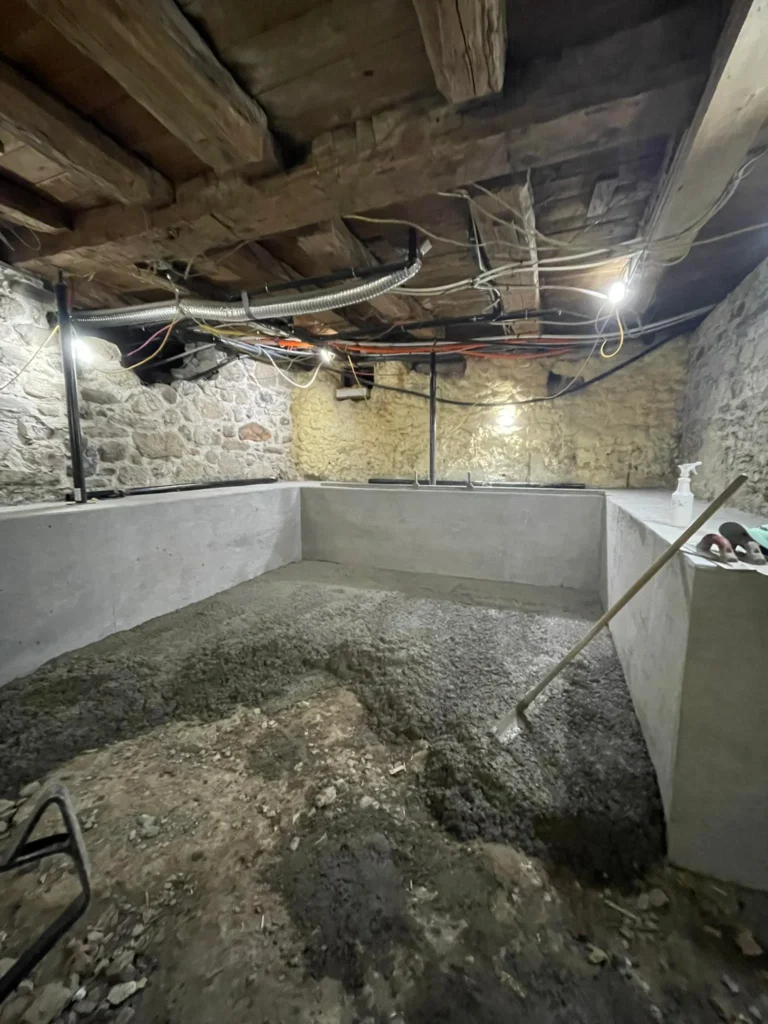
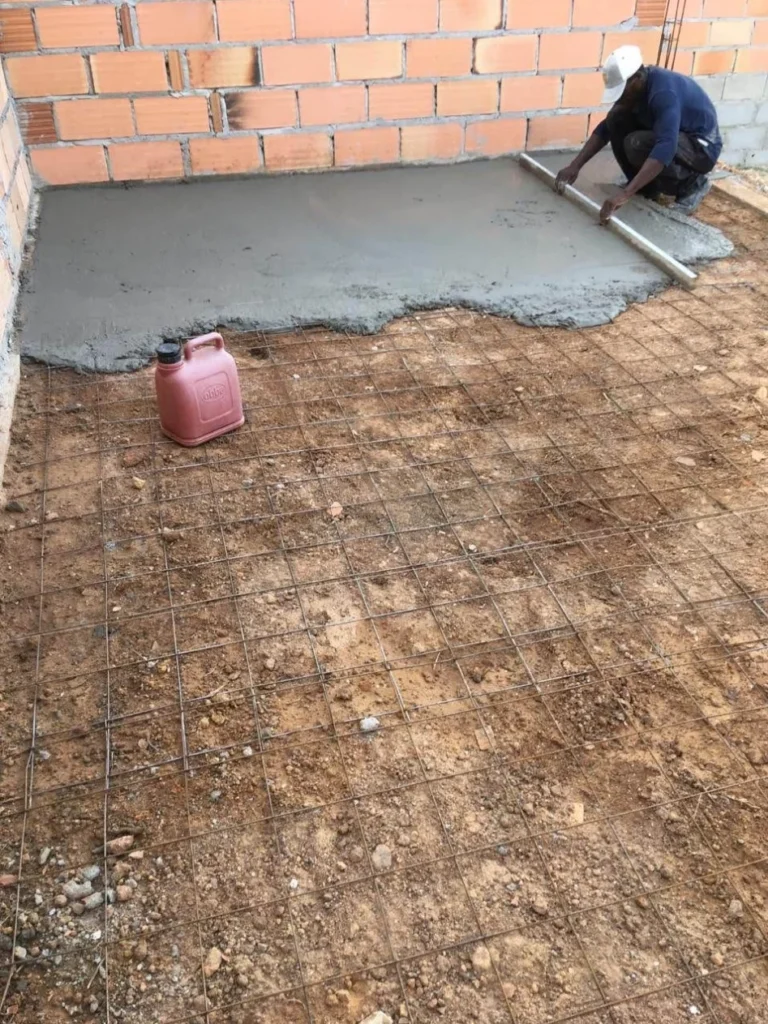
A properly prepared granular base is the foundation of a successful basement slab. In Calgary, this typically means 4–6 inches of compacted gravel placed over native soil.
The gravel base:
- Improves drainage beneath the slab
- Reduces moisture buildup
- Provides a stable, uniform support surface
Compaction Standards
Even the best concrete mix can fail if the base beneath it is poorly compacted. Mechanical compaction ensures the gravel won’t settle after the slab is poured.
Experienced contractors use plate compactors or rollers to achieve consistent density across the entire slab area.
Leveling & Accuracy
Laser leveling is commonly used to ensure the base is flat and at the correct elevation. This step directly affects how smooth and level the finished basement concrete floor will be—especially important for modern flooring systems.
Insulation & Vapor Barriers Under Basement Slabs
Why Insulation Matters in Calgary
Uninsulated basement slabs are one of the biggest sources of heat loss in Calgary homes. Cold concrete floors reduce comfort and increase heating costs—especially in finished basements.
Rigid foam insulation beneath the slab helps:
- Maintain warmer floor temperatures
- Reduce energy loss
- Improve overall basement comfort
Types of Basement Slab Insulation
Common insulation materials include EPS and XPS rigid foam boards. The recommended insulation value depends on usage, but many Calgary builders target R-10 to R-20 beneath basement slabs.
Vapor Barriers Explained
A vapor barrier—usually a polyethylene sheet—prevents ground moisture from migrating into the concrete and indoor air. This layer is critical for preventing mold, musty odors, and flooring failures.
Best practice includes sealing all seams and penetrations to maintain a continuous moisture barrier beneath the slab.
In the next section, we’ll dive into choosing the right concrete mix, the basement pouring process, curing, costs in Calgary, and common mistakes to avoid—so you can confidently plan your basement project from start to finish.
Choosing the Right Concrete Mix for Basement Concrete Floors
Concrete Strength (PSI) Requirements
For most residential basement concrete floors in Calgary, a concrete strength of 25–30 MPa (3,600–4,300 PSI) is more than sufficient. This range provides excellent durability for residential use without increasing shrinkage or cracking risk.
Higher-strength concrete is not always better. Stronger mixes often contain more cement, which can increase shrinkage and lead to unnecessary cracking if not carefully managed.
Air-Entrained vs Non-Air-Entrained Concrete
Basement concrete floors are interior slabs and are not exposed to freeze–thaw conditions directly. For this reason, non-air-entrained concrete is typically used.
- Air-entrained concrete: Required for exterior slabs exposed to moisture and freezing
- Non-air-entrained concrete: Smoother finish, higher surface hardness, ideal for basements
Ready-Mix vs On-Site Mixing
Using professionally batched ready-mix concrete ensures consistent strength, proper water-to-cement ratios, and predictable finishing results. This consistency is especially important for large basement pours where uniformity matters.
Many Calgary builders prefer ready-mix delivery because it:
- Reduces material waste
- Improves scheduling accuracy
- Ensures code-compliant mix designs
Basement Concrete Pouring Process (Step-by-Step)
Pre-Pour Checklist
A successful basement pour starts well before the truck arrives. Experienced crews review several critical items before placing concrete:
- Sub-base fully compacted and level
- Insulation and vapor barrier installed and sealed
- Reinforcement positioned correctly
- Weather conditions suitable for pouring
Pouring & Screeding
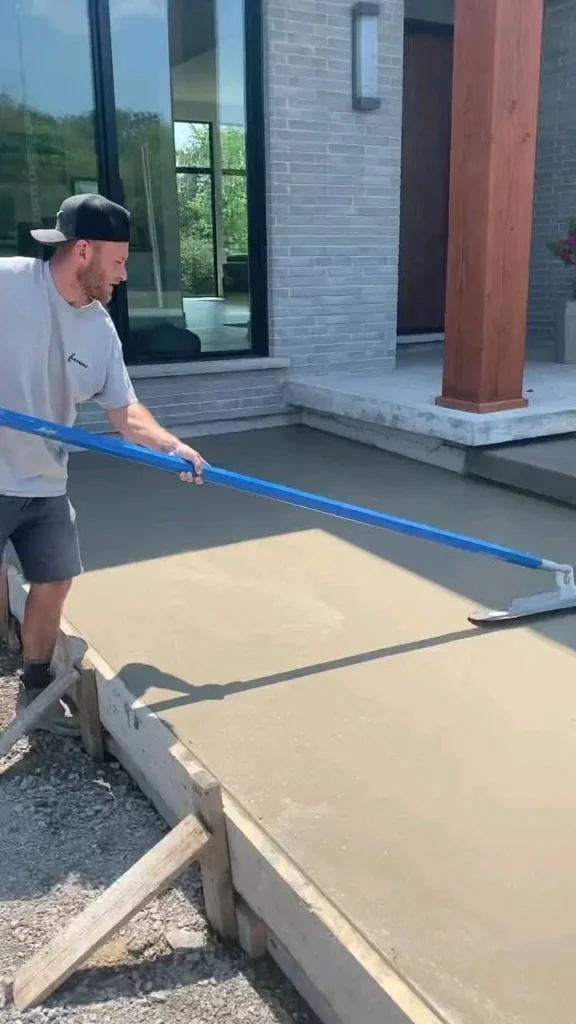
Concrete is placed evenly across the slab area and spread using rakes or shovels. Screeding ensures the surface is flat and level to the desired elevation.
In Calgary basements, steady placement is preferred over rushing the pour. Controlled placement reduces segregation and improves finish quality.
Finishing Options
Once the concrete begins to set, finishing starts. Common basement concrete floor finishes include:
- Smooth trowel finish: Ideal for finished basements and flooring installation
- Light broom finish: Sometimes used in utility rooms
- Polished concrete: A modern option for exposed concrete designs
Curing Basement Concrete Floor Properly
Why Curing Is Critical
Curing is the process that allows concrete to reach its intended strength. According to the Portland Cement Association, properly cured concrete can be up to 40% stronger than improperly cured concrete.
In Calgary’s dry climate, curing is especially important to prevent rapid moisture loss.
Curing Methods
- Keeping the slab covered with curing blankets
- Applying curing compounds
- Limiting foot traffic during early curing stages
Most basement slabs reach sufficient strength for light foot traffic within 24–48 hours, but full curing continues for up to 28 days.
Basement Concrete Floor Cost in Calgary
Typical Cost Per Square Foot
Basement concrete floor costs in Calgary typically range between $6 and $10 per square foot, depending on project complexity.
Key Factors That Affect Pricing
- Slab thickness
- Reinforcement type
- Insulation requirements
- Access to the site
- Scheduling and pour size
How to Control Costs Without Cutting Corners
Planning ahead, ordering accurate quantities, and choosing the correct mix design can significantly reduce waste and unnecessary expenses.
Common Basement Concrete Mistakes to Avoid
- Skipping insulation: Leads to cold floors and higher energy bills
- Poor base preparation: Causes settlement and cracking
- Incorrect water addition: Weakens concrete and increases shrinkage
- Rushing the cure: Reduces long-term durability
Most basement slab failures can be traced back to shortcuts taken early in the process:
- Skipping insulation: Leads to cold floors and higher energy bills
- Poor base preparation: Causes settlement and cracking
- Incorrect water addition: Weakens concrete and increases shrinkage
- Rushing the cure: Reduces long-term durability
While some homeowners consider DIY concrete projects to reduce costs, basement slabs require specialized knowledge of moisture control, insulation integration, and proper curing techniques that significantly impact long-term performance. Understanding when professional expertise is essential helps avoid costly mistakes that are difficult or impossible to correct after the concrete has cured.
Why Work with a Professional Concrete Supplier in Calgary
Local experience matters. A professional concrete supplier understands Calgary soil conditions, climate challenges, and code requirements—ensuring the mix delivered to your site performs as intended. Partnering with established professional concrete flatwork services in Calgary provides access to consistent quality control, reliable delivery scheduling, and technical support that extends beyond material supply to include proper installation guidance for contractors and homeowners alike.
- Consistent quality control
- Reliable delivery scheduling
- Technical support for contractors and homeowners
Why Choose Omega Ready Mix
Omega Ready Mix supplies high-quality concrete solutions tailored for Calgary and Alberta conditions. With modern batching equipment and a team experienced in residential and commercial projects, we help ensure basement slabs are poured efficiently, accurately, and to spec.
From small residential basements to large-scale developments, our focus is on reliability, consistency, and long-term performance.
Frequently Asked Questions
How long before I can walk on a new basement slab?
Light foot traffic is usually allowed after 24–48 hours, depending on temperature and curing conditions.
Can basement concrete be poured in winter in Calgary?
Yes, with proper cold-weather procedures such as heated materials, insulated blankets, and controlled curing.
Do basement slabs need rebar?
Not always. Many basement slabs rely on fiber reinforcement and control joints, though rebar may be recommended for heavier loads.
What happens if I skip the vapor barrier?
Skipping the vapor barrier increases the risk of moisture intrusion, mold, and flooring failure.
Final Thoughts
A basement concrete floor is a long-term investment in your home’s comfort, durability, and value. In Calgary’s challenging climate, success depends on proper design, preparation, and material selection.
By understanding the process and working with experienced professionals, you can avoid common pitfalls and ensure your basement slab performs well for decades.
Planning a basement project in Calgary? Contact Omega Ready Mix today to discuss your concrete needs and get expert support from start to finish.