Pouring your own concrete can feel empowering. Whether it’s a backyard patio, a new walkway, or a small shed pad, many Calgary homeowners take the DIY route to save money and move faster. But concrete in Alberta is not forgiving. Between freeze–thaw cycles, chinooks, dry air, and clay-heavy soils, a simple mistake can turn into cracking, scaling, or total failure within a year.
This guide is written for real Calgary homeowners—not textbook scenarios. Drawing from on-the-ground experience, local building conditions, and best practices used by professional concrete crews, we’ll walk you through how to plan, prep, and pour concrete the right way. You’ll also learn when DIY makes sense, when it doesn’t, and how to protect your investment from costly mistakes.
Why DIY Concrete Projects Are Popular in Calgary
Rising Renovation Costs and a Strong DIY Culture
Over the past few years, material prices and labour costs across Alberta have climbed sharply. According to Statistics Canada, residential construction costs increased by more than 20% between 2020 and 2023, pushing many homeowners to handle smaller projects themselves. Concrete, in particular, appears deceptively simple: mix, pour, smooth, done.
Calgary also has a strong DIY culture. Homeowners often tackle projects on weekends, drawing inspiration from YouTube tutorials and big-box store guides. While these resources are helpful, most are not designed for Calgary’s climate or soil conditions.
Common DIY Concrete Projects Around Calgary
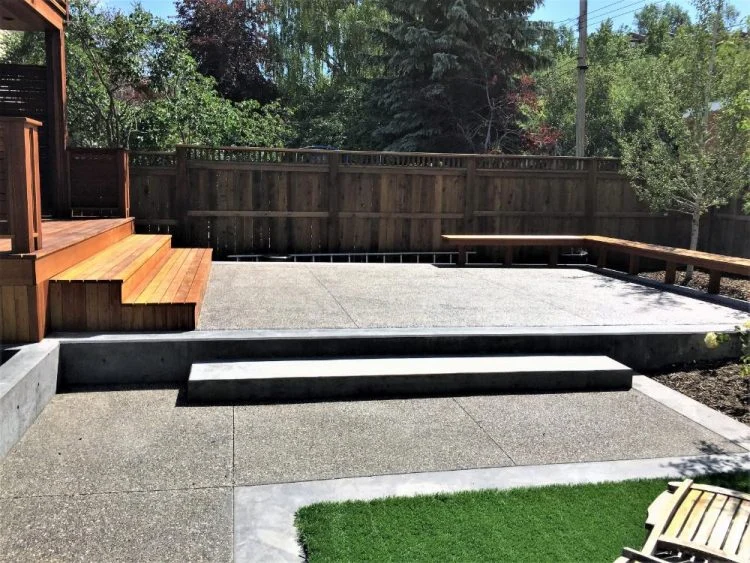
DIY concrete projects that homeowners most commonly attempt include backyard patios and seating areas, walkways and side-yard paths, shed and gazebo pads, hot tub bases, garbage bin pads, utility slabs, and fence post footings. While these projects are generally manageable if properly planned, homeowners should understand the complexity involved. For comprehensive guidance on concrete patio installation—including proper base preparation, drainage design, and finishing techniques specific to Calgary’s freeze-thaw environment—even experienced DIYers benefit from understanding professional standards before attempting outdoor living space projects.
These projects are generally manageable if properly planned. Problems arise when homeowners underestimate the importance of ground preparation, weather timing, or mix selection.
Understanding Calgary’s Climate Before You Pour Concrete
Freeze–Thaw Cycles and Long-Term Durability
Concrete does not fail overnight—it fails slowly. Calgary experiences dozens of freeze–thaw cycles each year, especially in spring and fall. When water enters concrete and freezes, it expands by roughly 9%, creating internal pressure that leads to cracking and surface flaking.
This is why air-entrained concrete is standard in Alberta. The tiny air bubbles give freezing water space to expand, dramatically improving durability. DIYers who skip this detail often see damage within one or two winters.
Chinooks, Wind, and Rapid Moisture Loss
Calgary’s chinooks can raise temperatures by 10–15°C in a matter of hours. Combined with wind and low humidity, this causes concrete surfaces to lose moisture too quickly. Rapid moisture loss leads to plastic shrinkage cracking—those hairline cracks that appear before the slab has even hardened.
Professional crews plan pours around wind conditions and actively manage curing. DIYers who “set it and forget it” often learn this lesson the hard way.
Best Seasons for DIY Concrete in Alberta
The safest window for DIY concrete in Calgary is typically late May through early September. Even then, overnight temperatures matter. As a rule of thumb:
- Below 5°C overnight: additional protection required
- Below 0°C: DIY pouring is strongly discouraged
- Above 25°C with wind: moisture control is critical
Planning Your DIY Concrete Project Properly
Measuring, Calculating, and Ordering the Right Amount
Running out of concrete mid-pour is one of the most common DIY mistakes. Cold joints form when fresh concrete is placed against partially hardened concrete, creating weak seams that crack over time.
To avoid this, measure length, width, and thickness carefully, then add 10% extra volume for waste and uneven subgrade. Homeowners using bagged concrete often underestimate how physically demanding mixing becomes once volumes exceed one cubic yard.
Choosing the Right Concrete Mix for Calgary
Not all concrete is the same. For exterior DIY projects in Calgary, the following mix characteristics are essential:
- Air-entrainment: improves freeze–thaw resistance
- Minimum 30–32 MPa strength: suitable for patios and walkways
- Controlled water content: prevents weak, dusty surfaces
Adding extra water may make concrete easier to place, but it significantly reduces strength and durability. Professionals often say: “Concrete gets strong from cement—not water.”
Permits, Drainage, and Property Considerations
In Calgary, most small concrete flatwork projects do not require permits, but drainage rules still apply. Concrete should always slope away from foundations to prevent water infiltration. Homeowners should also check property lines and utility locations before excavation.
Ground Preparation: The Step That Makes or Breaks DIY Concrete
Excavation Depth and Calgary’s Clay Soils
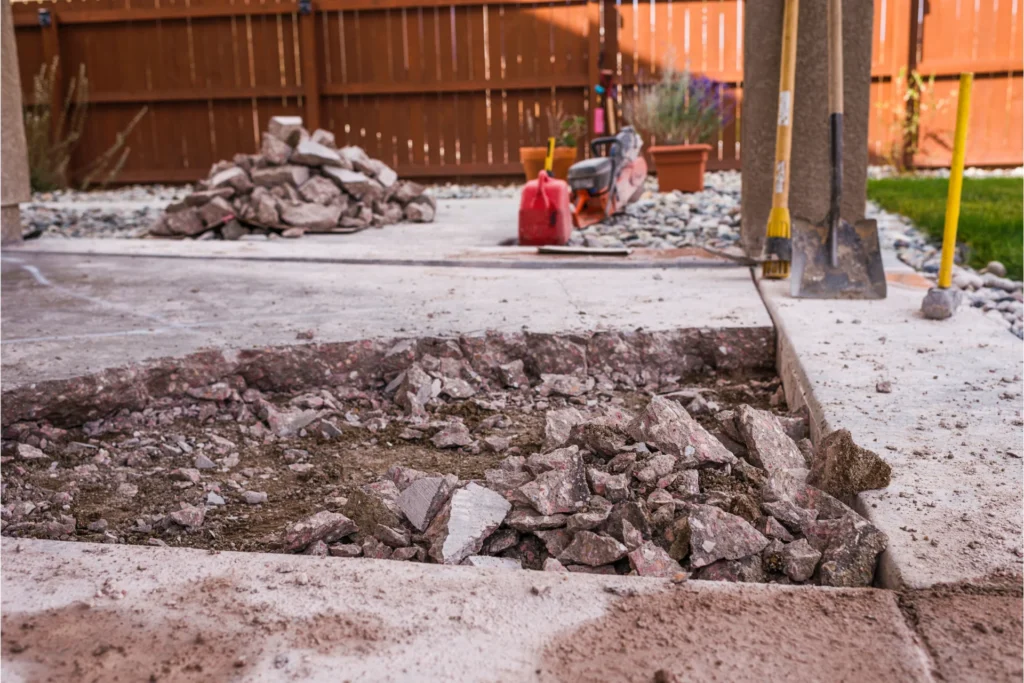
Southern Alberta soils often contain expansive clay that swells when wet and shrinks when dry. Pouring concrete directly on poorly prepared soil leads to uneven settling and cracking.
For most DIY slabs, excavation should allow for:
- 100–150 mm (4–6 inches) of compacted gravel base
- 100 mm (4 inches) of concrete thickness minimum
Gravel Base and Proper Compaction
Gravel is not optional—it is structural. A well-compacted base distributes load evenly and allows water to drain away from the slab. Plate compactors provide far better results than hand tampers, especially for larger areas.
Skipping compaction is one of the main reasons DIY slabs settle unevenly within the first year.
Building Forms That Stay Straight and Strong
Concrete is heavy. Wet concrete exerts significant pressure on forms, especially along edges. Forms should be square, level, and firmly staked to prevent bulging or blowouts during the pour.
Professionals often spend more time on formwork than on the actual pour—DIYers should do the same.
Mixing and Pouring Concrete the Right Way
Bagged Concrete vs Ready-Mix vs On-Site Mixing
| Option | Best For | Limitations |
|---|---|---|
| Bagged Concrete | Very small projects | Inconsistent mixing, labour intensive |
| Ready-Mix Truck | Large slabs | Minimum order, time limits |
| On-Site Volumetric Mixing | DIY projects of any size | Requires access for equipment |
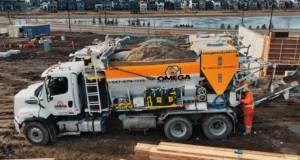
For many Calgary homeowners, on-site mixed concrete provides professional-grade consistency without over-ordering. This approach allows concrete to be mixed fresh, in the exact quantity needed.
Water Ratios and Strength Control
Adding water is the fastest way to ruin concrete. Each extra litre weakens the final product and increases shrinkage. Properly proportioned concrete may feel stiffer, but it finishes stronger and lasts longer in Calgary’s climate.
Pouring Techniques for Small DIY Slabs
Concrete should be placed continuously and spread evenly to avoid segregation. Use shovels or rakes—not excessive vibration—to move material. Screeding should follow immediately to level the surface before finishing begins.
In the next section, we’ll cover finishing techniques DIYers can realistically handle, proper curing in Calgary’s climate, common mistakes to avoid, and when it’s time to call in professional support.
Finishing Techniques DIYers Can Actually Handle
When to Start Finishing (Timing Matters)
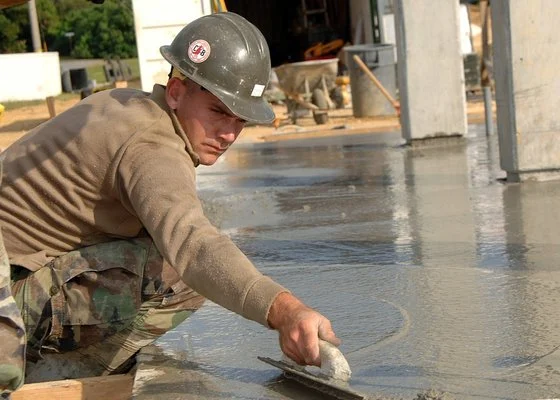
Finishing concrete too early or too late is one of the most common DIY errors. After placing and screeding, concrete will release “bleed water” as heavier aggregates settle. Finishing while this water is still on the surface traps moisture and weakens the top layer.
A simple rule: wait until the surface sheen disappears and the concrete supports light pressure without sinking. In Calgary’s dry air, this window can be shorter than expected—especially on windy days.
Broom Finish vs Trowel Finish
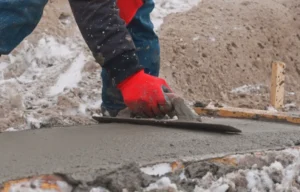
For exterior concrete in Calgary, a broom finish is usually the safest choice. It provides traction in icy conditions and hides minor imperfections better than a smooth finish.
- Broom finish: Ideal for patios, walkways, and steps
- Trowel finish: Better for interior or sheltered slabs only
Highly polished surfaces outdoors can become dangerously slippery once snow and ice arrive.
Control Joints and Crack Management
Concrete will crack—it’s unavoidable. The goal is to control where it cracks. Control joints should be placed at intervals roughly 24–30 times the slab thickness (in inches). For a 4-inch slab, joints every 8–10 feet are typical.
Cut joints early enough—either with a groover during finishing or a saw once the concrete gains initial strength.
Curing Concrete Properly in Calgary’s Climate
Why Curing Is Not “Just Waiting”
Curing is the process that allows concrete to reach its design strength. Cement needs moisture to hydrate properly. Without curing, concrete may reach only a fraction of its potential strength.
According to industry data, properly cured concrete can be up to 40% stronger than concrete allowed to dry out too quickly.
DIY-Friendly Curing Methods
- Plastic sheeting: Traps moisture and protects from wind
- Wet curing: Light misting for several days
- Curing compounds: Sprayed on to seal moisture
For most DIY projects, plastic sheeting secured at the edges is the most practical and effective solution.
Cold-Weather Protection
If temperatures are expected to dip near freezing within the first 48 hours, insulation blankets are critical. Concrete gains most of its early strength during this window, and freezing can permanently damage it.
Avoid direct heat sources like propane heaters pointed at the slab—these cause uneven curing and surface cracking.
Common DIY Concrete Mistakes (And How to Avoid Them)
Pouring Too Thin
Slabs under 4 inches thick are prone to cracking and failure. Thinner concrete may look fine initially but often breaks down within one or two winters. This is especially critical for vehicle-bearing applications. Understanding proper garage floor concrete requirements—which typically specify 5-6 inch thickness with steel reinforcement—helps homeowners recognize when DIY approaches fall short of structural necessities. What works for a garden path will not withstand daily vehicle traffic and the concentrated loads that garage slabs must support.
Skipping Reinforcement
Rebar or wire mesh helps control cracking and improves load distribution. For patios and walkways, light reinforcement is inexpensive insurance.
Poor Drainage Planning
Flat slabs that don’t slope away from buildings trap water. In freeze–thaw conditions, standing water accelerates deterioration.
Rushing the Finish
Overworking the surface brings excess water and cement paste to the top, creating a weak, flaky layer that scales in winter.
Ignoring the Weather Forecast
Weather changes faster in Calgary than almost anywhere in Canada. Always check both daytime highs and overnight lows before committing to a pour.
When DIY Concrete Is a Bad Idea
Large Slabs and Structural Loads
Garage pads, driveways, and load-bearing slabs require proper engineering, reinforcement design, and finishing equipment. These projects are rarely suitable for DIY. For homeowners planning larger exterior projects, working with experienced providers of professional concrete driveway installation ensures proper thickness specifications, climate-appropriate reinforcement, and installation techniques that prevent the costly failures commonly seen when structural flatwork is treated as a weekend project
Understanding your limitations is one of the smartest parts of planning any concrete project. When site conditions, project complexity, or structural requirements exceed DIY capabilities, the most cost-effective decision is often to hire a flatwork concrete contractor from the start. Professional installation eliminates guesswork, provides proper equipment and expertise, and typically costs less than repairing or replacing a failed DIY slab. Many Calgary contractors offer consultation services to help homeowners determine which projects are truly DIY-friendly and which require professional execution.
Sloped or Drainage-Sensitive Areas
Improper slopes can redirect water toward foundations or neighboring properties, creating long-term problems and liability issues.
Tight Access or Remote Locations
Limited access often leads to rushed placement and inconsistent mixing—two things concrete does not forgive.
How Omega Ready Mix Helps DIYers Succeed
On-Site Volumetric Mixing for DIY Projects
On-site mixing allows homeowners to get fresh concrete in the exact quantity needed—no waste, no guessing, and no rushed pours. This approach is ideal for patios, pads, and walkways of all sizes.
Real Advice From Concrete Professionals
Choosing the right mix, timing your pour, and understanding curing requirements can make or break a project. Getting guidance before you pour is far cheaper than fixing a failed slab.
Backup When DIY Turns Into “Help”
Many homeowners start a project DIY and realize partway through they need support. Reliable delivery and professional-grade concrete help protect the work already completed.
DIY Concrete FAQs
Can I pour concrete myself in Calgary?
Yes, for small projects—if you plan properly, use the right mix, and respect weather conditions.
What temperature is too cold to pour concrete?
Below 5°C overnight requires protection. Below 0°C is not recommended without professional-grade cold weather measures.
How thick should a DIY concrete slab be?
A minimum of 4 inches for patios and walkways. Heavier loads require thicker slabs and reinforcement.
Do I need rebar for a patio?
While not always mandatory, light reinforcement significantly improves durability and crack control.
How long before I can walk or drive on new concrete?
Foot traffic is usually safe after 24–48 hours. Vehicles should wait at least 7 days, longer in cooler weather.
Final Tips for DIY Concrete Success
DIY concrete can absolutely work in Calgary—but only when done with respect for local conditions. Plan more than you think you need to, protect your pour from weather, and never rush curing. When in doubt, get advice before the concrete hardens—because once it does, there are no do-overs.
Ready to Start Your DIY Concrete Project?
If you’re planning a DIY concrete project in Calgary, talk to professionals before you pour. Getting the right mix, the right volume, and the right timing can save you thousands in repairs.
Contact Omega Ready Mix today to discuss your project, get expert advice, and ensure your DIY concrete stands up to Calgary’s climate for years to come.