Building outside Calgary city limits comes with freedom, space, and long-term value—but it also comes with unique construction challenges. One of the most common pain points rural homeowners, farmers, and contractors face is concrete delivery for rural areas around Calgary. Longer distances, unpredictable access roads, weather extremes, and strict timing windows can quickly turn a simple pour into a costly problem if it’s not planned properly.
This guide is written to help you understand how rural and remote concrete delivery really works in Alberta. Drawing on real-world experience from the field, we’ll explain the challenges, the solutions, and how professional suppliers ensure consistent quality—even miles outside the city. Whether you’re pouring a foundation on an acreage or a slab for a farm shop, this article will help you plan with confidence.
Understanding Rural and Remote Construction Needs in Alberta
Concrete delivery in rural Alberta is not just “city delivery with extra driving.” Rural and remote projects require a different mindset, different equipment, and deeper logistical planning. Understanding what qualifies as rural—and how concrete is typically used in these environments—is the first step to a successful pour.
What Qualifies as a Rural or Remote Area Around Calgary
In practical terms, rural and remote areas around Calgary include any project located outside established urban infrastructure. These sites often fall within:
- Acreages and country residential properties
- Farms, ranches, and agricultural facilities
- Hamlets and unincorporated communities
- Industrial yards, energy sites, and utility corridors
Many of these locations sit 30–100+ kilometres from the nearest batch plant. According to Alberta Transportation data, over 70% of Alberta’s road network is rural, much of it gravel or seasonal-use roads. That reality directly impacts truck access, delivery time, and concrete performance.
Common Concrete Applications in Rural Areas
Rural projects often involve larger footprints and heavier loads than urban residential work. Some of the most common applications include:
- Foundations and footings for homes, shops, and barns
- Large slabs for farm shops, equipment storage, and garages
- Driveways and access pads designed for heavy vehicles
- Equipment pads for tanks, generators, and agricultural systems
- Precast elements such as stairs, pads, and retaining components
Because re-pours are far more expensive in remote areas, rural concrete delivery demands higher accuracy in volume estimation, mix design, and timing than most city pours.
Key Challenges of Concrete Delivery to Remote Locations
Delivering concrete to remote areas around Calgary involves more than fuel costs and extra kilometers. Each challenge compounds the others, making experience and preparation critical.
Distance, Travel Time, and Concrete Set Time
Concrete is a time-sensitive material. Once batched, the hydration process begins immediately. Industry standards typically allow 90 minutes from batching to placement, depending on mix design and temperature. Long rural hauls can push these limits.
Without proper planning, extended travel times can lead to:
- Reduced slump and workability
- Difficulty finishing slabs
- Increased risk of cold joints
Experienced rural suppliers mitigate this risk by adjusting mix designs, using approved admixtures, and carefully coordinating dispatch times to match site readiness.
Road Conditions and Site Accessibility
Unlike city streets, rural roads are often gravel, uneven, or seasonally restricted. Spring thaw weight bans, soft subgrades, and narrow approaches can all affect whether a concrete truck can safely reach your pour location.
Real-world example: it’s not uncommon for rural sites to require advance route planning, including:
- Verifying bridge and culvert load limits
- Assessing turning radius for mixer trucks
- Preparing temporary access pads or gravel stabilization
Weather Extremes in Alberta
Alberta’s climate adds another layer of complexity. Rural sites are more exposed to wind, cold, and heat—conditions that directly affect concrete curing. Statistics from Environment and Climate Change Canada show that areas outside Calgary experience wider temperature swings than urban cores due to reduced heat retention.
Successful rural pours require:
- Cold-weather protection planning in winter
- Moisture control and wind mitigation in summer
- Flexible scheduling around sudden weather changes
Limited On-Site Resources
Many rural locations lack basic construction support such as power, water, or additional labour. This makes self-sufficient delivery methods and precise coordination even more important. A delayed crew or missing tool can mean an entire load is at risk.
For remote job sites, understanding the differences between a volumetric mixer vs traditional ready-mix is critical, as long travel times can significantly impact concrete freshness and workability.
Rural concrete mixes must comply with CSA concrete durability standards for freeze-thaw environments, especially in Alberta’s extreme temperature conditions.
Concrete Delivery Solutions for Rural & Remote Areas
Despite these challenges, modern equipment and experienced teams have made concrete delivery for rural areas around Calgary more reliable than ever. The key is choosing the right delivery method for the job.
Ready-Mix Truck Delivery
Traditional ready-mix trucks remain the best option for large-volume pours such as full foundations or expansive slabs. When access and scheduling are well-managed, ready-mix delivery provides consistent quality and efficiency.
However, for very remote sites or uncertain timelines, ready-mix alone may not be the most flexible solution—especially when waiting time or partial loads are involved.
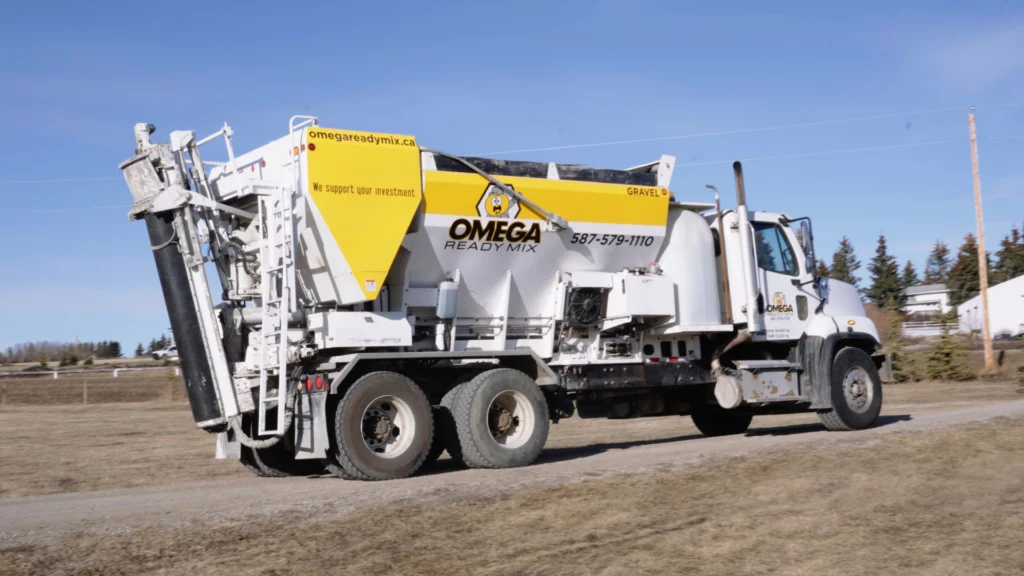
Volumetric Concrete Trucks for Remote Jobs
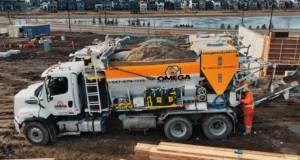
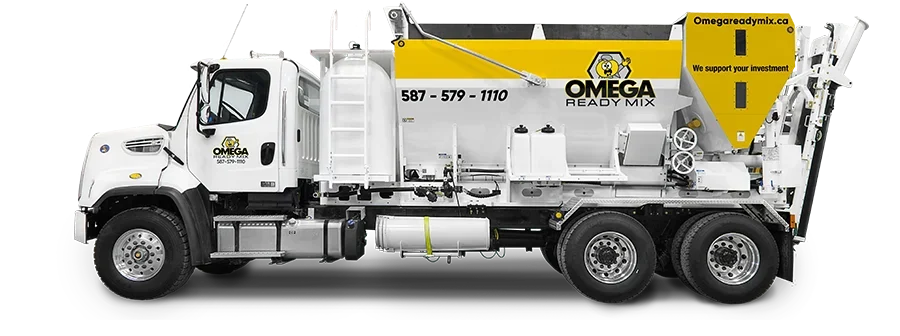
Volumetric concrete trucks are a game-changer for rural construction. These trucks mix concrete on-site, producing fresh material exactly when and where it’s needed.
Key advantages include:
- No risk of concrete setting during long travel
- Exact volume production—no waste
- Ideal for small to medium rural pours
For many acreage owners and farmers, volumetric delivery offers the perfect balance between flexibility and quality.
Small Load Concrete Options
Rural projects don’t always require full truckloads. Small load concrete services allow homeowners to pour pads, walkways, or repairs without paying for excess material. This approach significantly reduces cost overruns and material waste—especially in remote locations where returns aren’t practical.
Precast Concrete as an Alternative
In some rural applications, precast concrete elements offer superior efficiency. Precast stairs, pads, or retaining components can be installed quickly, minimize weather exposure, and reduce on-site labour demands. This option is particularly valuable when site access is limited or seasonal conditions are unpredictable.

Planning a Successful Rural Concrete Pour
Proper planning is the single biggest factor in successful concrete delivery for rural areas around Calgary. Because rural sites allow far less margin for error than city jobs, preparation directly affects cost, quality, and schedule.
Pre-Pour Site Preparation Checklist
Before the truck ever leaves the yard, rural project sites should be fully prepared. Based on field experience, the following checklist helps prevent delays and rejected loads:
- Clear and compacted access roads capable of supporting heavy trucks
- Confirmed turning radius and safe truck positioning area
- Subgrade properly compacted and level
- Forms secured, square, and braced
- Reinforcement (rebar or mesh) installed and inspected
- Weather protection materials staged if required
According to the Canadian Ready-Mixed Concrete Association (CRMCA), inadequate site readiness is one of the leading causes of wasted concrete and additional delivery charges on rural pours.
For smaller rural pours, many homeowners benefit from no minimum order concrete delivery in Calgary, which eliminates waste and avoids paying for excess material that isn’t needed on site.
Scheduling and Communication
Rural concrete delivery requires tighter coordination than urban projects. Travel distances mean there is little flexibility once a truck is dispatched. Clear communication between the owner, contractor, and dispatcher ensures:
- Concrete arrives at peak workability
- Crews are ready to place immediately
- Weather-related risks are minimized
Experienced rural suppliers often build contingency time into schedules to account for road conditions, equipment movement, or sudden weather changes—especially during spring and fall.
Estimating Volume Accurately
Over-ordering concrete on rural jobs can be expensive, while under-ordering can halt the entire project. Accurate volume calculations should account for:
- Variations in subgrade elevation
- Thicker edges on slabs and footings
- Spillage and consolidation losses
Using volumetric trucks or professional takeoffs significantly reduces the risk of miscalculation on remote projects.
Many of the advantages of on-site concrete mixing for Calgary contractors—including precise volume control and flexible scheduling—are even more valuable on rural and remote projects.
Access planning is essential, as Alberta’s rural road and transportation network includes gravel routes, seasonal restrictions, and weight-limited structures.
Cost Considerations for Rural Concrete Delivery
Pricing for rural and remote concrete delivery differs from city pours due to logistics, travel time, and site conditions. Understanding these factors helps owners budget accurately and avoid surprises.
Factors That Affect Pricing
- Distance from batch plant: Longer hauls increase fuel, time, and truck wear
- Load size: Partial loads cost more per cubic metre
- Waiting time: Delays on site may result in standby charges
- Mix design: Specialty mixes or winter additives add cost
Industry data shows rural concrete delivery can cost 10–30% more than urban delivery when access and distance are not properly planned.
How to Reduce Overall Project Costs
Smart planning can significantly offset rural delivery costs. Proven strategies include:
- Choosing volumetric delivery for smaller or uncertain pours
- Ensuring site readiness before dispatch
- Scheduling pours during favourable weather windows
- Combining multiple pours into a single delivery when possible
Safety, Quality, and Compliance in Remote Deliveries
Safety and quality standards do not change just because a project is remote. In fact, rural concrete delivery often demands stricter adherence to best practices due to increased risk.
Maintaining Concrete Quality Over Long Distances
Professional suppliers use a combination of:
- Optimized mix designs
- Temperature-controlled batching
- Approved admixtures
These measures ensure concrete meets CSA A23.1/A23.2 performance standards, even after extended travel times.
Safety Standards for Rural Job Sites
Remote sites often involve uneven ground, soft shoulders, and limited visibility. Safe rural delivery includes:
- Proper truck positioning and stabilization
- Clear communication between driver and crew
- Designated safe zones for workers
Following these protocols protects both personnel and equipment while maintaining consistent pour quality.

Real-World Examples of Rural Concrete Delivery Projects
Across Southern Alberta, rural concrete delivery supports a wide range of projects:
- Acreage foundation: A full foundation pour 60 km outside Calgary completed using adjusted mix design and coordinated scheduling
- Farm shop slab: Large monolithic slab placed using volumetric trucks to eliminate waste
- Equipment pad: Remote agricultural pad poured in winter with cold-weather protection measures
These examples highlight the importance of experience, flexibility, and proper equipment in rural environments.
Frequently Asked Questions About Rural Concrete Delivery
How far outside Calgary can concrete be delivered?
Most rural deliveries are feasible within a 100 km radius, depending on access, weather, and delivery method. Volumetric trucks extend this range significantly.
Is volumetric concrete better for rural projects?
For small to medium pours or uncertain volumes, volumetric concrete is often the best choice due to on-site mixing and zero waste.
Can concrete be poured in winter in remote areas?
Yes. With proper mix design, insulation, and temperature management, winter concrete pours are common in rural Alberta.
What access is required for a concrete truck?
A stable access road, adequate turning radius, and firm setup area are essential. Gravel reinforcement may be required in soft conditions.
How much advance notice is needed?
Rural pours typically require more notice than city jobs to allow for route planning, mix adjustments, and scheduling coordination.
Conclusion: Reliable Concrete Delivery—No Matter How Remote
Concrete delivery for rural areas around Calgary demands more than trucks and material—it requires experience, planning, and adaptability. By understanding the challenges and choosing the right delivery solution, rural homeowners and contractors can achieve durable, high-quality results without costly setbacks.
From acreages and farms to industrial sites beyond city limits, professional rural concrete delivery ensures your project starts on a solid foundation.
Get a Quote for Rural or Remote Concrete Delivery
If you’re planning a project outside Calgary, early coordination is key. Work with a concrete supplier that understands rural logistics, Alberta weather, and real-world construction demands.
Contact our team today to discuss your rural concrete needs, get accurate volume estimates, and schedule reliable delivery—no matter how remote your site may be.