Choosing the right concrete delivery method can make or break a project. Order too much, and you pay for wasted material. Order too little, and your crew is standing around while concrete sets and schedules slip. For homeowners, contractors, and project managers across Canada, the debate between a volumetric mixer vs traditional ready-mix isn’t just technical—it’s practical, financial, and strategic.
Both systems are proven, widely used, and capable of producing high-quality concrete. However, they work in very different ways and serve different project needs. In this in-depth guide, we’ll break down how each method works, compare quality, flexibility, and cost, and help you decide which option makes the most sense for your specific job.
Understanding Concrete Delivery Methods
What Is Traditional Ready-Mix Concrete?
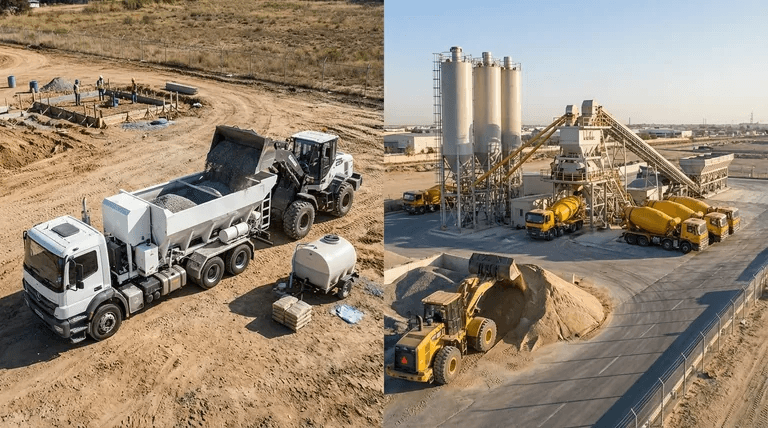
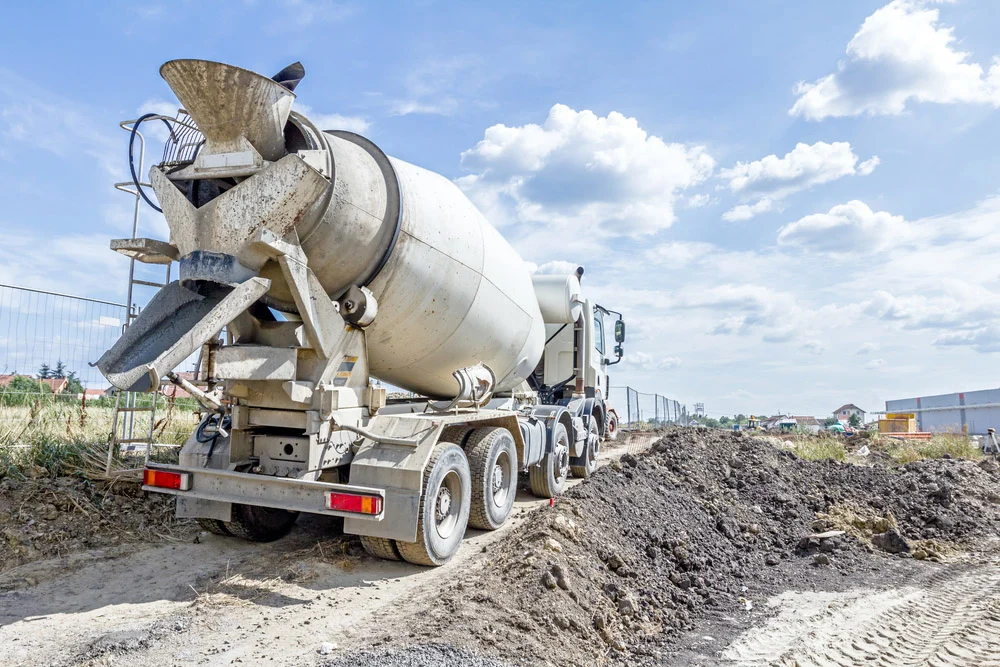
Traditional ready-mix concrete is produced at a central batching plant. Cement, aggregates, water, and admixtures are carefully proportioned using automated systems and mixed either fully at the plant or partially before being loaded into a rotating drum truck.
Once batched, the concrete is transported to the jobsite in a ready-mix truck, where the drum continues to rotate to keep the mix workable. This method has been the industry standard for decades and is commonly used for large commercial pours, infrastructure projects, and residential foundations.
- Concrete is batched off-site at a controlled facility
- Mix design is fixed before delivery
- Delivery timing is critical due to setting time
- Unused concrete is often returned or discarded
According to industry data, most ready-mix concrete must be placed within 90 minutes of batching to maintain quality, depending on weather conditions and admixtures. This makes logistics, traffic, and jobsite readiness crucial.
What Is a Volumetric Concrete Mixer?
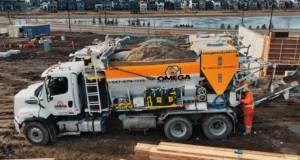
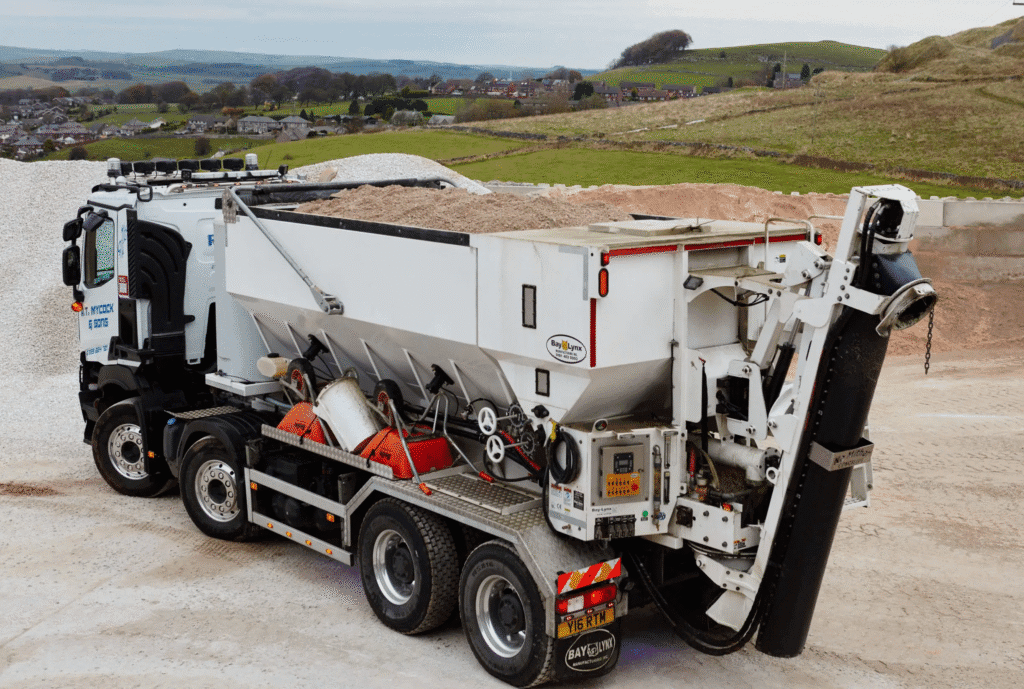
A volumetric concrete mixer operates more like a mobile batching plant. Instead of arriving with pre-mixed concrete, the truck carries raw materials—cement, sand, stone, water, and admixtures—in separate compartments.
Concrete is mixed fresh on-site, in real time, as it is discharged. The operator can adjust the mix design, slump, or strength during the pour, allowing for precise control and exact quantities.
- Raw materials stored separately on the truck
- Concrete mixed on demand at the jobsite
- Exact quantity production reduces waste
- Mix design can be adjusted mid-pour
Because the concrete is mixed only when needed, volumetric mixers eliminate concerns about premature setting during transport—an advantage that becomes especially valuable for remote locations, small pours, or unpredictable job conditions.
How Each System Works: Step-by-Step Comparison
Traditional Ready-Mix Production Process
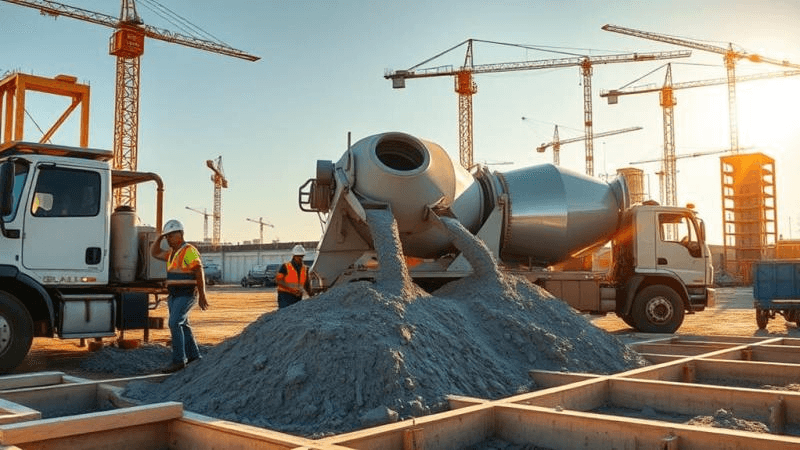
The ready-mix process begins at a batching plant, where materials are weighed and proportioned according to a specific mix design. Quality control technicians monitor moisture content, aggregate grading, and cement ratios to meet strength and performance requirements.
- Materials are batched at the plant
- Concrete is mixed and loaded into a drum truck
- The truck travels to the jobsite while rotating
- Concrete is discharged within a limited time window
While this system ensures consistency for large volumes, it offers little flexibility once the truck leaves the plant. Any changes in weather, site conditions, or quantity requirements can result in delays or waste.
Volumetric Mixer Production Process
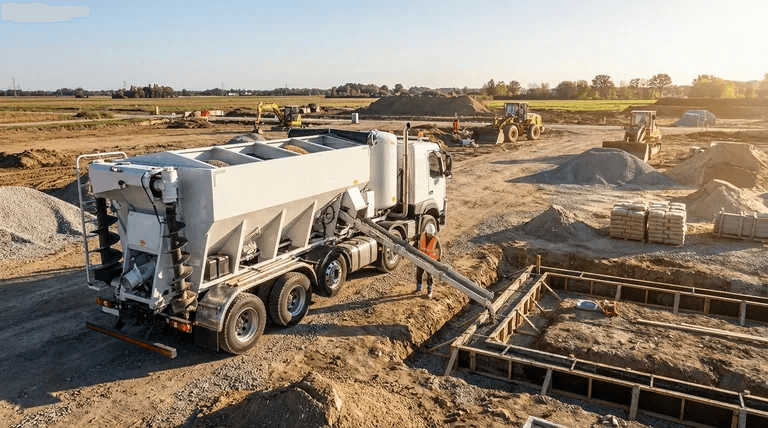
With volumetric mixing, batching happens on the truck itself. Each material is metered through an auger or conveyor system and combined only seconds before placement.
- Raw materials are loaded separately onto the truck
- The operator calibrates the mix design on-site
- Concrete is mixed continuously as needed
- Only the required amount is produced
This approach gives crews greater control. If a footing needs higher strength or a slab requires a wetter slump, adjustments can be made immediately without waiting for another delivery.
Quality & Performance Comparison
Consistency and Strength Control
Both methods are capable of producing high-strength, durable concrete when operated correctly. Traditional ready-mix benefits from centralized quality control and laboratory testing, which makes it ideal for large standardized pours.
Volumetric mixers, however, offer a different type of quality advantage: freshness. Because hydration begins moments before placement, the concrete is often more workable and predictable, especially in hot or cold conditions.
Studies from concrete industry associations show that on-site mixed concrete can achieve compressive strengths equal to or greater than plant-mixed concrete when properly calibrated and tested.
Flexibility of Mix Design
This is where the volumetric mixer vs traditional ready-mix comparison becomes clear. Ready-mix requires decisions upfront—strength, slump, additives—before the truck ever leaves the plant.
Volumetric mixers allow real-time adjustments, which is invaluable for:
- Projects with changing site conditions
- Multiple pours with different specifications
- Repair work and staged construction
As one senior concrete engineer noted, “The ability to fine-tune concrete on site significantly reduces risk and improves overall placement quality, especially for complex or variable projects.”
Cost Breakdown: Which Option Is More Cost-Effective?
Upfront Pricing Differences
At first glance, traditional ready-mix often appears cheaper on a per-cubic-metre basis. Large plants benefit from economies of scale, making them highly competitive for high-volume pours.
Volumetric concrete may have a higher unit price, but pricing is based on actual usage. You pay only for what you pour—no more, no less.
Hidden and Long-Term Costs
The true cost difference often shows up after the pour is finished. Returned concrete fees, disposal costs, and re-ordering delays can quickly erode the apparent savings of ready-mix.
- Returned concrete charges
- Labor downtime waiting for additional trucks
- Material waste and cleanup costs
For small to medium projects, these hidden costs frequently make volumetric mixing the more economical choice overall—a point many contractors discover after comparing total project expenses rather than just ticket price.
For smaller projects, this advantage is further amplified by the lack of minimum order requirements for concrete deliveries in Calgary, allowing contractors and homeowners to avoid paying for excess material they don’t use.
Waste, Sustainability & Environmental Impact
Concrete Waste Comparison
Concrete waste is one of the most overlooked cost and sustainability issues in construction. With traditional ready-mix, contractors often over-order to avoid running short, which frequently results in excess concrete that must be returned to the plant or discarded.
Returned concrete is not only expensive—it contributes to landfill waste and increases a project’s environmental footprint. Industry estimates suggest that up to 5–10% of ready-mix concrete can be wasted on small or irregular jobs due to over-ordering and timing constraints.
Volumetric mixers significantly reduce this issue by producing concrete only as needed. When the pour is finished, production simply stops—no leftover material, no disposal fees.
Sustainability Benefits of Volumetric Mixing
From a sustainability perspective, volumetric concrete aligns well with modern construction goals. Reduced waste means fewer raw materials consumed and less energy spent on disposal and reprocessing.
- Lower material waste and landfill impact
- Reduced fuel consumption from fewer return trips
- Improved resource efficiency for small and medium projects
For builders pursuing greener construction practices or working under environmental compliance requirements, volumetric mixing offers a clear advantage.
Construction industry data on concrete waste reduction and sustainable building practices highlights the growing importance of producing only what is needed on site.
Project Suitability: When to Use Each Option
Best Projects for Traditional Ready-Mix
Traditional ready-mix remains the best choice for large, continuous pours where consistency and volume are critical. These projects benefit from centralized batching and predictable delivery schedules.
- Large commercial slabs and foundations
- High-rise and infrastructure projects
- High-volume pours with fixed specifications
When the pour is planned well and quantities are well-defined, ready-mix delivers excellent efficiency and uniformity.
Best Projects for Volumetric Mixers
Volumetric mixers excel in projects that demand flexibility, precision, or adaptability. They are particularly effective when quantities are uncertain or conditions change during placement.
- Residential driveways and sidewalks
- Repairs, patching, and staged pours
- Remote or rural locations
- Precast and specialty concrete applications
For contractors handling multiple small pours in one day, volumetric mixing can dramatically improve productivity and reduce downtime.
This flexibility explains why some projects are best suited to on-site concrete mixing, especially when the volume is uncertain or specifications change during construction.
Scheduling, Logistics & Jobsite Efficiency
Time Sensitivity and Pour Windows
Ready-mix concrete is governed by strict time limits. Traffic delays, jobsite congestion, or weather issues can compromise workability and force crews to rush placement.
Volumetric mixers remove much of this pressure. Because concrete is mixed on demand, crews can work at a controlled pace without worrying about premature setting.
Jobsite Control and Productivity
From a project management standpoint, volumetric mixing offers superior jobsite control. Contractors can coordinate labor more effectively, reduce idle time, and adapt quickly to unexpected changes.
This flexibility is one of the main reasons many contractors view volumetric mixers not just as a delivery method, but as a productivity tool.
These benefits become even more important for transporting concrete to rural and remote areas around Calgary, where long transit times can affect the quality of ready-mixed concrete before it arrives at the construction site.
Side-by-Side Comparison: Volumetric Mixer vs Traditional Ready-Mix
| Feature | Volumetric Mixer | Traditional Ready-Mix |
|---|---|---|
| Mixing Location | On-site | Central batching plant |
| Flexibility | High (adjustable during pour) | Low (fixed before delivery) |
| Waste | Minimal | Moderate to high |
| Best Use | Small to medium, variable jobs | Large, continuous pours |
| Freshness | Mixed seconds before placement | Time-dependent |
Expert Insights & Industry Perspective
What Contractors Experience in the Field
Many experienced contractors report that volumetric mixers reduce stress on complex jobs. One Canadian site supervisor summarized it well:
“With volumetric concrete, we don’t guess quantities anymore. We pour exactly what we need, adjust on the fly, and move on to the next task without delays.”
At the same time, large-scale commercial contractors continue to rely on traditional ready-mix for its efficiency in high-volume applications.
Engineering and Quality Control Considerations
Both systems can meet CSA and ASTM standards when properly operated. Strength testing, calibration, and operator expertise are critical regardless of the method used.
Reputable suppliers invest heavily in quality control, trained operators, and modern equipment—factors that matter more than the delivery method itself.
Both delivery methods can meet CSA and ASTM concrete performance standards when proper batching, calibration, and testing procedures are followed.
Frequently Asked Questions (FAQ)
Is volumetric concrete as strong as ready-mix?
Yes. When properly calibrated and tested, volumetric concrete can achieve equal or greater compressive strength compared to traditional ready-mix.
Which option produces less waste?
Volumetric mixers typically produce far less waste because concrete is mixed only as needed.
Can volumetric mixers handle large pours?
They can, but traditional ready-mix is usually more efficient for very large, continuous pours.
Which is better in cold or hot weather?
Volumetric mixing offers better control in extreme temperatures because hydration begins at placement rather than during transport.
Final Verdict: Which Concrete Solution Is Right for You?
The decision between a volumetric mixer vs traditional ready-mix ultimately depends on your project size, complexity, and priorities. Ready-mix remains the backbone of large-scale construction, while volumetric mixing shines in flexibility, waste reduction, and jobsite efficiency.
Understanding these differences allows you to choose the right solution—not just for today’s pour, but for long-term project success.
Talk to a Concrete Expert Today
Whether you’re planning a small residential project or managing a large commercial build, working with an experienced concrete supplier makes all the difference.
Contact our team today to discuss your project, compare delivery options, and get expert guidance on the most efficient and cost-effective concrete solution for your needs.
Get a quote. Ask an expert. Build with confidence.