
The truck is backing in, the clock is running, and the contractor says “we always pour it.” But you sign the cheque and live with the slab for 30 years — so you have standing to say no. Here are the 10 pour-day conditions worth rejecting a Calgary concrete delivery over, and the 6 that on-site volumetric mixing removes before they start.
You don’t need to be a concrete finisher to catch a bad pour — you need to know which questions to ask at the chute and which numbers to check before the wheelbarrows move. This is written for the person paying for and accepting the delivery, not the crew placing it: most of these conditions are visible or measurable in the first ten minutes, and sending one truck back is almost always cheaper than repouring a slab that failed in its first Calgary winter.
1. Past the 2-hour CSA discharge clock
The single most important number on pour day is the clock. Under CSA A23.1:24, ready-mix concrete must be discharged within two hours (120 minutes) of water first contacting the cement at the plant, unless the producer has documented data and the spec allows an extension. That two-hour window is the Canadian standard — and it matters because the old 90-minute figure people still quote came from a previous US-side ASTM C94 provision that has since been dropped. If a driver tells you “you’ve got 90 minutes,” that’s an outdated number — the limit is two hours, and it’s a ceiling, not a target.
Why it exists: from the moment water hits cement, hydration starts and the concrete stiffens. Push past the window and you’re placing concrete that has already lost workability, which tempts everyone on site to add water to loosen it — and that’s where strength quietly disappears (see conditions 3 and 10). What to do at the chute: ask for the batch ticket, read the batch time, and note the current time.
If the gap is approaching two hours — especially after a long haul across the city or time stuck in Deerfoot or Stoney Trail traffic — you have a legitimate reason to question whether this load should be placed. The line: “What time was this batched, and how does that sit against the two-hour discharge limit?”
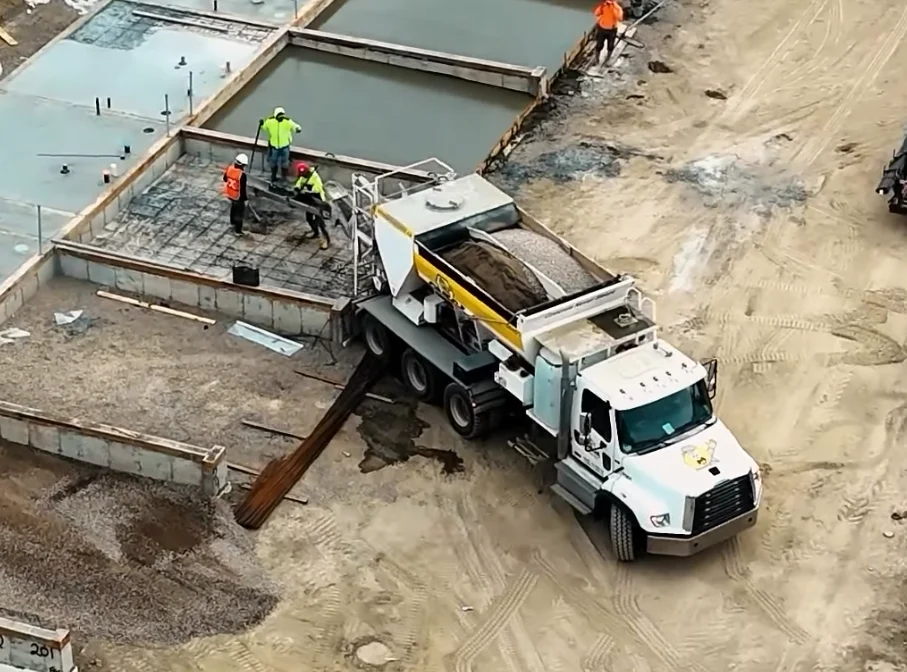
This is also the first condition a different delivery model handles structurally. With on-site volumetric mixing — a truck carrying sand, stone, cement, water and admixtures in separate compartments and combining them through an auger at the chute — the concrete is mixed on demand at your site, so the two-hour clock effectively starts in front of you, not at a plant across town. (Condition 10 totals up which of the ten this delivery model removes.)
Long waits are one of the fastest ways to push a load toward the discharge limit — see our blog on 7 pour-day logistics mistakes that trigger waiting-time fees on Calgary concrete trucks.
2. Air temperature below 5°C with no cold-weather provisions
Calgary’s pour season is short and its shoulder seasons are treacherous: a clear October morning can sit at 2°C at 8 a.m. CSA A23.1:24 §7 defines cold-weather concreting as the period when air temperature is at or below 5°C, or likely to fall to 5°C within 24 hours of placement.
Below that line, the producer and contractor must have cold-weather provisions in place: heated mixing water, insulation and protection after placement (blankets, hoarding, or heated enclosures), and a plan to keep the concrete warm long enough to gain strength.
This is non-negotiable because of the freezing point of fresh concrete. If concrete freezes before it reaches roughly 7 MPa of compressive strength, the water inside expands, disrupts the cement paste, and permanently caps the strength the slab can ever reach. That damage is invisible on day one and expensive on day 700. You may hear other figures thrown around, but 7 MPa is the early-frost-resistance value the standard works to.
What to verify on a cold morning: is there a cold-weather plan, and is it actually on site? Ask whether the mix water was heated, whether blankets or hoarding are staged, and how long the crew will keep the slab protected. “It’s 3 degrees — what’s the protection plan, and is it here right now?” If the answer is “we’ll pour it and hope,” that’s a condition to reject.
Acreage owners should be extra alert: a rural site west or north of the city can run several degrees colder than the downtown reading, open-lot wind pulls heat out of a fresh slab faster, and power for heated enclosures isn’t always close at hand. The forecast for your land isn’t the forecast for the airport.
3. Slump out of spec at the chute (and the driver wants to ‘fix it’)
Slump is the field measure of how workable the concrete is, tested per CSA A23.2-5C by packing fresh concrete into a standard cone, lifting it, and measuring how far it sags. Your mix was ordered to a target slump (commonly around 80 mm with a tolerance band) chosen to suit the placement: too stiff and it won’t consolidate around rebar or fill the forms.
Watch for concrete arriving outside its spec slump and someone deciding to “fix it” on the fly — almost always by adding water. That instinct is understandable, but uncontrolled water addition is the most common way a sound mix design gets quietly wrecked: every litre raises the water-to-cement ratio and lowers the strength and durability the slab will ever reach (this connects directly to condition 10). Slump that’s too high on arrival is also a flag — it can mean water or admixture was already added, or the mix isn’t what you ordered.
You’re not expected to run the cone test yourself — on a spec’d job that’s the technician’s role — but you can ask whether a slump test was done and how it landed. The line: “What slump did we order, and is this load testing inside the band?” If it’s out of spec and the fix offered is “we’ll add a bit of water to loosen it,” that’s your cue to ask how that squares with the mix design. Properly, slump is adjusted with admixtures within documented limits, not a garden hose at the curb.
This is the second condition where the delivery model changes the math: because a volumetric mixer meters water at the auger and mixes on demand, slump can be dialled in for the actual load on site, rather than locked in at a plant an hour earlier and “corrected” at the curb. That’s a process advantage in controlling slump — not a claim the concrete is stronger. Drum-mix ready-mix, batched to spec and delivered inside the clock, meets the same standards.
4. Air content below the spec band at the chute
If one durability number separates a Calgary slab that survives from one that flakes apart, it’s air content. Entrained air is a system of microscopic bubbles that act as pressure-relief chambers when water inside hardened concrete freezes and expands. Too little, and our hundred-plus freeze-thaw cycles a year will progressively spall and scale the surface. Exterior Calgary flatwork exposed to freezing and de-icing salts is typically specified in the C-2 exposure class, which calls for an air content of 5 to 8%.
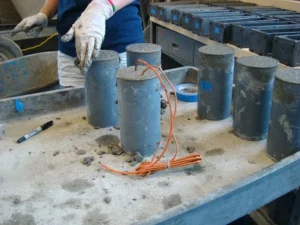
Air content is measured in the field per CSA A23.2-4C, using an air meter on a fresh sample at the point of discharge. This is the single test most worth confirming actually happened on an exterior residential pour, because low air is common, catastrophic for longevity, and — unlike a crack — invisible: a driveway can look flawless the day it’s finished and still be under-aired and doomed.
What to ask: “Is air content being tested at the chute, and is it in the 5-to-8% band?” If it reads low — say 3% — that’s a textbook reason to hold the load, because no amount of good finishing rescues concrete that lacks a freeze-thaw air-void system. Note too that pumping and over-finishing can knock air out between chute and slab, so the discharge test is the baseline.
Our companion piece — 8 air-entrainment questions Calgary homeowners don’t know to ask (but their driveway depends on) — goes deeper on what to say and what the readings mean; air is the condition most homeowners have never heard of and most need to understand.
5. Concrete temperature below 10°C at discharge in cold weather
Air temperature (condition 2) is the weather around the pour; concrete temperature is the material itself, and on a cold day they’re two different problems. CSA A23.1:24 sets minimum concrete temperatures at placement based on section thickness — and for the thinner sections typical of residential flatwork and modest foundation elements, the minimum in cold weather is on the order of 10°C.
Concrete that arrives too cold gains strength painfully slowly, stretching out how long it sits vulnerable to freezing before it reaches that 7 MPa safe point. Producers hit the minimum mostly by heating the mix water; the contractor then has to protect that warmth on the ground.
What to check: a fresh-concrete temperature reading should be part of the same field-testing pass as slump and air. “What’s the concrete temperature, and what’s our minimum for this pour?” If it’s arriving below the minimum with no plan to address it, you’re looking at a slow-curing slab racing the frost — a reasonable load to decline. Pair the reading with a quick check that the subgrade isn’t frozen, because warm concrete on frozen ground is its own way to lose the battle.
6. Heavy rain during placement
Rain falling onto fresh concrete during placement and finishing adds water to the top layer, raising the water-to-cement ratio exactly where you least want it — at the finished face you’ll walk and park on — and producing a weak, dusty, scale-prone surface skin even when the concrete underneath is sound. ACI 304R, the industry guide for placing concrete, treats protection from rain as a basic site requirement for this reason.
Calgary’s summer afternoons are famous for fast, heavy storms that build over the foothills with little warning, so a pour that started under blue sky can be taking on rain an hour later. The call isn’t always “all rain stops the pour” — a brief sprinkle on a slab already being protected can be managed — but heavy rain on unprotected fresh concrete, with no sheeting or shelter staged, is a legitimate reason to halt.
What to ask: “If that cell over the foothills opens up, what’s the plan to protect this surface?” If the crew has poly sheeting ready, the risk is managed; if the plan is to pour through a downpour and trowel the rainwater in, that’s a condition to stop on. This one applies regardless of delivery method — weather hits a volumetric pour and a drum-mix pour the same way.
7. Partial load (you ordered 5 yards, the truck shows 3.5)
This one is about getting what you paid for. With conventional drum-mix delivery, concrete is batched in fixed quantities at the plant and you’re typically billed for the full ordered volume, with short-load or minimum-load fees when you order less than the truck’s economical minimum. If your project needed 5 cubic yards and the truck arrives carrying noticeably less, you have both a quantity problem and a billing problem: will the pour come up short, and are you paying for 5 yards when only 3.5 showed up?
The batch ticket states the volume batched — read it. “The ticket says how many yards, and does that match what we ordered?” If the numbers don’t line up, that’s a conversation for before the chute opens, not after the slab is half-placed. A pour that runs out mid-slab isn’t a billing footnote — it can mean a cold joint at an unplanned location, a structural and durability compromise on flatwork.
This is the third condition where on-site volumetric mixing changes the structure of the problem. A volumetric mixer meters and mixes only the concrete you use and bills per cubic yard placed, with volume measured by the unit rather than estimated by the drum.
You don’t pay for yardage that didn’t come off the truck, and you’re far less likely to be stranded a half-yard short, because the same truck keeps mixing from its remaining material. That’s a delivery-and-billing advantage — produced to the same ASTM C685/C685M-25a and CSA A23.1 standards as plant-batched ready-mix, not a stronger or superior concrete.
8. The wrong mix design arrives
Concrete is not one product — it’s a recipe written to a spec. A garage slab, an exterior C-2 driveway, and a sulphate-resistant footing are three different mixes with different strengths, air requirements, cement types, and water-to-cement ratios. If you ordered a 32 MPa, C-2, air-entrained exterior mix and the ticket describes something else — lower strength, no air entrainment, a different exposure class — the right concrete didn’t show up, however good it looks coming down the chute.
This matters acutely around Calgary because of soil sulphates. Many sites carry sulphate-bearing soils, and a foundation or footing in contact with that soil needs a sulphate-resistant mix at the correct exposure class with the right cement type and water-to-cement ratio — a call driven by the geotechnical report. Getting the wrong mix into a sulphate exposure is a durability failure waiting years to surface. The point for pour day is narrow: confirm the load matches the spec your project was designed to.
How to catch it: the batch ticket lists strength, exposure class, and often cement type. Read it against your order. “The spec called for [X strength, X exposure class] — does this ticket match?” If not, stop. This is one of the cleaner rejections on the list, because there’s no on-site fix — you cannot turn an interior mix into a freeze-thaw-rated exterior mix at the curb.
The volumetric model has a quiet edge here too: because the materials ride in separate compartments and combine on demand, one truck can produce more than one mix design on the same visit — a footing mix and a slab mix — reducing the odds of being stuck with a single wrong batch. Again, a flexibility-of-delivery point, not a strength claim.
9. Visible segregation or bleeding at the chute
This is the condition you can read with your own eyes, no meter required. Segregation is when the heavy aggregate separates from the paste — rocks pooling and sliding out ahead of a soupy, sandy cream instead of a uniform, cohesive flow. Bleeding is excessive water rising to the surface and running off. A little bleed water is normal; sheets of it, or concrete coming apart into rock and slurry, is not.
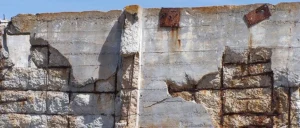
Both signal something is off — too much water, an unbalanced mix, or overlong agitation — and both predict a weaker, less durable result. Segregated concrete leaves rock-rich and paste-rich zones instead of a consistent matrix; heavy bleeding concentrates water and weak fines at the surface, the same scale-prone wear face that rain causes in condition 6. ACI 304R treats avoiding segregation as a core handling principle because it’s so directly tied to in-place quality.
What to do: watch the first material come down the chute. Healthy concrete moves as one cohesive, plastic, uniform mass. If the aggregate runs out ahead of the paste, or water sheets off the top, that’s a visible, defensible reason to question the load before it goes into your forms — “That doesn’t look uniform — is this segregating?” This applies to any delivery method; both volumetric and drum-mix concrete can segregate if the mix or handling is wrong.
10. The driver wants to add water at the site
Save this one for last because it ties the others together. Adding water at the site is the single most common — and most damaging — improvisation on a residential pour. Every additional litre beyond the mix design raises the water-to-cement ratio, the master dial for strength and durability: more water means weaker, more permeable, less frost-resistant concrete. Water added to chase workability (condition 3) or to loosen a load stiffened past the clock (condition 1) trades away the properties you’re paying for, invisibly.
There is a controlled, legitimate version. Under ASTM C94 §12.7 (the analogous ready-mix provision), a limited amount of water may be added once on site — but only if it brings the mix to, and does not exceed, the specified water-to-cement ratio and slump, properly documented, with the drum then mixed for the required revolutions. That’s a metered, within-spec adjustment — not a driver eyeballing a hose into the truck because the concrete “looks stiff.” The line to hold: “How much water is that, and does it keep us inside the spec’d water-to-cement ratio?” A documented top-up is fine; a shrug and a hose is a condition to stop on.
This is the clearest case of the delivery-model difference, so it’s the place to total it up. On a volumetric mixer, water is metered through the unit and the concrete is mixed on demand at the chute, so the “stiff load needs a splash” scenario is engineered out. On-site volumetric mixing structurally removes or sharply reduces roughly six of these ten triggers:
the discharge-clock pressure (1), the slump “fix” by curb-side water (3), the cold-arrival concrete-temperature gap when mixed hot on site (5), the partial-load billing trap (7), the wrong-single-batch risk (8), and uncontrolled site water (10). The other four — cold-weather protection on the ground (2), low entrained air (4), rain during placement (6), and segregation or bleeding (9) — depend on the mix, the weather, and the crew, and apply to a volumetric pour exactly as they do to a drum-mix pour.
Drum-mix ready-mix has its place and, batched correctly and delivered inside the clock, meets the same standards; the honest difference is a process and billing one, not a claim the concrete itself is stronger.
FAQ
Q1: Can a homeowner actually reject a concrete truck? Yes. You are the buyer and you sign for the delivery, which gives you standing to refuse a load that does not meet the conditions you ordered — the wrong mix design, concrete past the CSA discharge window, or material that fails its field tests for air or slump. The practical move is to flag the problem at the chute, ask for the batch ticket and test results, and decline before placement begins rather than after. Sending one truck back is almost always cheaper than repouring a slab that failed.
Q2: What is the CSA concrete discharge clock? Under CSA A23.1:24, ready-mix concrete must generally be discharged within two hours (120 minutes) of water first contacting the cement, unless the producer’s documented data and the project specification allow an extension. The two-hour figure is the current Canadian limit; the older 90-minute number some people still cite came from a previous US-side ASTM C94 provision that has since been dropped. Check the batch time on the ticket against the current time to see where your load sits.
Q3: What temperature is too cold for a concrete pour in Calgary? CSA A23.1:24 §7 defines cold-weather concreting as starting at or below 5°C air temperature (or when 5°C is likely within 24 hours of placement), at which point cold-weather provisions — heated mix water, insulation, and protection — are required. The bigger risk is the concrete freezing before it reaches about 7 MPa of strength, which permanently caps its performance. For typical residential sections, the minimum as-placed concrete temperature in cold weather is on the order of 10°C. Acreage sites often run colder than the city reading, so check your own location.
Q4: Does volumetric concrete still meet CSA standards? Yes. On-site volumetric mixing is produced to the same ASTM C685/C685M-25a and CSA A23.1 standards as plant-batched ready-mix — it is the same engineered concrete, made by combining the materials through an auger at your site instead of in a drum at a plant. The difference is the delivery model, not the concrete’s strength: water is metered at the chute, the mix is made on demand, and you are billed per cubic yard placed. It is accurate to call it equivalent in standard, not stronger.
Q5: When should I send a concrete truck back? Send it back when a condition can’t be fixed on site within spec: the wrong mix design arrived, the load is past the CSA discharge window with no documented extension, the air content tests below the specified band, the concrete temperature is below the cold-weather minimum with no protection plan, or the proposed “fix” is uncontrolled water at the curb. Visible segregation or sheeting bleed water, and heavy rain hitting unprotected concrete with no cover staged, are also valid reasons to halt. The test is whether the load can be brought into spec by a documented, legitimate method — if not, decline it.
Q6: Why is adding water at the site such a problem? Because every extra litre of water raises the water-to-cement ratio, which is the master control on strength and durability — more water means weaker, more permeable, more frost-prone concrete, and the damage is invisible until the slab underperforms. There is a controlled exception: ASTM C94 §12.7 permits a limited, documented, one-time water addition on site, but only if it stays within the specified water-to-cement ratio and slump and the drum is then properly remixed. A driver running a hose into the truck by eye is not that. Ask how much water and whether it keeps the load inside the spec’d ratio.
Sources
- CSA A23.1:24 (14th edition) — Concrete materials and methods of concrete construction; discharge clock, cold-weather concreting (§7), exposure classes and Table 14 — https://www.csagroup.org
- ASTM C685/C685M-25a — Standard Specification for Concrete Made by Volumetric Batching and Continuous Mixing — https://www.astm.org
- ASTM C94/C94M §12.7 — Standard Specification for Ready-Mixed Concrete; on-site water addition provisions — https://www.astm.org
- CSA A23.2-4C — Air content of plastic concrete by the pressure method (field test) — https://www.csagroup.org
- CSA A23.2-5C — Slump of plastic concrete (field test) — https://www.csagroup.org
- ACI 304R — Guide for Measuring, Mixing, Transporting, and Placing Concrete — https://www.concrete.org
- Concrete Alberta — Cold-weather concreting and placement bulletins — https://concretealberta.ca
About Omega Ready Mix
Omega Ready Mix (est. 2023) is a Calgary-area concrete supplier offering on-site volumetric mixing, producing concrete to the same ASTM C685/C685M-25a and CSA A23.1 standards as plant-batched ready-mix while metering water and yardage at the point of placement. Part of the Omega Group of concrete brands serving Calgary and surrounding communities.