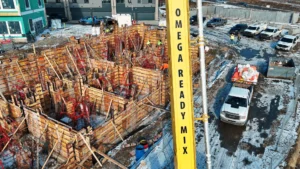
Volumetric and ready-mix (drum-mix) concrete are the same material held to the same standards — the difference is where it’s mixed. Ready mix is batched at a plant and trucked in a rotating drum; volumetric concrete is mixed on site, on demand, from dry materials carried in separate compartments. In Calgary, volumetric wins on small pours (under ~3–4 m³), acreage and rural sites 45+ minutes out, custom or changing mixes, and “pay only for what you pour” jobs. Drum-mix wins on large single-spec pours (roughly 8 m³ and up) on accessible city sites. Both meet CSA A23.1:24 and ASTM C685.
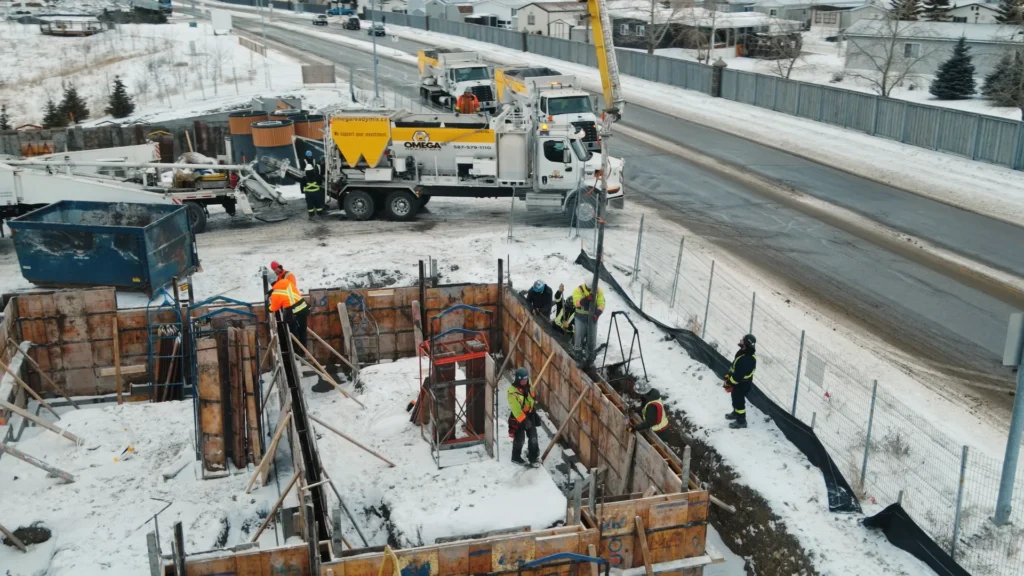
Why this page exists (and why the internet’s answer is wrong for Calgary)
Ask the internet “volumetric vs ready mix” and you’ll get one of two things: a comparison written for the UK market that frames the whole question around British accreditation (BS EN 206 / BS 8500) — rules that don’t govern a single pour in Alberta — or a manufacturer’s sales page insisting their method is always right.
Neither helps when you’re standing on a Calgary lot with a pour booked in three days and a real decision to make.
This is the honest version. We run Calgary’s only city-based volumetric concrete fleet, and the most useful thing we can tell you is when a drum truck is the better call — because for a big single-spec pour with good truck access, it usually is. The choice between the two methods is about job profile, not quality. Both produce real CSA A23.1:24 spec concrete. The right answer depends on volume, how many mixes you need, how far the site is, your schedule, and how exact your volume has to be.
What’s the actual difference between volumetric and ready-mix concrete?
Both produce concrete. Both meet the same Canadian standards. The difference is where the concrete is mixed and when the discharge clock starts.
Ready-mix (drum-mix, “barrel truck”) concrete
A ready-mix supplier batches concrete at a fixed plant — cement, sand, aggregate, water, and admixtures combined at the plant, loaded into a rotating drum, and driven to your site. The drum keeps it agitated so it doesn’t separate in transit.
- Governing standard: CSA A23.1:24 (and, in the US, ASTM C94 — written by the same ASTM subcommittee that wrote the volumetric standard).
- The binding constraint: CSA A23.1 sets a 2-hour (120-minute) discharge limit from initial batching to final placement. The clock starts at the plant the moment water meets cement.
Volumetric (mix-on-site, “mobile mixer”) concrete
A volumetric truck stores the dry materials — cement, sand, aggregate — in separate compartments on the truck. Water and admixtures sit in onboard tanks. Nothing is mixed until the truck arrives and the operator opens the auger; an onboard computer meters each material and the concrete is batched continuously as you pour.
- Governing standard: ASTM C685 / C685M, Standard Specification for Concrete Made by Volumetric Batching and Continuous Mixing (current edition C685/C685M-25a, with -24 also active). In Alberta the producing facility is also certified under CSA A23.1:24 §5.2.2.8 and Concrete Alberta’s Mobile Mixer Facility program.
- The binding constraint: essentially none from drive time. Because the concrete doesn’t exist until it’s batched on site, distance from any plant is irrelevant to compliance.
Both deliver real spec concrete to the same MPa, slump, and air-content targets. Both generate per-pour QC documentation. The functional difference is the clock.
The hidden physics: why the 2-hour clock decides most of this
Ready-mix concrete has one immutable property. The moment cement and water touch in the batch hopper, hydration — the reaction that turns wet concrete hard — begins. CSA A23.1 caps discharge at 2 hours from batching because beyond that the mix drifts: slump drops, workability degrades, and air content can wander outside the design window. (Alberta crews commonly add a field-practice air-content retest around the 90-minute mark for freeze-thaw exposure classes; treat that as a site convention, not a separate hard clock. Note that the US ready-mix standard, ASTM C94-21, actually removed its old 90-minute default in favour of a performance basis — the defensible Canadian anchor is the CSA 2-hour limit.)
For a pour 15 minutes from the plant, the clock is a non-issue. The truck arrives fresh, you pour, done.
For a pour 45–60 minutes out — Bearspaw, Springbank, Priddis, De Winton, Bragg Creek, rural Foothills — the math tightens. Add traffic. Add a 25°C-plus summer afternoon that accelerates hydration and slump loss. Add a Chinook wind raising plastic-shrinkage risk. Add a winter drive where the load sheds 8–15°C before it arrives.
Volumetric has none of this. The concrete is mixed at the truck on arrival, so a 60-minute drive to Bragg Creek delivers concrete exactly as fresh as a 5-minute drive across town. That single fact is what most of the “which method should I use” decision turns on.
When ready-mix (drum) is structurally the right call
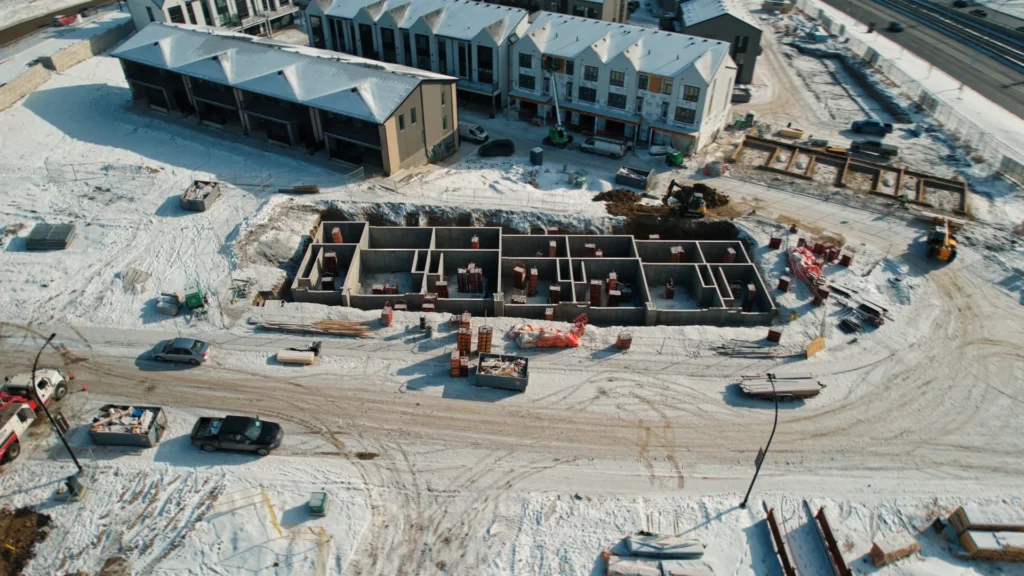
Drum-mix is built for high-throughput, single-spec, accessible-site pours:
- Single-spec pours of roughly 8 m³ and up. A 30 m³ slab at one mix design on a flat, truck-accessible site is hard to beat. One truck discharges fast and rolls out — maximum throughput per delivery.
- Production-builder slabs at scale. Identical-spec slabs poured across a multi-lot phase, day after day, fit drum’s plant-batching cadence.
- Mass concrete on commercial sites. Parkade slabs, warehouse floors, large infrastructure.
- Accessible flat sites inside city limits, where drive time isn’t a constraint.
- Pours with no spec change — one mix, one slump, one air content, start to finish.
Calgary has plenty of drum-mix capacity for this work — Lafarge Canada (Amrize), BURNCO, Inland Concrete, Heidelberg Materials, Rolling Mix Concrete, and others all run drum fleets across the region. For the right job, any of them can deliver compliant concrete at scale.
We’ll say it plainly: if you’ve got an 8 m³-plus single-spec pour with truck access on a clean site, a drum truck is the structural fit. We’ll tell you that, and point you to a drum supplier. The honesty of that recommendation is part of why builders trust the routing.
When volumetric is structurally the right call
Volumetric is built for the categories where drum’s plant-batching workflow breaks down.
Small pours
Drum-truck minimums in Calgary typically run 6–8 m³, and many smaller suppliers still won’t quote a clean small load without a short-load fee. Anything below the minimum means concrete batched at the plant that you never pour — returned, dumped, or charged. Volumetric mixes only what’s poured, metered to the quarter-yard. For a shed slab, a backyard pad, a garage approach, a 1–2 m³ patio, or a sidewalk repair, that’s the structural answer.
Multi-spec same-day jobs
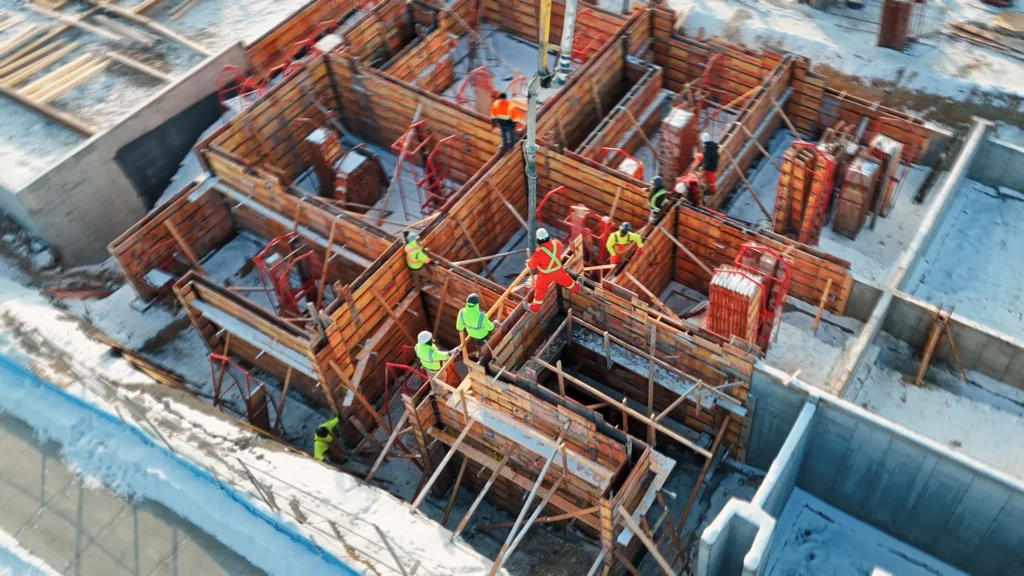
A typical Calgary single-family foundation day pours two specs: a footing mix and a wall mix (both Type HS for our sulphate soils). With drum that’s two trucks, two plant runs, two scheduling slots. Volumetric handles both from one truck — a roughly five-minute flush-and-switch between mix designs. Most residential foundation days are multi-spec days.
Acreage and rural builds
The discharge clock that doesn’t bother an inner-city pour quietly kills a rural one. A drum truck driving 45–60 minutes to a De Winton or Bragg Creek site is racing the 2-hour limit before it arrives; hot days and freeze-thaw exposure tighten it further. Anywhere 30-plus minutes from a Calgary plant is structurally volumetric territory.
Custom, decorative, and changing mixes
Stamped patios, integrally coloured driveways, exposed-aggregate walkways, fibre-reinforced slabs, repairs where the engineer is calling slump in real time. These often need slump or admixture changes mid-pour. Pre-batched drum concrete can’t tune mid-job; volumetric does it at the truck.
Variable or unknown volume
Footing pours where over-excavation changed the number, walls with unexpected step-downs, retaining walls where height varies. Drum has to commit to a volume at batch time. Volumetric mixes as you pour — you pay for what’s actually batched.
The decision tree (apply in order)
This is the same structural tree we use internally to route Calgary jobs. It holds regardless of who the supplier is.
- Under 3 m³? → Volumetric. Drum minimums make sub-load jobs impractical.
- 3–8 m³? → Volumetric (likely). The leftover-concrete math favours mix-on-site here.
- 8 m³+, single spec, simple accessible site? → Ready-mix (drum). Throughput per truck wins.
- 8 m³+, multi-spec same day? → Volumetric. One truck vs two or three.
- Acreage / 30+ minutes from a plant? → Volumetric. The discharge clock is the binding constraint.
- Variable or unknown volume? → Volumetric. Mix what you actually pour.
- Decorative / mid-pour mix change / integral colour / fibre? → Volumetric. Drum can’t tune mid-job.
If you reach the end and the answer is drum, that’s the structural answer for your job. The tree doesn’t sell — it reflects the physics and workflow of each method.
Is volumetric as strong and as compliant as plant concrete?
Short answer: yes — it meets the same ASTM C685 / CSA A23.1 standards as plant concrete, tested the same way. Volumetric isn’t a different, weaker product; it’s the same concrete mixed in a different place. ASTM C685 was written by the same ASTM subcommittee (C09.40) that maintains the ready-mix standard, C94. The hardened concrete is tested for strength by the same method — ASTM C39 cylinder breaks — against the same CSA A23.1:24 mix-design targets. In Alberta, the producing facility is independently certified under Concrete Alberta’s Mobile Mixer Facility Certification, which requires a Professional Engineer (P.Eng.) or Technologist (P.Tech.) inspection and is re-audited every three years. We cover the full proof in Is volumetric concrete as strong as plant concrete? (ASTM C685).
Ignore the British “ready mix is BSI-accredited, volumetric isn’t” framing you’ll see in foreign comparison articles. That’s a UK accreditation regime (BS EN 206 / BS 8500). It does not govern Alberta work, and it’s not the standard your engineer or inspector is checking against here.
How much does each cost in Calgary?
Cost is job-specific, so treat these as directional public ranges, not quotes:
- Calgary/Alberta delivered ready-mix, material only: roughly $180–$280 / m³ (Alberta aggregation ~$180–$215/m³; Calgary delivered ~$200–$280/m³). Independent Calgary contractor pricing for finished custom work runs higher, around $300–$400 / m³. (Sources: tnaconcrete.ca, 2024; Calgary-price aggregation.)
- Short-load economics (US figures, for context): a flat short-load fee of $150–$350 per delivery, or a per-yard premium of $15–$30/yd under the minimum — sometimes $40–$60/yd for the “missing” concrete. Typical drum minimums run 3–8 yd³. (Sources: Angi, HomeGuide.)
Why this matters: on a high-volume full load, drum is usually cheaper per cubic metre. But on the jobs volumetric is for — small, remote, custom — eliminating short-load fees, return charges, wasted over-ordered concrete, and failed long-haul loads often makes volumetric the cheaper total answer. We keep a published Calgary cost breakdown in our 2026 concrete price guide.
Who supplies volumetric concrete in Calgary?
Calgary has many drum-mix suppliers and one city-based volumetric operator — Omega Ready Mix, launched in 2023 and backed by the decades of cribbing-side foundation experience at sister company Omega 2000. The next-nearest volumetric supplier, Altamix, is in Didsbury — roughly 80 km north. For a Calgary lot owner pouring a 2 m³ patio, an acreage builder west of Cochrane, a renovation contractor needing a tight-access pour, or a builder running multi-spec foundation days, that geography is the whole point: a city-based fleet is at its home yard nightly for inspection, washdown, and the calibration the standard requires.
The category context: why most people have never heard of it
You’re not behind for not knowing volumetric existed. As Cemen Tech President and CEO Connor Deering put it:
“If you look at the universe of concrete being poured, 2%, maybe 2.5% of the concrete poured in the United States today is poured through a volumetric mixer. That’s really low… The biggest challenge to that, which is surprising given that the business is 57 years old, is education.” — Business Record, September 26, 2025 (source)
Most buyers’ mental menu is just two items: bags (small) or a big drum truck (big). Volumetric is the invisible middle — and for the right job, it’s the answer you didn’t know to ask for.
FAQ
Is volumetric concrete as strong as ready mix? Yes. Volumetric concrete meets the same ASTM C685 / CSA A23.1:24 standards as plant concrete and is tested by the same method (ASTM C39 cylinder breaks) against the same mix-design targets. It’s the same concrete, mixed on site rather than at a plant.
Is volumetric concrete cheaper than ready mix in Calgary? Per cubic metre on a large full load, drum-mix is usually cheaper. But for the small, remote, or custom jobs volumetric is built for, cutting short-load fees, return charges, and over-ordered waste often makes volumetric the lower total cost. Get a job-specific quote.
Does volumetric concrete pass inspection in Alberta? Yes. It’s governed by ASTM C685 and CSA A23.1:24 §5.2.2.8, and Alberta facilities are independently certified under Concrete Alberta’s Mobile Mixer Facility Certification (P.Eng./P.Tech. inspection, re-audited every three years). The volumetric batch ticket is typically more granular than a drum batch ticket.
What’s the smallest amount of volumetric concrete I can order? Volumetric is metered to the quarter-yard, with a small setup minimum around 0.25 m³ — far below the typical 6–8 m³ drum-truck minimum. You pay for what you pour.
When is ready-mix (drum) the better choice? Large single-spec pours of roughly 8 m³ and up, on accessible city sites with good truck access and no mid-pour spec changes. Throughput per truck wins there.
How far outside Calgary can volumetric concrete be delivered? There’s no spec-side limit on drive distance because the concrete is mixed on arrival. A city-based fleet practically serves the full acreage corridor — Bearspaw, Springbank, Priddis, De Winton, Bragg Creek, Foothills MD, Rocky View County — plus farther rural sites with appropriate lead time.
Does volumetric concrete have the 2-hour discharge clock? No. The CSA A23.1 2-hour limit applies to drum-mix because the cement starts hydrating at the plant. Volumetric keeps materials separate until the auger opens on site, so there’s no time-from-batching clock to race.
Can volumetric batch Type HS sulphate-resistant concrete for Calgary foundations? Yes. Calgary’s S-2 sulphate soils call for Type HS / HSb cement, and volumetric trucks routinely batch sulphate-resistant mixes to the CSA A23.1:24 durability targets for our exposure classes.