A comprehensive pricing guide for residential concrete in Calgary, Alberta.
If you received a concrete quote in Calgary in 2026, expect to pay between $6 and $12 per square foot for standard flatwork (materials, labor, and finishing included). The exact number depends on your project size, site access, reinforcement choice, and finish type. A typical 400 sq ft driveway runs $4,000-$6,000 installed. Anything significantly outside these ranges deserves a second look — or a second quote.
What Does Concrete Actually Cost Per Square Foot in Calgary?
Nationally, installed concrete flatwork ranges from $5 to $18 per square foot. In Calgary, the typical range is tighter: $6 to $12 per square foot for standard residential projects like driveways, patios, and garage pads.
Here is how those dollars break down:
| Cost Component | Per Square Foot |
|---|---|
| Materials (concrete, rebar, gravel base) | $1.50 – $2.00 |
| Labor (forming, pouring, finishing) | $2.50 – $5.00 |
| Overhead and profit | $1.00 – $3.00 |
| Total installed | $6.00 – $12.00 |
The lower end applies to straightforward, accessible slabs with a broom finish. The higher end reflects stamped or exposed aggregate finishes, difficult site access, or smaller projects where setup costs get spread across fewer square feet.
For raw concrete material only, Calgary homeowners can expect to pay $200 to $280 per cubic metre delivered ($120 to $165 per cubic yard). That is the truck showing up with concrete — it does not include forming, placing, finishing, or any prep work.
How Much Do Typical Calgary Projects Cost in 2026?
| Project | Size (sq ft) | Concrete Needed | Estimated Cost (Installed) |
|---|---|---|---|
| Single-car driveway | 300 – 400 | 3 – 5 cubic yards | $3,000 – $5,500 |
| Double-car driveway | 500 – 700 | 6 – 9 cubic yards | $5,000 – $9,000 |
| Patio | 150 – 300 | 2 – 4 cubic yards | $1,800 – $4,000 |
| Garage pad | 200 – 400 | 3 – 5 cubic yards | $2,500 – $5,500 |
| Sidewalk (50 ft) | 150 – 200 | 1.5 – 3 cubic yards | $1,200 – $2,800 |
| Basement floor (average) | 600 – 900 | 5 – 8 cubic yards | $4,500 – $9,000 |
These estimates assume a standard 4-inch slab on a properly prepped gravel base with broom finish. Stamped concrete adds $3 to $6 per square foot. Exposed aggregate adds $2 to $4 per square foot.
Why Are 2026 Prices Higher Than Last Year?
Concrete costs in Calgary have risen 3 to 7 percent from 2025, driven by several factors:
- Rebar and steel prices are up 5 to 10 percent due to ongoing tariff pressures on imported steel
- Fuel surcharges on delivery trucks have increased with diesel costs
- Labor shortages in the Calgary trades market continue to push wages upward
- Cement production costs have risen with new carbon pricing adjustments in Alberta
A project that cost $5,000 in 2025 may now run $5,200 to $5,350 in 2026. This is not gouging — it reflects real supply chain pressures across the industry.
What Are Short-Load Fees and How Do They Affect My Quote?
Here is where many homeowners get an unwelcome surprise. Traditional drum-mixer concrete trucks are designed to carry 8 to 10 cubic yards. If you need less than 5 yards — which covers most patios, sidewalks, and small pads — you will likely face a short-load fee of $40 to $60 per cubic yard.
That means ordering 3 yards of concrete could come with an extra $120 to $180 in fees before the truck even arrives. On a small project, short-load fees can increase your material cost by 25 to 40 percent.
Data on construction cost increases and project overruns aligns with research from McKinsey & Company, which highlights how labor shortages and supply chain pressures continue to impact pricing across North America.
Additional costs that may appear on your quote:
| Fee | Typical Cost |
|---|---|
| Short-load fee (under 5 yards) | $40 – $60 per yard |
| Pump truck | $600 – $900 |
| Saturday/overtime delivery | $100 – $200 |
| Extra time on site (over 90 min) | $2 – $4 per minute |
| Environmental/fuel surcharge | $30 – $75 |
Why Volumetric Concrete Eliminates These Hidden Costs
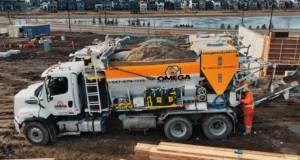
Omega Ready Mix uses volumetric concrete trucks that mix your concrete fresh on-site, one yard at a time. You pay only for what you pour — not for what the truck can carry. There are no short-load fees, no waste charges, and no ticking clock forcing your crew to rush.
For a 3-yard patio pour, this can save you $150 or more compared to a traditional drum-mixer delivery. And because the mix is produced on-site, there is zero waste to pay for.
What Are the Red Flags in a Concrete Quote?
After reviewing hundreds of forum posts from Calgary homeowners, these warning signs come up repeatedly:
- No line-item breakdown. If your quote is a single lump sum with no detail, you cannot verify what you are paying for. A good quote separates materials, labor, gravel base prep, reinforcement, finishing, and any fees.
- Verbal-only quotes. “I’ll do it for five grand” said in your driveway is not a quote. It is a guess that can change the moment work begins. Always get it in writing.
- Large deposit demands. Asking for more than 10 to 15 percent upfront — or the full amount before work starts — is a major red flag. Reputable Calgary contractors typically ask for a small deposit with the balance due on completion.
- No mention of mix design. Your quote should specify the PSI rating (typically 32 MPa / 4,500 PSI for driveways in Calgary), slump, and whether air entrainment is included. If the contractor cannot tell you what mix they are ordering, that is a problem.
- Suspiciously low pricing. A quote that is 30 percent below competitors usually means corners will be cut — thinner slab, no reinforcement, inadequate base prep, or poor finishing.
How Do I Compare Quotes Fairly?
When you have two or three quotes in hand, line them up against this checklist:
- Are they quoting the same slab thickness?
- Is the gravel base prep included or extra?
- What reinforcement is specified (rebar, wire mesh, fiber, or none)?
- What finish is included (broom, stamped, exposed aggregate)?
- Are delivery fees, pump fees, and short-load fees listed?
- Is there a warranty or guarantee on the work?
- Does the quote include control joint cutting?
- Is the timeline specified?
The cheapest quote is rarely the best value. The best quote is the one that clearly shows what you are getting and what you are paying for each component.
How Can I Save Money on My Calgary Concrete Project?
Here are practical ways to reduce costs without sacrificing quality:
- Time your project for shoulder season. May and September are less busy than June through August. You may get better pricing and faster scheduling.
- Prep the site yourself. Removing old concrete, clearing vegetation, and ensuring truck access can save $300 to $800 in labor.
- Choose broom finish. Stamped and exposed aggregate look great but add $2 to $6 per square foot.
- Use volumetric delivery. For projects under 5 yards, volumetric concrete from Omega Ready Mix eliminates short-load fees and waste charges, saving $150 to $300 or more on smaller pours.
- Bundle projects. If you need a driveway and a patio, doing them together saves on mobilization costs and may get you a volume discount.

Frequently Asked Questions
How much concrete do I need for a 20×20 patio?
A 20×20 foot patio at 4 inches thick requires approximately 5 cubic yards of concrete. At Calgary 2026 rates, the material delivery alone runs $600 to $825, with total installed cost of $2,400 to $4,800 depending on finish and access.
Why is my concrete quote so much higher than online estimates?
Most online calculators use U.S. national averages and do not account for Calgary’s climate requirements (air-entrained concrete, deeper frost footings), higher labor costs, or delivery fees. Alberta pricing runs 10 to 20 percent above U.S. national averages.
Should I get more than one quote?
Yes. Get at least three written quotes for any project over $2,000. Compare them using the checklist above to ensure you are evaluating the same scope of work.
Is it cheaper to pour concrete myself?
DIY can save on labor, but concrete materials alone cost $150 to $200 per yard delivered — and bagged concrete from a hardware store runs $400 or more per cubic yard. For most projects, professional delivery is actually cheaper than bags, and the results are far more reliable.
What PSI concrete do I need in Calgary?
For driveways and exterior slabs in Calgary, you need a minimum of 32 MPa (approximately 4,500 PSI) with 5 to 7 percent air entrainment to withstand freeze-thaw cycles. Patios and sidewalks can use 25 to 28 MPa (3,500 to 4,000 PSI).
Do I need a permit for a concrete driveway in Calgary?
In most cases, replacing an existing driveway on the same footprint does not require a permit. However, new driveways, driveway extensions, or any work that changes drainage patterns typically requires a development permit from the City of Calgary. Check with 311 before starting.
How long does a concrete driveway last in Calgary?
A properly installed and maintained concrete driveway in Calgary lasts 25 to 30 years. Annual sealing, prompt crack repair, and avoiding de-icing salts in the first winter all extend the lifespan.
When is the best time to pour concrete in Calgary?
The ideal window is May through September, when daytime temperatures consistently stay above 10 degrees Celsius. Pouring in temperatures below 5 degrees Celsius requires expensive cold-weather precautions including heated blankets and accelerated mix designs.
Get Your Free Concrete Quote
Stop guessing whether your quote is fair. Omega Ready Mix provides transparent, per-yard pricing with no short-load fees, no waste charges, and no hidden costs. Our volumetric trucks mix your concrete fresh on-site — you pay only for what you use.
Get a free quote from Omega Ready Mix — call (587) 579-1110 or email [email protected]
Omega Ready Mix | 5065 13 St SE 135, Calgary, AB T2G 5M8 | Available 24/7
Schema Markup Notes
Recommended schema types for this page:
- FAQPage schema for the FAQ section (8 question-answer pairs)
- Article schema with
datePublished: 2026-04-09anddateModified: 2026-04-09 - LocalBusiness schema for Omega Ready Mix (name, address, phone, email, areaServed: Calgary)
- Table structured data for the project cost table and cost breakdown table
- HowTo schema for the “How Do I Compare Quotes Fairly?” checklist section
- Use
speakableproperty on the answer capsule paragraph for voice search optimization