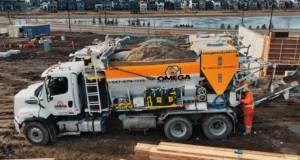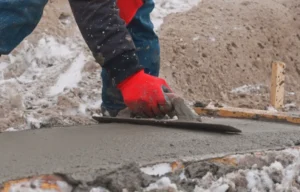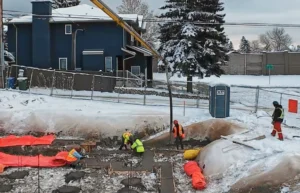
Planning a concrete pour for a home in Springbank or a commercial build outside Chestermere? Getting the slab where it needs to go is often the trickiest part, especially when you’re miles from the nearest city centre. That’s where concrete pumping comes in.
This guide breaks down what you’ll actually pay for concrete pumping services across rural Alberta, from the Rocky View County to areas like Lloydminster. As a trusted local provider, OmegaReadyMix has seen the variables that impact your final bill, and we’re here to help you budget smartly.
Average Concrete Pumping Costs
In rural Alberta, concrete pumping is rarely a flat-rate service. Your cost is built from several components, creating a final price that reflects your project’s unique demands. Understanding these pieces helps you interpret quotes accurately.
Most contractors will provide a total project quote, but breaking it down into its parts reveals what you’re really paying for.
Cost per Cubic Yard
The most straightforward pricing model charges per cubic yard of concrete pumped. In rural areas, this rate typically starts at $25 to $40 per cubic yard.
This covers the basic service of moving the concrete from the truck to your formwork. It’s a clean, simple way to price larger volume jobs where the pump will be busy for several hours.
Hourly Rates by Pump Type
For projects with a slower pour or uncertain timing, hourly rates are common. A standard line pump might run $150 to $250 per hour, while a large boom pump can command $300 to $500 per hour.
The clock usually starts when the pump arrives on site and stops after the final cleanup. Be aware that most companies enforce a minimum charge, often 2 to 4 hours, even if your job takes less time.
Minimum Charges and Setup Fees
Don’t overlook the minimum charge, which is the baseline cost for bringing any pump to your site. For a rural call in areas like near Highway 22X, expect a minimum of $300 to $600.
This fee accounts for the travel, setup, and basic operation. A separate setup or mobilization fee of $100 to $300 may also apply, especially for boom pumps that require more time to position and stabilize.
Pump Types and Their Costs
Not all concrete pumps are the same. The type of pump your job requires is the single biggest factor influencing your cost. Choosing the right one balances capability with budget.
Matching the pump to your site’s access and reach requirements is the key to cost control.

Boom Pump Costs
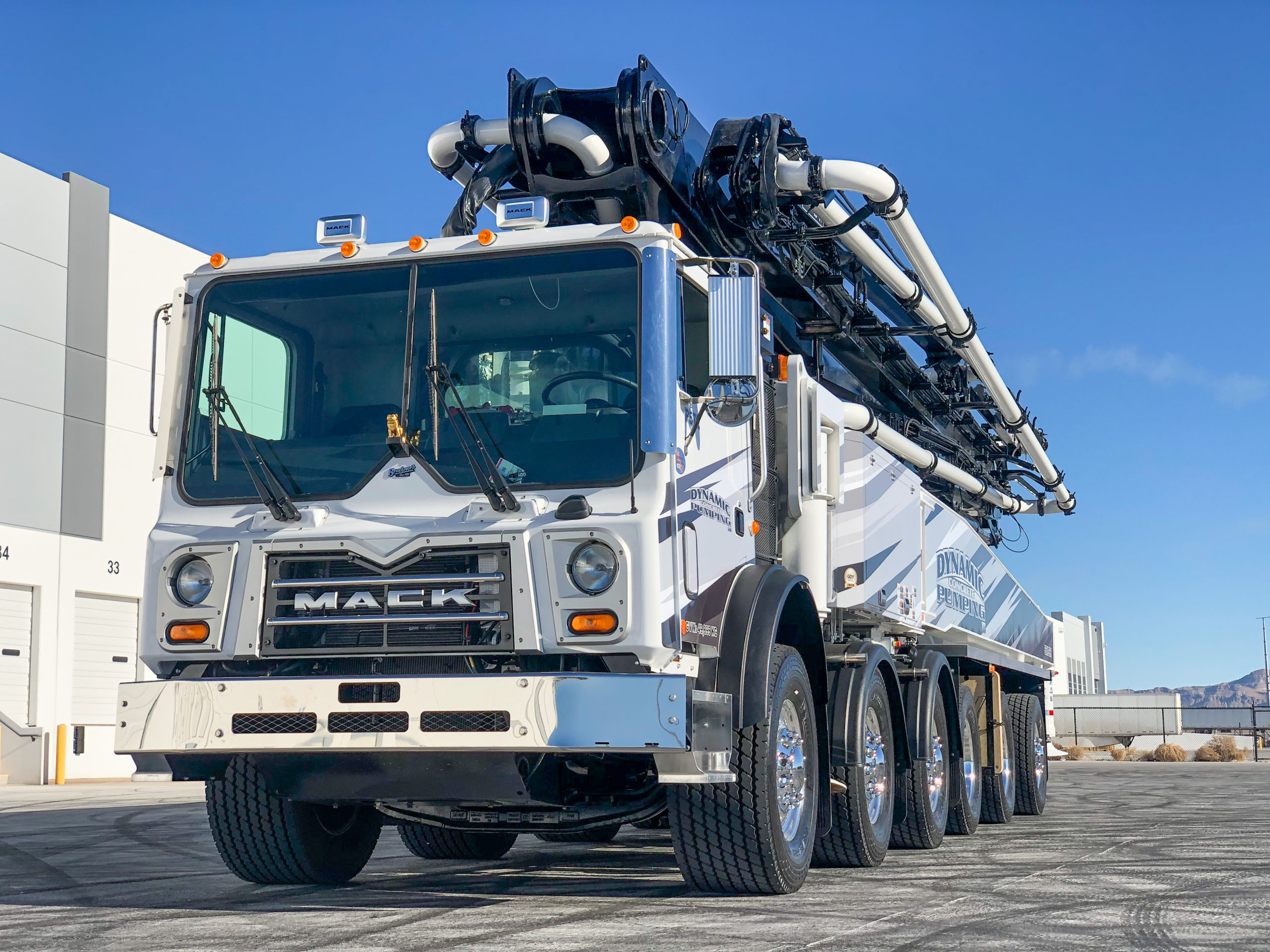
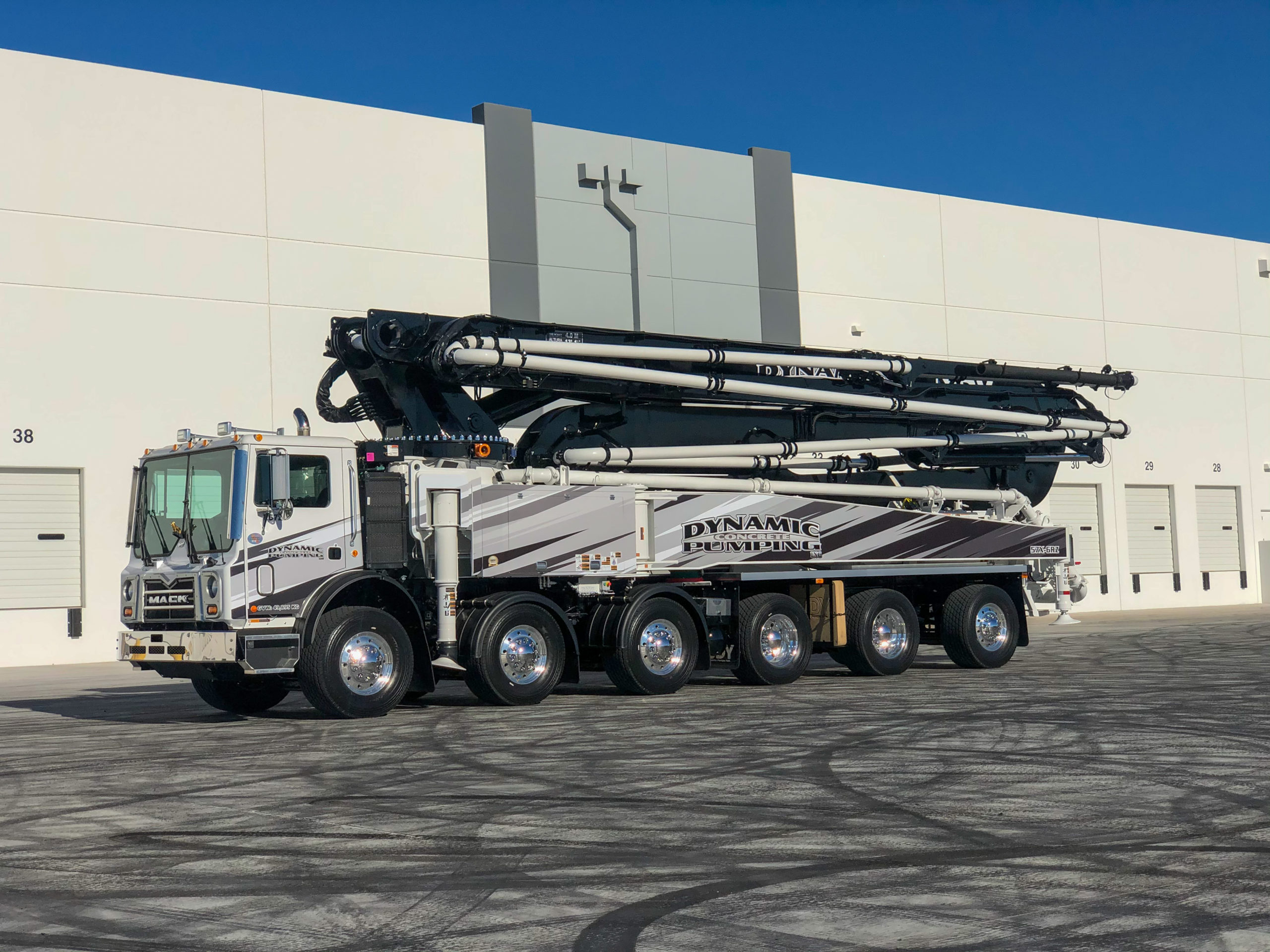
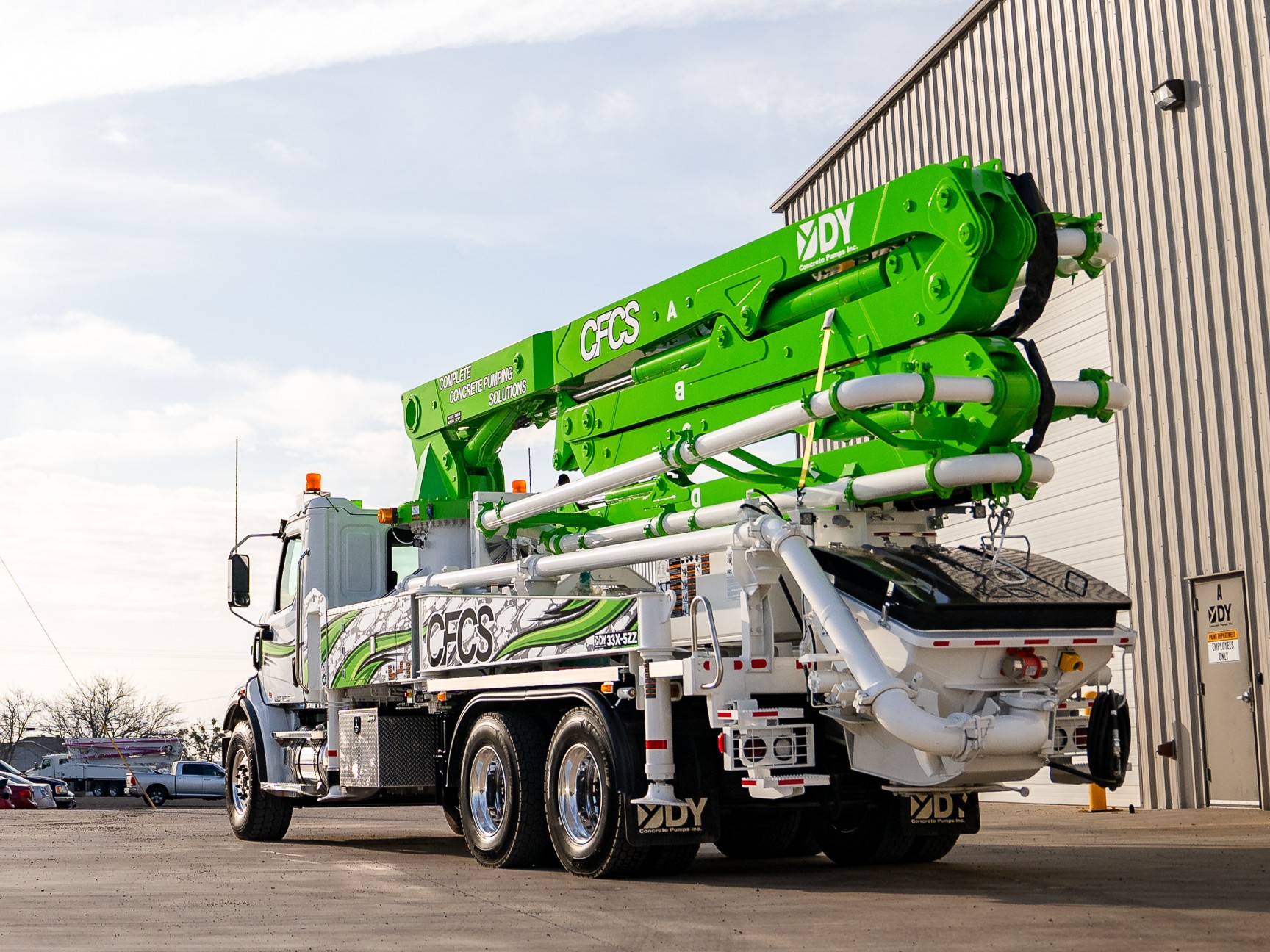
Boom pumps are the aerial workhorses, using a remote-controlled robotic arm to place concrete with precision. They are essential for foundations, elevated slabs, or sites with major obstacles.
For a rural job, renting a medium-sized boom pump (20-30 meters) typically costs $450 to $750 for the first 4 hours, plus an hourly rate thereafter. Longer booms (over 30m) command a significant premium due to their complexity.
Line Pump Costs
Also known as trailer-mounted pumps, these use flexible hoses snaked to the pour location. They are perfect for tight access, backyard projects, or smaller volumes.
You’ll generally pay less for a line pump, with rates starting around $300 for a 2-3 hour minimum. Their lower cost makes them the go-to choice for most rural residential projects like driveways or garden slabs.
Trailer-Mounted Pump Costs
This category often overlaps with line pumps. The key is they are towed to site, offering great flexibility. Costs are similar to standard line pumps, but ensure your quote includes a capable vehicle for towing if the provider isn’t delivering it.
For a DIY rental, you might see daily rates of $400 to $800, but operator costs are extra and absolutely necessary for safe, effective use.
Specialty Pump Costs
For extreme conditions—like very high lifts, long horizontal distances over 500 feet, or pumping mixes with large aggregate—specialty pumps are used. This includes high-pressure pumps or separate placing booms.
Expect costs to jump 50-100% above standard boom pump rates. These are for complex commercial or industrial projects and are rarely needed for typical rural builds.
To better understand safety practices when operating heavy equipment, you can review official guidelines from Canadian Centre for Occupational Health and Safety
Factors Affecting Concrete Pumping Prices in Rural Alberta
Rural projects introduce variables that city jobs don’t face. The quote you get for a acreage near Balzac will differ from one for a site right in Calgary, even for the same volume.
Knowing these factors lets you ask the right questions and avoid surprise charges on your invoice.
Project Size and Volume
Larger volumes generally reduce the cost per cubic yard, as the fixed setup costs are spread over more material. A 30-yard foundation pour will have a better effective rate than a 5-yard patio.
Conversely, very small pours (under 5 yards) often hit the minimum charge hard, making pumping seem expensive per yard. Sometimes, wheelbarrowing might be more economical for tiny jobs.
Distance and Travel Surcharges
This is the major rural differentiator. Every contractor has a “free” travel radius, often 50-80 km from their depot. Beyond that, a per-kilometer travel surcharge applies.
For a site 150 km from Red Deer or the pump operator’s base, you could see a travel fee of $200 to $400 added to the bill. Always confirm the depot location and the travel policy upfront.
Fuel and Access Fees
Long rural drives mean significant fuel costs, which are frequently passed on as a fuel surcharge, especially with volatile diesel prices. An extra 10-15% on the total is not uncommon.
Access fees apply if your site requires special effort—navigating a long, muddy lane off a grid road near Carstairs, for instance. If a pump truck needs a escort or has to travel on unpaved roads, expect an extra charge.

Site Preparation and Delays
A pump needs stable, level ground to set up. If the crew arrives and has to spend an hour grading a spot or moving materials, that’s typically billable time at their hourly rate.
Delays caused by your site—like a ready-mix truck being late, forms not being ready, or weather halting the pour—also usually incur “wait time” charges. The pump and operator are on the clock.
Washout and Cleanup Charges
After the pour, the pump’s lines and hopper must be thoroughly cleaned with water. In rural areas, managing this wastewater (slurry) is a regulated task.
Some companies include a standard washout in their minimum fee. Others charge extra, particularly if a special containment or disposal method is needed to protect the local environment.
Cost Breakdown by Project Size
Let’s put these numbers into context with real-world examples. These ranges assume a site within a 100km radius of a major centre like Calgary or Edmonton, with standard access.
Remember, travel fees can significantly increase these totals for remote locations.
Small Jobs (1-5 Cubic Yards)
Think of a backyard shed slab, a small patio, or a set of steps. A line pump is almost always used here. Your total cost will likely be the minimum charge.
Expect to pay between $300 and $600 all-in. This makes the effective cost per yard high ($60-$120/yard), but it’s the price for precision and labour savings on a small scale.
Medium Jobs (6-15 Cubic Yards)
This covers most residential driveways, larger patios, or garage floors. A line pump or a small boom pump might be used, depending on access.
Costs range from $600 to $1,500. The per-yard rate becomes more favourable, generally landing in the $30 to $50 range as the fixed costs are distributed.
Large Jobs (16+ Cubic Yards)
This is the realm of foundations, commercial slabs, and entire farm shop floors. A boom pump is standard for speed and reach.
For a 30-yard foundation, budget $1,200 to $2,500+ for pumping. At this scale, the per-yard cost often hits the lower end of the scale, around $25 to $35 per cubic yard.
Rental vs. Purchase Costs
For contractors or farmers with frequent pours, the question of renting versus buying a pump arises. For the vast majority of rural homeowners, rental through a service is the only practical choice.
The logistics and expertise required to operate a pump make purchasing a major commitment.
Concrete Pump Truck Rental Rates
Daily and weekly rentals are available for operator-included pumps. A line pump with an operator might cost $800 to $1,500 per day.
A boom pump with an operator is a much larger investment, typically $1,500 to $3,000+ per day. These rates include the machine, the expert operator, fuel, and insurance.
New and Used Pump Prices
Purchasing is a capital investment for serious volume. A new, small trailer-mounted line pump can start around $80,000.
A new truck-mounted boom pump is a different league, easily ranging from $300,000 to over $600,000. Used pumps offer savings but come with maintenance risks and are still a six-figure investment for a decent boom truck.
Additional Fees and Extras
The base quote tells part of the story. To get the full picture, you must ask about potential add-ons. A reputable company like OmegaReadyMix will outline these clearly from the start.
Transparency on extras is the hallmark of a trustworthy contractor.
Hose and Line Extension Costs
Pumps come with a standard hose length (usually 300-400 feet for a line pump). If your pour location is farther, you’ll need extensions.
Extra hose can cost $5 to $15 per foot, added to your rental or service fee. For long runs on an acreage, this can add hundreds of dollars, so accurate measurement is crucial.
Operator and Helper Rates
When you rent just the pump, you must also hire a certified operator. Operator rates are $50 to $80 per hour, often with a daily minimum.
For large pours, a helper to manage the hose nozzle may also be needed, adding another $30-$50 per hour. Most full-service quotes bundle this labour in.
Regional Pricing in Alberta (Lloydminster, Red Deer, etc.)
Supply and demand affect pricing. In the busy industrial corridor around Fort McMurray, prices are higher due to demand. In agricultural regions during off-seasons, you may find more competitive rates.
Areas further from major equipment depots (like parts of rural Southern Alberta near the U.S. border) may see higher travel fees that influence the total more than the hourly rate itself.
Tips to Reduce Concrete Pumping Costs
A little preparation on your end can lead to significant savings and a smoother pour. It’s about respecting the crew’s time and ensuring the site is ready for efficient work.
These steps demonstrate you’re an organized client, which any contractor appreciates.
Site Preparation Best Practices
Ensure the pump has a clear, level, and stable area to set up, free of debris and standing water. Mark underground utilities clearly.
Have all forms fully built, braced, and ready. The pump should be able to reach most of the pour area without needing excessive hose extensions or repositioning mid-pour.
A well-prepared site means the pump crew can start work immediately, avoiding costly setup and delay charges.
Scheduling and Timing Advice
Schedule your concrete delivery and pump for the same, confirmed time. A waiting pump or a waiting concrete truck burns money.
Consider booking during the contractor’s slower periods, if possible. Avoid the peak spring and summer rush where demand—and sometimes pricing—is highest.
For very remote sites, see if you can coordinate with a neighbour who also needs concrete work to share the travel mobilization fee.
Frequently Asked Questions
Is concrete pumping worth the cost for a rural driveway?
For most rural driveways, absolutely. The speed and precision of a pump, especially a line pump, far outweigh the cost. It places concrete quickly and evenly, which is critical for a durable, crack-resistant finish.
Compared to the labour, time, and potential inconsistency of trying to wheelbarrow 20+ yards of concrete over a long distance, pumping is almost always the more cost-effective choice in the long run.
Can I operate a rented concrete pump myself to save money?
This is strongly discouraged and often prohibited by rental companies. Concrete pumps are complex, high-pressure machines. Improper operation can lead to dangerous hose whips, equipment damage, or a ruined concrete pour.
The potential cost of mistakes—injury, wasted concrete, damaged property—dwarfs the cost of hiring a professional operator. Always budget for a certified pump operator.
How far in advance should I book a pump in rural Alberta?
During the prime construction season (May through September), book at least 2 to 4 weeks in advance. For large boom pumps, even more lead time is wise.
For winter or early spring pours, you might manage with a week’s notice, but confirm the contractor’s availability for cold-weather pumping, as not all equipment is suitable.
Does weather affect pumping costs in Alberta?
Indirectly, yes. Cold weather requires heated concrete and sometimes insulated hoses, which can add a premium to the ready-mix and may involve a small service fee from the pump operator.
More importantly, if bad weather causes a delay or cancellation on the day of the pour, you may still be responsible for minimum or cancellation fees. Always discuss the weather policy when you book.
Conclusion
Budgeting for concrete pumping in rural Alberta means looking beyond the hourly rate. The true cost is a combination of volume, pump type, travel distance, and your site’s readiness. By understanding these factors, you can get accurate quotes and avoid unexpected fees.
Investing in professional pumping saves time, reduces physical labour, and ensures a high-quality pour that stands up to Alberta’s tough climate. It’s a strategic cost that protects your larger investment in the concrete itself.
Ready to get a precise quote for your specific rural project? The team at OmegaReadyMix has the local expertise to navigate distance, access, and logistics. Contact us for a detailed breakdown on your concrete pumping cost in rural Alberta.