Planning a new build in Blatchford or a major renovation in Queen Mary Park? If sustainability is a core goal for your project, choosing the right concrete contractor becomes crucial. You need a team that understands not just how to pour concrete, but how to do it in a way that aligns with LEED certification goals.
This list cuts through the noise, highlighting Edmonton’s top contractors who bring proven expertise in LEED-certified concrete work to the table. We’ll look at their specific strengths, so you can find the best fit for your project, whether it’s a commercial build or a high-performance home.
What Makes a Concrete Contractor Ideal for LEED Projects?
Not every concrete company is equipped to handle the stringent requirements of LEED certification. Beyond basic quality, a LEED-focused contractor must have a deep understanding of sustainable material sourcing, waste management, and how concrete contributes to a building’s overall energy performance.
They need to be fluent in the language of recycled content, regional materials, and indoor air quality. A true specialist will guide you through material selection and construction practices that directly earn points under LEED’s Materials & Resources and Indoor Environmental Quality categories.
Look for a partner who sees concrete not just as a structural necessity, but as a strategic tool for sustainability.
Overview of LEED-Certified Concrete Construction in Edmonton
Edmonton’s construction landscape is increasingly shaped by a push for greener, more efficient buildings. From the ICE District downtown to institutional projects at the University of Alberta, LEED standards are becoming the benchmark.
For concrete, this means moving beyond the basic mix to consider its entire lifecycle. The right approach can significantly reduce a project’s carbon footprint while enhancing durability against our harsh freeze-thaw cycles.
Core Principles of LEED in Concrete Construction
LEED prioritizes materials with high recycled content, like fly ash or slag cement, which can replace a portion of traditional Portland cement. It also rewards using materials extracted and manufactured within a 500-mile radius of the project site to cut transportation emissions.
Furthermore, construction waste management is critical. A LEED-aligned contractor will have a clear plan to divert concrete washout, cut-offs, and packaging from the landfill, often recycling over 75% of on-site waste.
How LEED Certification Impacts Project Cost and Timeline
There’s a perception that sustainable construction always costs more upfront. While specialized mixes or processes can add 5-15% to concrete costs, they often lead to long-term savings through enhanced durability and energy efficiency.
The timeline may require additional planning for sourcing specific materials and coordinating with third-party commissioning agents. However, an experienced contractor will integrate these steps seamlessly, avoiding major delays.
Benefits of Choosing LEED-Certified Concrete Contractors
Working with a knowledgeable contractor streamlines the certification process immensely. They ensure documentation for material invoices, recycled content, and waste diversion is accurate and readily available for your LEED submission.
You also gain access to their network of suppliers for low-carbon mixes and their expertise in techniques like permeable paving, which manages stormwater right on sites in neighbourhoods like Glenora. The result is a build that’s not only greener but often more resilient and valuable.
Profile of Edmonton’s Leading LEED-Capable Concrete Contractors
To rank Edmonton’s top LEED-focused concrete contractors, we evaluated their direct experience with certified projects, their commitment to sustainable practices, and the range of green services they offer. The goal is to help you compare and choose the best partner for your specific needs.
1. Pyramid Concrete – Sustainable Construction Focus
Pyramid Concrete earns its top spot through a company-wide culture dedicated to green building. They don’t just offer sustainable options; they advocate for them, educating clients on the long-term benefits for projects in areas like Windermere.
Key Benefit: Their in-house expertise in specifying and procuring high-performance, low-carbon concrete mixes reduces the administrative burden on your team. They handle the complex logistics of sourcing specialized materials, making the sustainable path the easier one.
One Caveat: Their deep specialization in high-end sustainable projects can sometimes place them at a premium price point compared to standard concrete contractors. They are best suited for projects where LEED certification is a non-negotiable goal.
2. Champion Concrete Construction Inc. – Energy-Efficient Concrete Solutions
Champion ranks highly for their technical prowess in designing concrete systems that actively contribute to a building’s energy efficiency. They excel at utilizing concrete’s thermal mass for passive heating and cooling, a strategy perfect for Edmonton’s temperature swings.
Key Benefit: They provide detailed modeling to show how their concrete solutions, like insulated concrete forms (ICFs) or strategically placed mass walls, will reduce your building’s operational energy costs for decades.
One Caveat: Their focus is heavily weighted toward the structural and energy performance aspects. If your project’s LEED goals are more centred on recycled content or waste diversion, you may need to ensure they partner with equally strong waste management sub-trades.
3. Diamond Built Construction – High-Performance Concrete for LEED
Diamond Built brings a comprehensive, full-building approach. They understand how concrete interacts with other building systems to achieve credits, making them ideal for complex commercial or multi-unit residential projects.
Key Benefit: Their strength is in coordination. They effectively manage the interplay between concrete work, envelope sealing, and mechanical system integration, ensuring no LEED point opportunity falls through the cracks.
One Caveat: As a larger, full-service builder, they may not take on standalone concrete packages for smaller projects. They are most effective when engaged early for design-assist or as a design-build partner.
4. Garden Concrete Services Ltd. – Long-Term Sustainable Concrete Experience
Garden Concrete Services offers a unique blend of deep local experience and a practical approach to sustainability. They’ve been adapting to Edmonton’s green building trends for years, offering reliable solutions for both residential and light commercial projects.
Key Benefit: Their longevity means they’ve built strong, local supply chains for sustainable materials. You get the benefit of their established relationships, which can translate to better availability and pricing on things like local aggregates or recycled concrete for base material.
One Caveat: Their portfolio, while strong, may feature fewer Platinum-level LEED projects compared to some top-tier firms. They are an excellent choice for Certified, Silver, or Gold targets where proven, reliable execution is key.
5. Wolf Concrete Edmonton – Environmentally Conscious Concrete Operations
Wolf Concrete rounds out the list with a strong focus on the environmental impact of their own operations. They invest in modern, fuel-efficient mixing and delivery equipment and have rigorous site management policies to minimize their immediate footprint.
Key Benefit: Choosing them directly reduces the environmental impact of the construction phase itself. This operational diligence supports credits in Sustainable Sites and can be a significant differentiator for clients focused on the entire construction lifecycle.
One Caveat: Their emphasis on operational greenness is stellar, but ensure their technical expertise in advanced sustainable concrete *mix designs* aligns with the specific performance requirements of your project.
| Option | Best For | Price Range (CAD) | Verdict |
|---|---|---|---|
| Pyramid Concrete | Projects where LEED Platinum/Certification is the primary driver | Premium | Premium |
| Champion Concrete Construction Inc. | Maximizing energy efficiency & thermal mass benefits | High | Premium |
| Diamond Built Construction | Large, complex commercial or multi-unit residential builds | High | Premium |
| Garden Concrete Services Ltd. | Reliable, practical sustainability for residential & light commercial | Medium-High | Best Value |
| Wolf Concrete Edmonton | Clients prioritizing low-impact construction operations | Medium | Budget |
This comparison shows a clear gradient from specialized, premium services to solid, value-oriented green contractors. Your choice ultimately hinges on your project’s scale, certification targets, and budget.
For most Edmonton projects seeking a balance of proven LEED experience and realistic budgeting, Garden Concrete Services Ltd. presents the best overall value.

Services Offered by LEED-Focused Concrete Contractors
These specialized contractors move far beyond basic slabs and footings. Their service menus are tailored to directly address LEED credit categories, offering solutions that make certification more achievable.
Green Concrete Mixes and Low-Impact Materials
The foundation of sustainable concrete is the mix design. Contractors will specify blends with high volumes of supplementary cementitious materials (SCMs) like fly ash or slag, which can reduce the carbon footprint of the concrete by 30-40%.
They also source aggregates from local pits, supporting the regional economy and slashing transportation miles. This directly contributes to LEED’s Regional Materials credit.
Energy-Efficient Foundations and Structural Concrete
Techniques like Insulated Concrete Forms (ICFs) create a high-performance building envelope in one step. The concrete provides incredible strength and thermal mass, while the continuous insulation dramatically reduces heating and cooling loads for buildings across Edmonton.
For foundations in areas with high water tables, like near the North Saskatchewan River valley, they may employ waterproofing admixtures within the concrete itself, enhancing durability and preventing future moisture issues.
Permeable Concrete and Stormwater Management Systems
Permeable concrete is a game-changer for managing runoff on sites like parking lots or driveways in neighbourhoods like Terwillegar. It allows water to pass through, reducing strain on municipal systems and filtering pollutants.
This can contribute significantly to LEED Sustainable Sites credits. A knowledgeable contractor will ensure proper sub-base installation and maintenance planning for these systems.
Interior Polished Concrete for Indoor Environmental Quality
Polished concrete floors aren’t just stylish; they’re a supremely sustainable finish. They utilize the structural slab as the finished floor, eliminating the need for additional materials like carpet, vinyl, or tile.
This reduces material consumption and creates a hard, non-porous surface that doesn’t off-gas volatile organic compounds (VOCs), directly supporting superior Indoor Air Quality credits.
Decorative Concrete That Supports Sustainable Design
Even decorative elements can align with LEED. Stamped or stained concrete for patios or walkways is extremely durable and long-lasting, reducing replacement cycles. Using integral colour avoids the need for applied, potentially high-VOC, exterior paints or coatings.
These finishes extend the lifecycle of the surface and maintain a lower environmental impact over time, which is a core principle of sustainable design.
How Contractors Achieve LEED Points with Concrete
Understanding the direct link between concrete choices and LEED points empowers you to have more productive conversations with your contractor. Here’s how they turn standard practice into certified performance.
Material Sourcing and Recycled Content in Concrete
LEED awards points for using materials with recycled content. A savvy contractor will provide documentation proving the percentage of post-industrial recycled content in their concrete mix, primarily from SCMs like fly ash (a coal combustion byproduct).
They may also use recycled concrete aggregate (RCA) as a base material or even within the concrete mix itself for certain applications, diverting waste from landfills.
Locally Sourced Concrete To Reduce Transportation Impact
The “Regional Materials” credit requires that materials are extracted, processed, and manufactured within a 500-mile radius. Your concrete contractor is a key player here.
They will source cement from the Edmonton area, aggregates from local pits, and even batch the concrete at a nearby plant, like those serving the Acheson industrial area, to minimize transportation emissions.

Waste Reduction, Recycling, and Site Management Practices
From the moment the mixer arrives, waste management is critical. Contractors must plan to reuse or recycle concrete cut-offs, washout water, and packaging materials.
Best-practice sites will have clearly labelled bins for wood, metal, concrete, and general waste. The goal is to divert at least 75% of construction debris from the landfill, a common LEED prerequisite.
Optimizing Concrete to Improve Building Energy Performance
Concrete’s thermal mass can be strategically used to stabilize indoor temperatures. A contractor versed in building science can advise on where to place exposed mass walls or floors to absorb heat during the day and release it at night.
This passive design strategy, often used in projects like the Mosaic Centre, reduces the load on mechanical systems and is a powerful tool for earning Energy & Atmosphere credits.
Using Concrete for Daylighting and Thermal Mass Strategies
Polished concrete floors reflect natural light deeper into a space, reducing the need for artificial lighting during the day—a key Indoor Environmental Quality credit. Furthermore, when paired with a high-performance building envelope, the thermal mass of concrete slows temperature fluctuations.
This makes mechanical systems more efficient and comfortable for occupants, tying material choice directly to operational energy savings.
Case Studies: LEED-Certified Concrete Projects in Edmonton
Real-world examples show how these principles come together. Edmonton has several landmark projects that demonstrate the power of LEED-focused concrete work.
Commercial Buildings Using High-Performance Concrete
The Enbridge Centre in downtown Edmonton (LEED Platinum) utilized a high-volume fly ash concrete mix for its core walls and foundations. This significantly reduced the embodied carbon of the structure.
The project also features a raised-floor system with a polished concrete topping slab, contributing to indoor air quality and utilizing the slab’s thermal mass for energy efficiency.
Institutional and Educational Facilities with LEED Concrete Design
The MacEwan University’s Allard Hall (LEED Gold) is another prime example. The design employed exposed architectural concrete extensively, eliminating the need for additional interior finishes.
Contractors used locally sourced aggregates and concrete to meet regional material requirements, while careful site management achieved a high construction waste diversion rate.
Multi-Unit Residential Developments with Sustainable Concrete
Many new multi-family projects in neighbourhoods like Oliver are pursuing LEED certification. Common strategies include using ICFs for above-grade walls for superior insulation and airtightness.
Permeable concrete paving in parking and courtyard areas manages stormwater on-site. These features, championed by knowledgeable concrete contractors, are becoming standard expectations for forward-thinking developers.
Selecting the Right Contractor for Your LEED Concrete Project
With a list of qualified contractors in hand, how do you make the final choice? It comes down to asking the right questions and verifying their track record.
Key Certifications and Experience to Look For
While a contractor doesn’t need a LEED AP on staff, it’s a strong plus. More importantly, look for direct experience with projects that have achieved certification—ask for specific examples at the certification level (Gold, Platinum) you’re targeting.
Memberships in organizations like the Canada Green Building Council (CaGBC) or the Edmonton Construction Association’s sustainable building committees also indicate a commitment to the field.
Questions to Ask About Sustainability and LEED Experience
Go beyond the brochure. Ask: “Can you provide documentation from a past project showing the recycled content calculation for the concrete?” or “What is your standard construction waste diversion rate, and how do you track it?”
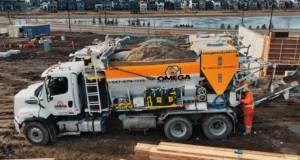
Inquire about their relationships with local ready-mix suppliers who can provide low-carbon mixes. A good partner, like OmegaReadyMix, is invaluable for this.
Evaluating Contractor Track Record and References
Always ask for and contact references for projects similar in scale and sustainability goal to yours. Don’t just ask if they were happy; ask specific questions about the contractor’s problem-solving skills with green materials, their adherence to waste management plans, and their communication throughout the certification documentation process.
The right contractor will have references who can speak knowledgeably about the sustainable aspects of the project, not just the finish quality.
Sustainable Best Practices for Concrete in Edmonton’s Climate
Edmonton’s extreme climate demands that sustainability and durability go hand-in-hand. A green concrete solution that fails in five years is the opposite of sustainable.
Freeze-Thaw Durability and Long Life Cycle Concrete
Concrete in Edmonton must be designed to withstand hundreds of freeze-thaw cycles. Proper air entrainment—microscopic air bubbles in the concrete—is non-negotiable. These bubbles provide space for water to expand when it freezes, preventing cracking and spalling.
A long-lasting concrete structure is inherently sustainable, as it won’t require energy-intensive repairs or replacement for decades.
Low-Carbon Concrete Mixes for Edmonton Projects
The biggest carbon impact of concrete comes from cement production. Using mix designs with 30-50% SCM replacement directly addresses this. These mixes have been proven to perform excellently in our climate, often gaining strength over a longer period and developing superior long-term durability.
It’s a win-win: lower embodied carbon and a more resilient final product.
Water Conservation and Curing Methods for Sustainability
Traditional concrete curing uses significant amounts of water for spraying or ponding. Sustainable alternatives include using curing compounds (membranes that seal in moisture) or insulated blankets that retain the concrete’s own hydration heat and moisture.
These methods conserve water and can lead to a better, more consistently cured product, especially during Edmonton’s dry, windy spring and fall conditions.
Cost Considerations and ROI of LEED-Certified Concrete
Any discussion of sustainable building must address cost. The financial picture for LEED concrete is more about long-term value than just upfront price.
Upfront vs. Lifecycle Cost of LEED Concrete Solutions
Specialized mixes, tighter tolerances, and additional documentation can add a premium of 5-15% to concrete costs. However, this must be weighed against the lifecycle cost.
Durable, high-performance concrete requires less maintenance, reduces energy bills for the life of the building, and extends renovation cycles. Over 30 years, the initial premium is often dwarfed by operational savings.
Incentives, Rebates, and Tax Benefits for LEED Buildings
Various municipal and provincial programs may offer grants, density bonusing, or tax incentives for achieving certain levels of sustainability certification. Some utility companies offer rebates for buildings that demonstrate reduced energy consumption.
A knowledgeable contractor can often help identify these programs, effectively lowering the net cost of the sustainable features.
How LEED Concrete Enhances Property Value and Marketability
LEED certification is a recognized marker of quality and efficiency, increasingly demanded by commercial tenants and homebuyers. A building with lower operating costs and a smaller environmental footprint commands higher rents and resale values.
The concrete work forms the durable, high-performance backbone that makes these benefits possible, making it a smart investment.
Future of LEED-Certified Concrete in Edmonton
The trajectory is clear: sustainable construction is becoming the standard, not the exception. Edmonton’s contractors and material suppliers are adapting rapidly to meet this demand.
Emerging Green Concrete Technologies and Materials
Research into novel cement alternatives, like calcined clays or carbon-cured concrete, is ongoing. We’re also seeing more use of carbon capture, utilization, and storage (CCUS) technologies being integrated into cement production.
These innovations promise to further slash the carbon footprint of one of the world’s most used materials.
Trends in Net Zero and Carbon-Neutral Concrete Construction
The industry is moving beyond reducing impact to achieving net-zero embodied carbon in buildings. This will require concrete with even higher SCM percentages, optimized designs that use less material, and the use of carbon-sequestering aggregates.
Contractors who master these techniques will lead the next generation of construction in Edmonton.
How Edmonton Contractors Are Adapting to Higher Sustainability Standards
Leading local contractors are investing in training, building partnerships with advanced material suppliers, and often acting as educators for their clients and design teams. They understand that their role is evolving from simple installers to essential sustainability consultants.
Staying ahead of code changes and client expectations is now a core part of their business strategy.
FAQ: LEED-Certified Concrete in Edmonton
You’ve got questions. Here are straightforward answers to the most common ones we hear from Edmonton homeowners and developers.
Is LEED-certified concrete actually stronger or more durable?
Often, yes. Mixes high in fly ash or slag can develop higher ultimate strength over time and improve resistance to chemical attacks. More importantly, the focus on proper design, placement, and curing that comes with LEED projects typically results in a higher-quality, more consistent, and therefore more durable concrete installation.
It’s not just the mix; it’s the entire process that leads to a better final product.
What’s the single biggest cost factor for green concrete in Edmonton?
The largest variable is the specific mix design. High-performance, low-carbon mixes using specialty SCMs can cost more per cubic meter than standard mixes. However, this is often offset by the expertise of the contractor in placing it efficiently.
The real cost-saver is choosing a contractor, like our top-ranked options, who knows how to execute these mixes correctly the first time, avoiding costly rework.
Can I use LEED strategies for a small residential project, like a garage or driveway?
Absolutely. While you may not pursue full certification, you can adopt the principles. Specify a concrete mix with recycled content from your supplier. Choose a contractor who recycles their washout and cut-offs.
For driveways in neighbourhoods like Laurier Heights, consider permeable pavers or a permeable concrete option to manage runoff. Every sustainable choice adds up.
How do I verify my contractor is actually using sustainable practices?
Ask for documentation. Request batch tickets from the ready-mix plant showing the mix design and recycled content percentages. Inquire about their waste management plan and ask for reports from the recycling facility.
A transparent, reputable contractor will have this data readily available and will be proud to share it.
Conclusion
Choosing a contractor for LEED-certified concrete work in Edmonton is about finding a partner who understands the big picture of sustainability. It’s not just about pouring a slab; it’s about responsible sourcing, efficient building, and creating a structure that performs well for generations in our climate.
The contractors profiled here represent the leading edge of this shift in our city. They combine local knowledge with specialized expertise to turn sustainable goals into built reality.
For developers in the ICE District or homeowners in Glenora, the path to a greener build starts with the foundation. By selecting a contractor skilled in LEED principles, you invest in a better building and a better future for Edmonton.
Ready to discuss how LEED-certified concrete can form the foundation of your next project? The team at OmegaReadyMix provides the high-quality, sustainably sourced concrete that these top contractors rely on.