Planning a backyard patio in Mount Royal or pouring the foundation for a new commercial project near Deerfoot Trail? Choosing your concrete mix is no longer just about strength and cost—it’s about making a smarter environmental choice. That’s the heart of the debate between fly ash and slag cement, two powerful materials that can make your concrete more sustainable.
In Calgary’s fast-paced market, homeowners and builders alike are asking: which option is truly the greener choice? Both dramatically reduce the need for Portland cement, the biggest carbon culprit in concrete. But their environmental stories are shaped by where they come from and how they behave in our unique climate. This comparison cuts through the technical noise to give you the practical, local insights you need to decide.
What is Fly Ash and How is it Made?
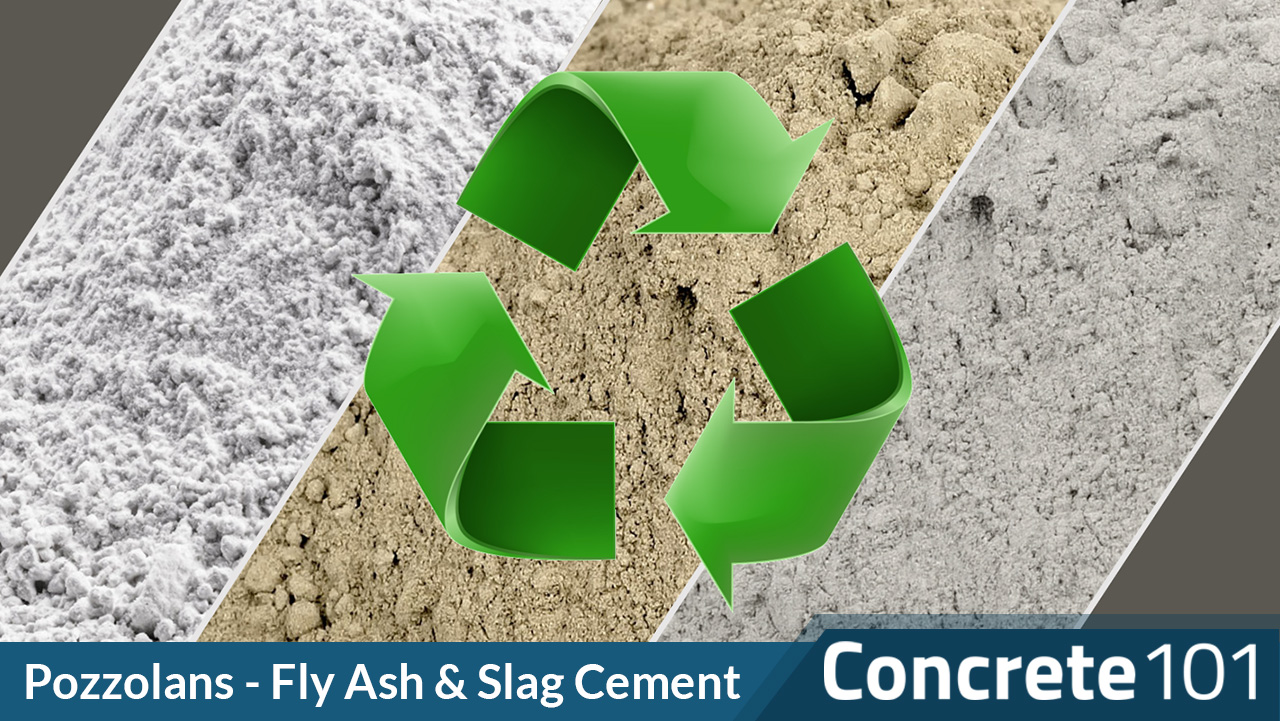
Fly ash is a fine, powdery byproduct captured from the exhaust stacks of coal-fired power plants. When coal is burned to generate electricity, the mineral impurities it contains fuse into tiny glassy spheres that are carried away by the flue gases. Modern pollution control systems, like electrostatic precipitators, capture this material before it can be emitted into the atmosphere.
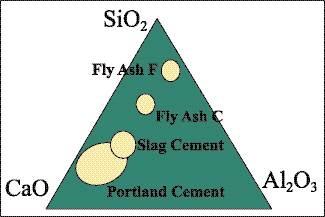
The resulting powder is what we call fly ash, and it’s classified as a pozzolan. This means it contains silica and alumina which, in the presence of water and calcium hydroxide from cement, react to form additional cementitious compounds. For decades, this material was simply landfilled, but its discovery as a high-performance concrete ingredient turned a waste problem into a valuable resource.
This transformation is a cornerstone of industrial symbiosis. By diverting fly ash from waste streams, we reduce landfill use and offset the need to mine and process virgin materials for cement production. The environmental benefit is two-fold: we utilize a post-industrial material and lower the overall carbon footprint of the concrete in your Bridgeland renovation or Seton community centre.
What is Slag Cement and How is it Made?
Slag cement, often called ground granulated blast-furnace slag (GGBFS), originates from the iron production industry. In a blast furnace, iron ore, coke, and limestone are heated to extreme temperatures to produce molten iron. The non-iron components rise to the top as a molten slag, which is then rapidly quenched with high-pressure water jets.
This rapid cooling process, called granulation, gives the slag its glassy, granular structure and latent hydraulic properties. The granulated material is then dried and ground into a fine powder, similar in fineness to Portland cement. Unlike fly ash, slag cement is not a pozzolan but a true hydraulic cement—it can harden and gain strength when mixed with water on its own, though it benefits from activation by the alkalies in Portland cement.
The production of slag cement represents another major win for circular economy principles within heavy industry. It captures the full mineral value of the iron-making process, ensuring almost nothing goes to waste. For a Calgary contractor sourcing materials, this means the environmental impact of the steel produced for your project’s rebar is partly mitigated by the green concrete made with its companion product.

Head-to-Head: Environmental Impact Breakdown
To truly understand which material is greener, we must look beyond the simple “waste vs. virgin material” narrative. The full environmental picture includes embodied carbon, resource consumption, and local logistical factors that affect a project’s total footprint, from the batch plant to your property line.
Fly ash’s primary green advantage is its extremely low embodied carbon. Since it’s a recovered material, its production is attributed to the electricity generation process. Using it directly displaces Portland cement, avoiding approximately 0.9 tonnes of CO2 for every tonne of cement replaced. However, its availability is intrinsically linked to the coal power industry, which is in decline.
Slag cement also boasts a very low embodied carbon compared to Portland cement, typically reducing CO2 emissions by about 0.8 tonnes per tonne replaced. Its production is tied to iron manufacturing, an industry that is evolving but likely to persist. The energy-intensive grinding process is a notable part of its footprint, though often powered by efficient, modern facilities.
Embodied Carbon & Energy Use
When comparing the two directly, fly ash generally has a slight edge in pure carbon accounting because its processing is less energy-intensive than grinding slag. The act of quenching molten slag with water and then grinding it consumes significant electricity. Fly ash, once collected, often requires only classification and minimal processing.
However, this analysis can shift dramatically when transportation is factored in. A key consideration for Calgary builders is where these materials come from. Fly ash used locally may be sourced from plants in Alberta or Saskatchewan, while slag cement often travels greater distances from major steel mills in Ontario or the United States, adding transportation emissions.
Resource Efficiency & Circular Economy
Both materials are stellar examples of turning industrial streams into resources, but they support different sectors. Using fly ash provides an essential end-of-life solution for the coal power industry, creating a market for a material that would otherwise require costly disposal. It extends the lifecycle of the mineral content of the coal.
Slag cement optimization represents maximum resource efficiency within the metals sector. It ensures that nearly 100% of the raw materials fed into a blast furnace emerge as a saleable product—either iron or slag. This moves the industry closer to a “zero-waste” ideal, which is a powerful sustainability driver for commercial developers seeking LEED or other green building certifications for projects in the East Village or University District.

Performance in Calgary’s Climate: Durability & Suitability
Environmental benefits mean little if the concrete doesn’t stand up to our conditions. Calgary’s climate—with its sharp freeze-thaw cycles, use of de-icing salts, and expansive clay soils—demands durable concrete. Both supplementary materials enhance durability, but in different ways that can influence your choice for a specific application.
Fly ash improves concrete workability and finishability, which is a boon for complex pours or stamped concrete driveways in neighbourhoods like Brentwood. Its pozzolanic reaction is slower, leading to lower early strength but continued strength gain over months and even years. More importantly, it significantly reduces permeability, creating a denser matrix that resists chloride intrusion from road salts and protects reinforcing steel from corrosion.
Slag cement also produces a very dense, low-permeability concrete. It offers excellent resistance to sulphate attack, which is a key consideration for foundations in Calgary’s sulphate-rich soils. Its hydration generates less heat than standard mixes, a critical advantage for large mass pours like basement foundations or retaining walls, where thermal cracking is a risk.
Freeze-Thaw and De-Icing Salt Resistance
For driveways, sidewalks, and parking garages exposed to Calgary winters, both materials excel. The reduced permeability they provide limits the amount of water that can saturate the concrete. Since freeze-thaw damage occurs when trapped water expands, less saturation means less internal pressure and scaling. This is why many progressive concrete suppliers, including OmegaReadyMix, champion these mixes for exterior flatwork.
The dense concrete also acts as a barrier against de-icing salts (chlorides). When chlorides can’t penetrate deeply, they can’t reach the rebar to initiate corrosion, which leads to cracking and spalling. For a homeowner on a busy street like Crowchild Trail where salting is heavy, specifying a mix with either fly ash or slag cement can significantly extend the service life of their concrete.
Side-by-Side Comparison Table
This table breaks down the key decision factors to help you weigh fly ash against slag cement for your next Calgary project.
| Factor | Fly Ash | Slag Cement |
|---|---|---|
| Primary Source | Coal-fired power plants | Iron blast furnaces |
| Embodied Carbon | Very Low (byproduct) | Low (requires grinding) |
| Key Strength | High long-term strength, reduced permeability | Sulphate resistance, low heat of hydration |
| Best For in Calgary | Driveways, flatwork, general-use structures | Foundations, underground structures, mass pours |
| Calgary Climate Suitability | Excellent (Improves freeze-thaw durability) | Excellent (Resists soil sulphates) |
| Placement & Curing | Slower early strength; requires longer curing/protection | Slower set time; critical to protect from premature drying |
Local Availability & Supply Chain in Alberta
The greenest material in theory isn’t green at all if it has to be shipped across the continent. The local supply chain directly impacts the carbon footprint of your concrete delivery. For Calgary projects, understanding where these materials come from is a practical part of the sustainability equation.
Fly ash has traditionally been readily available in Alberta, sourced from provincial coal-fired plants. As Alberta’s energy grid transitions, the long-term supply of local, high-quality fly ash is a topic of discussion within the industry. Currently, supply remains stable, but forward-thinking concrete producers are planning for future shifts, which may involve sourcing from other regions.
Slag cement is not produced locally in Alberta. It is manufactured at grinding facilities, often located near source steel mills in Ontario (e.g., Hamilton) or imported from the United States. This means transportation over long distances via rail, which adds to its embodied carbon footprint by the time it reaches a Calgary batch plant. This logistical factor is crucial when calculating the total environmental impact of your specified mix.
For a truly local green choice, the proximity of the material source to your job site is as important as the material itself.
Cost Analysis: Is Greener Concrete More Expensive?
Many assume eco-friendly options come with a premium price tag. With fly ash and slag cement, the economics are more nuanced and often favourable. Historically, both materials were less expensive than Portland cement, as they were valued for their beneficial use rather than their production cost. This created a direct cost saving for concrete.
Market dynamics have shifted. As demand for green building materials has skyrocketed and supply chains have evolved, the cost advantage has narrowed. Today, concrete mixes containing fly ash or slag cement are typically cost-competitive with traditional mixes. You are unlikely to pay a significant premium, and in many cases, you may pay the same or even less, especially when lifecycle cost (durability, less maintenance) is considered.
For a contractor budgeting a multi-unit development in Quarry Park or a homeowner redoing their Currie Barracks patio, the value proposition is clear. The potential for lower upfront material cost, combined with superior long-term performance and the ability to meet sustainability benchmarks for certifications or grants, makes these mixes a financially smart choice, not just an environmental one.
Our Verdict: Which is the Greener Choice for You?
So, which wins the green title? The answer, practically speaking, depends heavily on your project’s specifics and priorities. If we must crown one, fly ash often holds a slight edge in a pure, localized carbon footprint analysis when sourced nearby, due to its minimal processing. However, slag cement’s exceptional durability in challenging soil conditions is a massive environmental benefit, as a longer-lasting structure is the ultimate form of sustainability.
For most Calgary homeowners planning driveways, patios, or walkways, high-quality fly ash concrete is an outstanding green choice. It leverages a locally available byproduct, delivers exceptional durability against winters, and is widely supplied. For contractors working on foundations, underground parking, or large civil projects where sulphate resistance and thermal control are paramount, slag cement is the superior technical and environmental performer for that application.
The real winner is the mindset shift. By choosing either fly ash or slag cement over 100% Portland cement mixes, you are actively selecting a lower-carbon, higher-performance product. You’re voting for the circular economy and building something designed to last decades in our climate. That’s a powerful decision.
FAQ: Fly Ash and Slag Cement in Calgary
Is concrete with fly ash or slag weaker?
Not at all. In fact, the long-term strength is often higher. The key difference is in the rate of strength gain. Both materials develop strength more slowly than plain Portland cement in the first 3-7 days.
This means forms might need to stay in place a little longer, and you must protect the fresh concrete from freezing or drying out. After 28 days and beyond, the strength typically meets or exceeds that of traditional concrete, leading to a more durable final product for your home or building.
Can I get these mixes for a small residential project?
Absolutely. Reputable ready-mix suppliers like OmegaReadyMix regularly batch these mixes for projects of all sizes, from a small garden shed slab in Altadore to a full driveway replacement. You don’t need to be a large commercial developer to benefit from greener concrete.
The main requirement is communicating your specifications to your provider. Discuss your project’s needs, and they can recommend a mix design incorporating these supplementary materials that is appropriate for the scale, finish, and exposure conditions of your job.
Are there any downsides to using these materials?
The primary consideration is the slower early strength development, which requires proper planning for form removal and cold-weather protection. In Calgary’s short construction season, this needs to be managed carefully to avoid delays.
Colour can also be affected. Fly ash concrete often has a darker, more consistent grey colour, while slag cement can give a lighter, almost bluish-green tint initially that weathers to a light grey. This is generally seen as an aesthetic benefit, but it’s something to note if you’re matching existing concrete.
Conclusion
The journey to greener construction in Calgary isn’t about finding a single perfect solution, but about making informed, better choices with the materials we have. Both fly ash and slag cement offer profound environmental advantages over traditional concrete, turning industrial byproducts into high-performance building blocks for our communities.
Your choice between them should be guided by your project’s specific demands—foundation versus flatwork, soil conditions, and even the time of year you’re building. What matters most is moving away from the status quo and specifying a mix that reduces carbon and enhances durability.
Ready to pour a greener foundation for your Calgary project? The team at OmegaReadyMix has the local expertise to guide you through the “fly ash vs. slag cement” decision and deliver a high-performance, sustainable concrete mix tailored to our climate. Reach out for a quote and build with confidence.