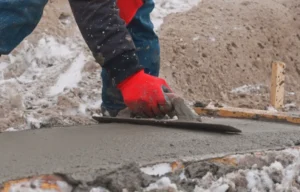
A practical guide to the most common DIY concrete failures and how to prevent them.
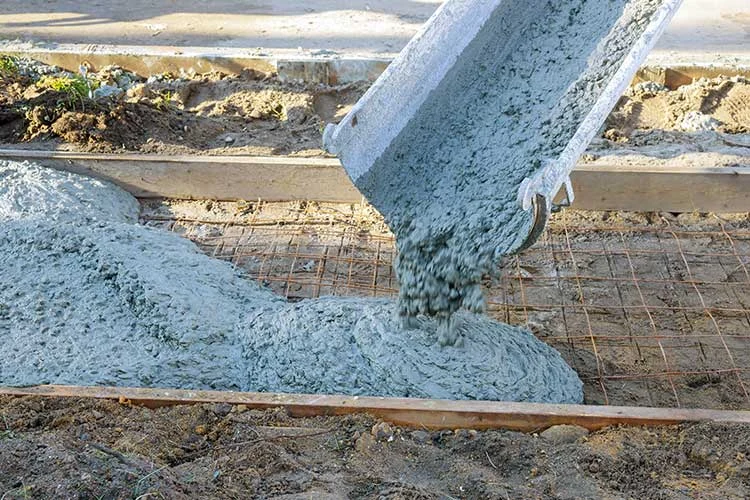
About 80 percent of DIY concrete projects run into at least one significant problem, and the average cost to fix mistakes after the fact is $1,500 or more. The most common errors — adding too much water, skipping proper curing, and not cutting control joints — are entirely preventable with the right knowledge. Here are the 10 mistakes Calgary homeowners make most often, why they happen, and how to avoid each one.
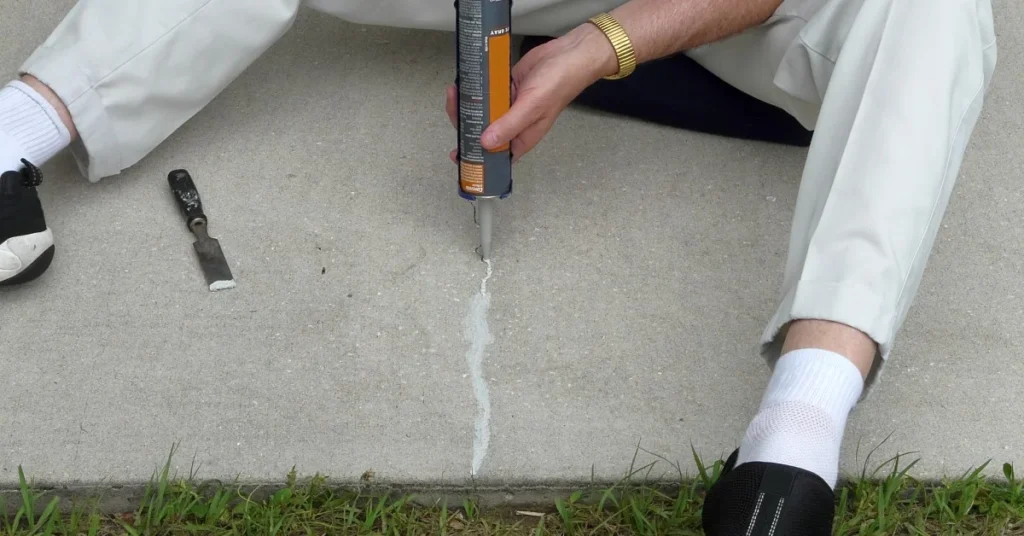
Should You DIY Your Concrete Project?
Before diving into the mistakes, let us address the elephant in the room: should you even attempt a DIY concrete pour?
The honest answer depends on the project. A small stepping stone path or a fence post? Absolutely DIY-friendly. A 400 sq ft driveway? That is a different conversation entirely.
Here is the cost reality that pushes many Calgarians toward DIY:
| Approach | Cost Per Cubic Yard | Notes |
|---|---|---|
| Bagged concrete (hardware store) | $400+ per yard | Backbreaking mixing, inconsistent quality |
| Ready-mix delivery | $150 – $200 per yard | Material only, requires 5+ yard minimum or short-load fees |
| Volumetric delivery (Omega) | $150 – $200 per yard | No minimum, no short-load fees, mixed on-site |
| Full contractor install | $400 – $700 per yard | Includes all labor, materials, and finishing |
The break-even point is clear: bagged concrete from the hardware store costs roughly $400 or more per cubic yard once you factor in bags, mixing time, and waste. Professional delivery runs $150 to $200 per yard. Above 1 cubic yard, delivered concrete is actually cheaper than bags — and the quality is dramatically better.
Even if you are doing the labor yourself, getting concrete delivered rather than mixing bags saves money and produces a stronger, more consistent result.
Proper curing and strength development in concrete are widely documented by the American Concrete Institute, which emphasizes that moisture retention during curing can significantly increase long-term durability and performance.

Mistake #1: Adding Water to Make Concrete Easier to Work
Why it happens: Concrete starts setting the moment it is mixed. As the crew works, it gets stiffer and harder to spread and finish. The temptation to add a bucket of water from the garden hose is overwhelming — it instantly makes the concrete fluid and workable again.
Why it is a disaster: Every additional inch of slump (the measure of concrete wetness) reduces compressive strength by approximately 500 PSI. A mix designed for 4,500 PSI that gets watered down on-site might only reach 3,000 PSI — well below what Calgary driveways need to survive freeze-thaw cycles.
Excess water also causes surface dusting, increased shrinkage cracking, and reduced durability. The damage is permanent and invisible until the surface starts flaking apart after the first winter.
How to avoid it: Order concrete at the correct slump for your project (typically 4 to 5 inch slump for flatwork). If the mix arrives too stiff, the problem is the mix design, not the water content. With volumetric delivery from Omega Ready Mix, the slump is adjusted at the truck — not with a garden hose.
Mistake #2: Not Compacting the Subbase Properly
Why it happens: Homeowners lay down gravel, rake it roughly level, and pour concrete on top. It looks flat enough. What could go wrong?
Why it is a disaster: Uncompacted gravel settles unevenly under the weight of the concrete and the loads placed on it. This creates voids beneath the slab, which leads to cracking, sinking, and eventually slab failure. Calgary’s freeze-thaw cycles make this worse — water collects in voids, freezes, and accelerates the damage.
How to avoid it: Use a plate compactor (available for rent at $50 to $75 per day in Calgary) to compact your gravel base in 2 to 3 inch lifts. The finished base should be 6 to 8 inches of compacted gravel for driveways and 4 to 6 inches for patios. It should feel solid underfoot with no give when you walk on it.
Mistake #3: Forms Not Level or Properly Staked
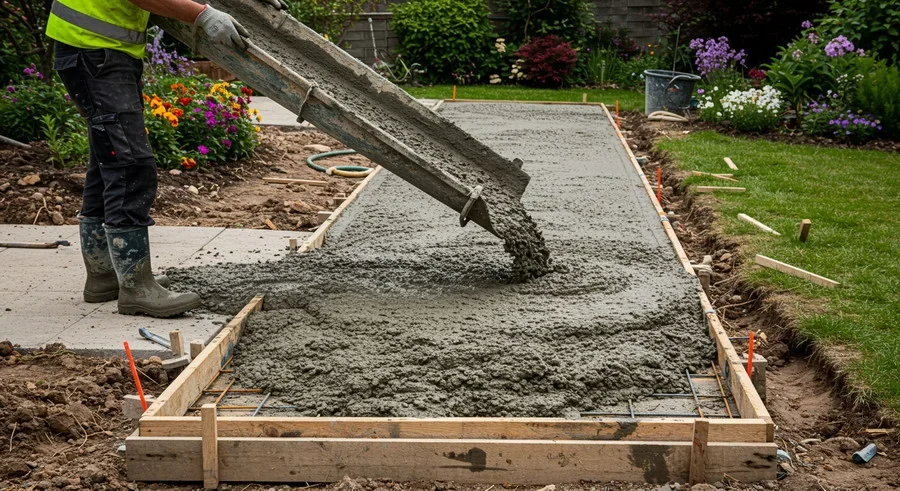
Why it happens: Setting forms seems straightforward — just nail some boards around the perimeter. But achieving a consistent slope for drainage while keeping everything straight and secure requires more precision than most people expect.
Why it is a disaster: Unlevel forms create an uneven slab with puddles that collect water. Forms that flex or bow during the pour create a wavy edge that looks terrible and is expensive to fix. Stakes that pop out under the pressure of wet concrete can cause a blowout — concrete flowing out of the forms and across your yard.
How to avoid it: Use straight 2×4 or 2×6 lumber. Stake every 2 to 3 feet on the outside of the forms. Check level and slope with a 4-foot level at every stake. For driveways, maintain a minimum 2 percent slope (about 1/4 inch per foot) away from the house for drainage. Double-check everything before calling for concrete delivery.
Mistake #4: No Control Joints or Wrong Spacing
Why it happens: Control joints (the grooves cut into concrete) seem like an aesthetic choice that can be skipped. Or homeowners space them randomly without understanding the engineering behind them.
Why it is a disaster: Concrete shrinks as it cures — approximately 1/16 inch per 10 feet. Without control joints, this shrinkage creates random cracks wherever the slab is weakest. With properly spaced joints, cracks form inside the grooves where they are invisible.
How to avoid it: Cut control joints to a depth of one-quarter the slab thickness (1 inch deep for a 4-inch slab). Space them at intervals no greater than 2 to 3 times the slab thickness in feet. For a 4-inch slab, that means joints every 8 to 12 feet. Cut them within 6 to 12 hours of finishing, before the concrete cracks on its own.
Mistake #5: Starting Finishing Too Soon
Why it happens: The concrete is poured, screeded, and bull-floated. It still looks wet. The DIYer grabs a steel trowel and starts finishing the surface immediately, eager to get the smooth look they want.
Why it is a disaster: Finishing too early traps bleed water beneath the surface. This creates a weak layer that dusts, flakes, and develops craze cracking (a network of fine surface cracks). The damage becomes visible within weeks and the surface deteriorates rapidly, especially through Calgary winters.
How to avoid it: Wait until the bleed water has fully evaporated and the concrete is firm enough that your footprint leaves less than a 1/4-inch impression. In Calgary’s dry climate, this typically takes 45 minutes to 2 hours depending on temperature and wind. The concrete should look matte, not shiny, before you start finishing.
Mistake #6: Not Curing Properly
Why it happens: The pour is done, the surface looks great, and the homeowner walks away thinking the job is finished. Or they know about curing but underestimate how long it takes.
Why it is a disaster: Concrete needs moisture to develop full strength. The chemical reaction (hydration) continues for weeks, and if the surface dries too quickly, the top layer becomes weak and dusty. Proper curing increases final strength by 50 percent or more compared to air-dried concrete.
How to avoid it: Keep the concrete moist for at least 7 days. Options include: spraying with water 2 to 3 times daily, covering with wet burlap or plastic sheeting, or applying a curing compound immediately after finishing. In Calgary’s dry summer air with low humidity and constant wind, curing is even more critical than in humid climates. Do not skip this step.
Mistake #7: Skipping Reinforcement
Why it happens: The slab is “only” for a patio. It does not carry heavy loads. Reinforcement seems like an unnecessary expense on a small project.
Why it is a disaster: In Calgary, every exterior slab deals with frost heave and freeze-thaw cycling. Without reinforcement, cracks widen season after season until sections of the slab shift and become a tripping hazard. Fiber reinforcement costs as little as $0.15 per square foot — a fraction of the cost of replacing a cracked slab at $8 to $12 per square foot.
How to avoid it: At minimum, use fiber reinforcement in every exterior pour. It adds $60 to $160 to a typical residential project and provides three-dimensional crack control throughout the slab. With Omega Ready Mix, fiber is added directly to the volumetric mix on-site.
Mistake #8: Underestimating How Fast Concrete Sets
Why it happens: First-time pourers expect concrete to stay workable for hours. In reality, on a warm Calgary summer day (25 to 30 degrees Celsius), concrete can begin setting within 60 to 90 minutes of mixing — and finishing becomes impossible shortly after.
Why it is a disaster: A crew that falls behind cannot catch up. Once concrete sets, no amount of effort will fix an unfinished surface. The result is rough patches, trowel marks, and inconsistent finishing that requires grinding or — more likely — complete replacement.
How to avoid it: Have enough helpers. A general rule: you need at least 1 person per 2 cubic yards for screeding and finishing, plus someone managing the pour. For a 5-yard driveway, that means 3 to 4 people minimum. Have all tools staged and ready before the truck arrives. Practice the workflow on air before concrete day.
Mistake #9: Ordering the Wrong Amount
Why it happens: Homeowners calculate volume based on exact dimensions without accounting for subbase irregularities, over-excavation, or form deflection. They order exactly what the math says — or worse, round down to save money.
Why it is a disaster: Too little concrete means a cold joint (a weak seam where fresh concrete meets partially cured concrete) if you can get another delivery in time. In Calgary, a second truck from a traditional supplier costs $250 to $330 minimum for a short load — often more than the extra yard of concrete is worth. Too much concrete means paying for material you pour into a wheelbarrow and waste.
How to avoid it: Calculate your volume carefully, then add 10 percent for waste and irregularities. For a 5-yard project, order 5.5 yards.
Better yet, use volumetric delivery. Omega Ready Mix mixes concrete on-site one yard at a time. If you need 5.3 yards, you get exactly 5.3 yards — no short-load fees for the extra fraction, no waste from over-ordering, and no panic if you need a bit more than expected.
Mistake #10: Skipping Air Entrainment for Exterior Concrete
Why it happens: Air entrainment is an additive that creates billions of microscopic air bubbles in the concrete. It is invisible, it costs extra, and many DIYers have never heard of it.
Why it is a disaster in Calgary: Without air entrainment, water inside the concrete has nowhere to expand when it freezes. The expanding ice crystals blow apart the concrete from the inside, causing surface scaling, spalling, and flaking — often within the first winter. This is the single most common cause of concrete surface failure in Calgary.
How to avoid it: For any exterior concrete in Calgary, specify 5 to 7 percent air entrainment in your mix design. This is non-negotiable. The small cost ($5 to $10 per cubic yard) prevents thousands of dollars in damage. When ordering from Omega Ready Mix, air entrainment is standard in exterior mixes — you do not have to remember to ask for it.

The Real Cost of DIY Mistakes
| Mistake | Typical Repair Cost |
|---|---|
| Surface dusting from excess water | $500 – $1,500 (grind and seal or overlay) |
| Slab cracking from poor subbase | $2,000 – $5,000 (tear out and replace) |
| Scaling from no air entrainment | $800 – $2,500 (resurface or replace) |
| Uneven slab from bad forms | $1,000 – $3,000 (grind or replace) |
| Random cracking from no control joints | $300 – $800 (seal and live with it) |
The average homeowner who encounters DIY problems spends approximately $1,500 fixing them — often more than the labor cost of hiring a professional would have been in the first place.
How Volumetric Delivery Helps DIYers Succeed
Even if you are doing the labor yourself, the right concrete delivery makes a massive difference. Omega Ready Mix’s volumetric trucks solve several of the most common DIY failure points:
- No temptation to add water — the mix arrives at the correct slump, adjusted on-site
- No ordering headaches — you pay for exactly what you use, no short-load fees, no waste
- Fiber reinforcement built in — added directly to the mix, no separate installation
- Air entrainment included — standard for exterior mixes, so you cannot accidentally skip it
- No 90-minute clock — volumetric trucks can pause and resume mixing, so you work at your own pace
- Smaller trucks — easier site access for residential projects with limited space
Frequently Asked Questions
Is it worth doing concrete myself to save money?
For small projects under 2 cubic yards (a small patio or sidewalk section), DIY can save $1,000 to $2,000 in labor costs. For larger projects like driveways, the risk of costly mistakes often outweighs the savings. Even DIYers should use professional concrete delivery rather than bags.
How many helpers do I need for a concrete pour?
Plan for at least 1 person per 2 cubic yards, with a minimum of 3 people for any pour over 2 yards. Concrete does not wait — you need enough hands to screed, float, and finish before the concrete sets.
Can I pour concrete in the rain in Calgary?
No. Rain dilutes the surface, weakens the finish, and creates permanent damage. If rain is forecast, postpone the pour. Check the weather the morning of your scheduled pour and have a backup date planned.
What tools do I need for a DIY concrete pour?
At minimum: screed board (straight 2×4), bull float, magnesium hand float, steel trowel, edger, groover (for control joints), rubber boots, gloves, eye protection, and a garden hose. Rent a plate compactor for base prep. Total tool cost for a one-time project: $150 to $300.
How thick should my concrete slab be?
In Calgary, the minimum for any exterior slab is 4 inches. Driveways should be 5 inches if they will support trucks or heavy vehicles. Garage pads are typically 4 to 5 inches. Sidewalks can be 4 inches. Never go thinner than 4 inches for exterior work — it will not survive Calgary winters.
When should I seal my new concrete?
Wait at least 28 days for the concrete to fully cure before applying sealer. In Calgary, apply a penetrating sealer before the first winter. Reapply annually or biannually for driveways exposed to road salt and de-icers.
Can I pour concrete over old concrete?
It is possible but rarely recommended. The bond between old and new concrete is weak, and the combined thickness often creates drainage and height problems. Removing the old slab first produces a far better result. Budget $2 to $4 per square foot for demolition and removal in Calgary.
What temperature is too cold to pour concrete in Calgary?
Do not pour if the temperature is below 5 degrees Celsius or if it will drop below freezing within 24 hours of the pour. Concrete that freezes before it cures loses up to 50 percent of its potential strength and the surface will deteriorate rapidly.
Set Your DIY Project Up for Success
Whether you are pouring a patio yourself or managing a contractor, the right concrete delivery makes the difference between a project you are proud of and one you regret. Omega Ready Mix delivers fresh-mixed concrete to your Calgary site with the correct slump, air entrainment, and fiber reinforcement built right in. No minimums, no short-load fees, no waste.
Get a free quote from Omega Ready Mix — call (587) 579-1110 or email [email protected]
Omega Ready Mix | 5065 13 St SE 135, Calgary, AB T2G 5M8 | Available 24/7
Schema Markup Notes
Recommended schema types for this page:
- FAQPage schema for the FAQ section (8 question-answer pairs)
- Article schema with
datePublished: 2026-04-09anddateModified: 2026-04-09 - LocalBusiness schema for Omega Ready Mix (name, address, phone, email, areaServed: Calgary)
- HowTo schema for each mistake/solution pair (10 items)
- Table structured data for cost comparison and repair cost tables
- Use
speakableproperty on the answer capsule paragraph for voice search optimization