
Whether you’re pouring a foundation for a new home in Chestermere or building a commercial space near the Stephen Avenue Walk, concrete is a fundamental part of construction. Yet, its production is a significant source of greenhouse gases, and that can be a tough trade-off for environmentally conscious builders and homeowners here in Calgary. The good news? Technology is turning the tide. This is exactly how CarbonCure works to shrink that carbon footprint without sacrificing performance.
What is CarbonCure Technology
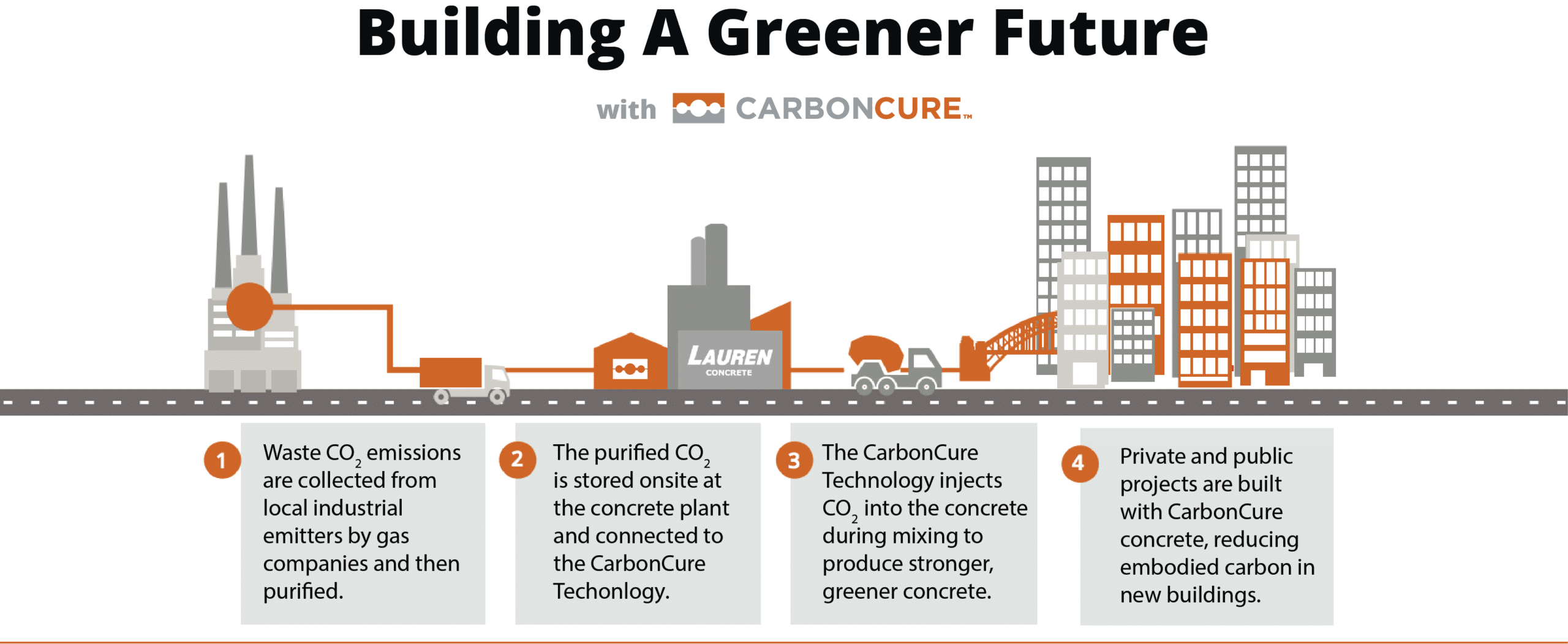
CarbonCure Technology is a revolutionary system designed to reduce the embodied carbon of concrete during its production. It’s not an additive or a replacement; it’s a clever process integrated right into the mixing stage. Essentially, it involves injecting recycled carbon dioxide (CO₂) into the concrete while it’s being batched. This process permanently traps the CO₂ within the concrete itself, preventing its release into the atmosphere.
For local projects—from a stamped patio in McKenzie Towne to a warehouse floor in Balzac—this means you can choose a concrete mix that’s actively contributing to a lower carbon outcome. OmegaReadyMix offers this innovative technology, allowing Calgary builders to meet sustainability goals while delivering the durable, reliable concrete the local climate demands.
How CarbonCure Works
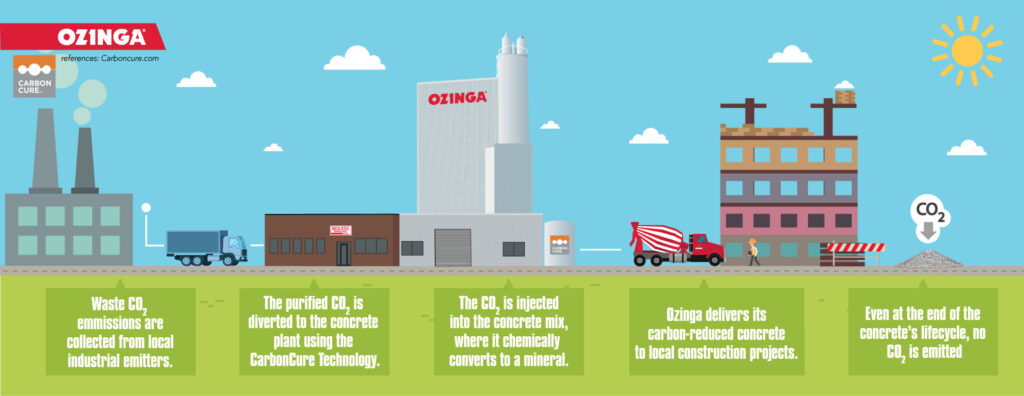
The system starts with a supply of captured CO₂, often sourced from industrial processes. This CO₂ is stored on-site at the ready-mix plant in a secure tank. During the batching of your concrete order, a precisely controlled amount of this gas is injected directly into the mix water. The injection happens automatically and is monitored by the plant’s control system, ensuring consistency and quality for every pour.
Once introduced to the concrete mix, the CO₂ doesn’t just float around. It immediately reacts with the calcium ions present in the cementitious materials. This rapid reaction is the secret to the whole system—it converts the gaseous CO₂ into a solid, stable mineral within the concrete matrix. This transformation happens in minutes, locking the carbon away for the lifetime of the structure.
CO2 Mineralization Process
This chemical reaction is known as CO₂ mineralization. The injected CO₂ reacts with calcium-rich compounds in the cement to form calcium carbonate (CaCO₃). This is essentially a tiny, stable mineral particle—similar to limestone—that becomes permanently embedded throughout the concrete. This isn’t a coating or a filler; it’s a fundamental change in the concrete’s microstructure at a nano-scale.
The mineralization process is immediate and irreversible. This means the CO₂ is sequestered permanently. It won’t leach out over time, even under Calgary’s freeze-thaw cycles or exposure to de-icing salts on a Deerfoot Trail overpass. The CO₂ becomes part of the stone, ensuring the carbon reduction benefit lasts as long as the concrete itself.
Technology Installation and Application
Integrating CarbonCure into a production facility like OmegaReadyMix’s plant is straightforward. The core hardware includes the CO₂ storage tank, an injection manifold, and the control software that syncs with the existing batching system. Installation doesn’t require a complete overhaul of the plant, which makes adoption practical for producers serving our region.
The application is universal across mix designs. Whether producing a standard 32 MPa mix for a residential basement or a high-strength mix for a commercial project in the East Village, the technology can be applied. The system adjusts the injection rate based on the specific mix recipe, ensuring optimal performance and carbon savings for every type of concrete ordered.
The bottom line: CarbonCure turns a ready-mix plant into a carbon recycling station, transforming waste CO₂ into a durable building material.
Carbon Footprint Reduction Benefits
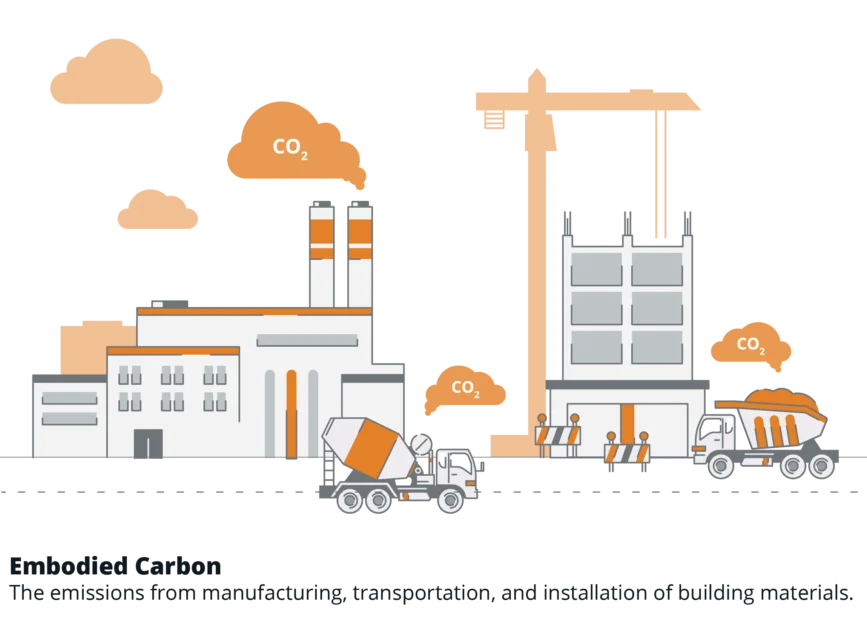
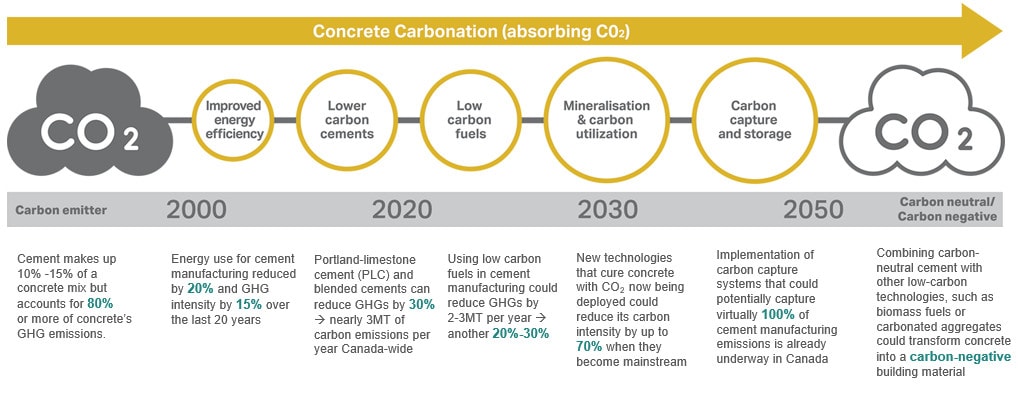
The primary goal of CarbonCure is to lower the Global Warming Potential (GWP) of concrete. Concrete’s carbon footprint comes largely from the production of cement, a key ingredient. By mineralizing CO₂ within the mix, CarbonCure directly offsets a portion of the emissions associated with that cement.
This isn’t a marginal improvement. For builders in Calgary aiming for LEED certification or simply wanting to reduce their project’s environmental impact, this technology provides a tangible, quantifiable benefit. It allows you to specify a lower-carbon material without negotiating on strength or finish.
Quantified Emissions Savings
The savings are measured in kilograms of CO₂ equivalent per cubic meter of concrete produced. Typical reductions range from 4 to 6 kg CO₂e/m³. To put that in a local context, if you’re pouring a 400 m³ foundation for a multi-unit development in the Beltline, using CarbonCure concrete could sequester over 2,400 kg of CO₂—the equivalent of taking a passenger car off the road for nearly a year.
These savings are achieved without increasing the cement content. In fact, the process can sometimes allow for a slight optimization of the cement dosage while maintaining performance. This creates a double benefit: reduced emissions from the sequestered CO₂ and potentially reduced emissions from less cement manufacturing.
Percentage Reduction in Carbon Footprint
When looking at the complete carbon footprint of a concrete mix—from raw material extraction to transportation and production—CarbonCure technology typically achieves a reduction of 5-7%. This percentage represents a meaningful step toward low-carbon construction goals.
For a project pursuing specific sustainability benchmarks, this reduction can be a key component. It’s a ready-made solution that doesn’t require switching to unfamiliar alternative materials or complex engineering adjustments. The concrete you get is the concrete you know, just with a smaller environmental shadow.
Does that sound like a compromise on quality or cost?
Comparison to Traditional Concrete
The most direct comparison is between two identical mix designs—one batched with CarbonCure and one without. The traditional mix releases all the CO₂ associated with cement production into the atmosphere. The CarbonCure mix captures and permanently stores a portion of that CO₂ within the slab or structure itself.
Beyond emissions, the performance comparison is critical. Traditional concrete has a known and trusted profile. CarbonCure concrete matches that profile in key areas like strength, durability, and workability, while adding the carbon benefit. It’s not a “green” alternative that behaves differently; it’s enhanced traditional concrete.
Choosing CarbonCure means you get the same reliable concrete for your Calgary project, but with a verified reduction in its carbon footprint.
Concrete Performance and Quality
Any sustainability claim must be backed by performance. Calgary’s climate, with its deep frost lines and temperature swings, demands concrete that can withstand the test of time. CarbonCure technology doesn’t just aim to reduce carbon; it aims to maintain or improve the concrete’s physical characteristics.
The mineralization process subtly alters the concrete’s internal structure. This can lead to beneficial effects on the material’s key properties, ensuring your driveway in Bridlewood or your commercial floor performs as expected for decades.
Compressive Strength Improvements
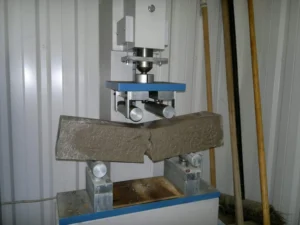
Compressive strength is the fundamental measure of concrete’s ability to carry load. In many cases, CarbonCure concrete shows a slight early strength gain. The formation of calcium carbonate particles can contribute to a denser microstructure, which often translates to a stronger material.
This doesn’t mean the mix design is radically changed. The target strength—say, 32 MPa for a residential foundation—is still met. The technology can help achieve that strength consistently, and sometimes a bit faster, which can be beneficial for construction schedules on tight Calgary projects.
Cement Content Optimization
Because the mineralized CO₂ can contribute to the concrete’s strength development, there is potential to slightly optimize the cement content in some mix designs. Using a little less cement to achieve the same strength further reduces the mix’s carbon footprint, as cement production is the largest source of CO₂ in concrete.
This optimization is done carefully by the ready-mix producer’s technicians. At OmegaReadyMix, engineers fine-tune mixes to leverage this benefit where possible, ensuring the delivered concrete meets all specification requirements while maximizing environmental performance.
Concrete Finish and Appearance
The finish and appearance of concrete are paramount for aesthetic projects like stamped patios or exposed aggregate walkways. The CarbonCure process does not affect the concrete’s surface qualities, workability, or color. The mineralized particles are microscopically small and uniformly distributed.
This means your decorative concrete project in a community like Elbow Valley will have the same beautiful finish, whether it uses CarbonCure technology or not. The carbon reduction happens invisibly inside the material, leaving the visual and tactile qualities entirely unchanged.
Quality Assurance and Regulatory Approval
CarbonCure concrete is not a speculative product. It is produced under the same rigorous quality assurance (QA) protocols as all concrete. Every batch is tested for slump, air content, and strength. The technology has received broad regulatory approval and meets relevant ASTM and CSA standards.
For Calgary builders, this means specifying CarbonCure doesn’t introduce any regulatory risk or approval hurdles. It’s a certified, proven technology that integrates seamlessly into the existing supply chain and construction codes used across Alberta.
The performance data is clear: CarbonCure enhances concrete’s environmental profile without diminishing its structural or aesthetic qualities.
Environmental Impact
The broader environmental impact of adopting CarbonCure technology extends beyond a single project. It contributes to a circular economy model where waste CO₂ becomes a resource. This shift is crucial for the construction industry’s path to net-zero emissions.
For the Calgary region, supporting technologies like this means building a more sustainable city without sacrificing development. It allows growth in communities from Seton to the Northwest to align with long-term environmental stewardship goals.
Global Warming Potential (GWP) Reduction
Global Warming Potential (GWP) is a standardized measure of how much a greenhouse gas contributes to global warming over a given time, compared to carbon dioxide. Concrete’s GWP is primarily driven by the CO₂ emissions from cement production. CarbonCure’s mineralization process directly lowers the GWP of the final product.
By permanently sequestering CO₂, the technology reduces the net carbon impact of each cubic meter placed. This makes it a powerful tool for builders and developers needing to calculate and report the total embodied carbon of their projects for sustainability certifications or corporate reporting.
CO2 Sequestration and Storage
Sequestration refers to the long-term capture and storage of carbon. CarbonCure achieves this by converting CO₂ into a solid mineral within the concrete. This storage is permanent—the carbon will not be re-released unless the concrete is completely decomposed, which takes centuries.
Think of every structure built with CarbonCure concrete as a small carbon vault. A new school in Cochrane, a bridge repair along Glenmore Trail, or a condo tower downtown all become permanent repositories for captured carbon, contributing to a cumulative reduction in atmospheric CO₂ levels.
Universal Application Across Mix Designs
One of the strongest environmental arguments for CarbonCure is its universality. It doesn’t require switching to a niche, low-carbon mix that may have limited applications. It can be applied to the vast majority of standard ready-mix concrete designs.
This means the carbon reduction potential scales massively. If adopted widely by producers like OmegaReadyMix, the technology can transform the carbon footprint of the entire concrete supply for our region, from common residential grades to specialized high-performance mixes, without disrupting the construction ecosystem.
The environmental benefit isn’t a one-off; it’s a scalable solution that can change the baseline for concrete production in Calgary and beyond.
Implementation and Adoption
Adopting CarbonCure technology is a practical decision for a ready-mix producer. The system is designed for integration into existing plants without major downtime or re-engineering. For contractors and developers, specifying it is as simple as requesting it on the concrete order.
The path from curiosity to common use involves understanding the implementation process, the cost implications, and the value it creates in terms of sustainability credits and market differentiation.
Integration with Existing Production Systems
Integration is mechanical and digital. The physical installation involves placing the CO₂ storage tank and connecting the injection lines to the batching system. The digital integration links the CarbonCure control software to the plant’s batch controller, automating the injection based on the mix being produced.
This seamless integration means OmegaReadyMix can produce CarbonCure concrete on the same schedule as traditional concrete. There’s no delay or separate batching line. It becomes a standard option available for any order, providing flexibility for projects across Calgary.
Cost Considerations
There is an incremental cost associated with using CarbonCure technology, primarily due to the captured CO₂ supply and system operation. This typically translates to a modest increase in the price per cubic meter of concrete—often in the range of 2-5%.
For builders, this cost should be viewed as an investment in sustainability and future-proofing. It can contribute directly to achieving LEED points, meeting corporate ESG (Environmental, Social, and Governance) targets, or satisfying green building requirements for projects in forward-thinking communities.
LEED Certification and Sustainability Credits
Using CarbonCure concrete can contribute directly to points under the LEED (Leadership in Energy and Environmental Design) rating system, specifically in the “Building Product Disclosure and Optimization – Sourcing of Raw Materials” credit. The quantified CO₂ reduction provides the data needed for credit calculation.
For developers in Calgary aiming for LEED certification for buildings in the downtown core or in new sustainable communities, specifying CarbonCure from a local provider like OmegaReadyMix is a straightforward way to gain valuable points. It’s a proven, documented strategy for reducing the embodied carbon of the construction materials.
Implementing CarbonCure is a tangible step toward greener building certifications, adding value beyond the concrete’s structural function.
Low-Carbon Concrete Solutions
CarbonCure is part of a broader suite of technologies and strategies aimed at reducing concrete’s carbon footprint. Understanding its place within this landscape helps you make informed choices for your project. No single solution is a silver bullet, but combined approaches can drive significant change.
From using supplementary cementitious materials (SCMs) to exploring alternative binders, the industry is innovating. CarbonCure offers a unique, complementary path by addressing the carbon problem within the conventional concrete production process itself.
Alternative Methods for Reducing Embodied Carbon
Other common methods include replacing a portion of Portland cement with materials like fly ash or slag (SCMs), which have lower associated CO₂ emissions. Another approach is using alternative binders, such as limestone calcined clay cements (LC³).
Each method has its own applicability, benefits, and sometimes limitations regarding mix performance, availability, or cost. For many Calgary projects, especially those requiring specific performance criteria or fast timelines, SCMs are a common and effective companion to CarbonCure technology.
CarbonCure Compared to Other Approaches
CarbonCure differs from SCM substitution because it doesn’t alter the cement composition. It adds a process that sequesters CO₂ within the existing mix. This makes it highly compatible with other methods—you can use SCMs and CarbonCure together for stacked benefits.
Compared to entirely novel binder systems, CarbonCure leverages the existing, trusted concrete supply chain. It doesn’t require re-engineering structures or retraining crews. It’s an incremental improvement on a known material, which can speed adoption on projects from the University District to industrial parks.
Stackable Benefits with Other Technologies
The true potential for deep carbon reduction comes from stacking multiple strategies. Using a mix with 20% fly ash (an SCM) reduces the cement content and its associated emissions. Then, applying CarbonCure technology sequesters additional CO₂ within that lower-cement mix.
This stackability is key for projects pursuing aggressive carbon targets. By working with a producer like OmegaReadyMix who can optimize mixes using multiple low-carbon strategies, you can achieve a significantly reduced embodied carbon footprint without compromising on the concrete’s performance or availability.
CarbonCure isn’t the only tool, but it’s a versatile one that works alongside other methods to drive down concrete’s carbon impact.
Learn more about the technology to know more about emissions and environmental impact
FAQs About CarbonCure Concrete in Calgary
Is CarbonCure concrete approved for use in Calgary building codes?
Yes, absolutely. CarbonCure technology produces concrete that meets all relevant Canadian and Alberta standards, including CSA A23.1. The concrete undergoes the same rigorous testing as traditional mixes for strength, durability, and composition. It is fully approved for all typical construction applications in Calgary, from residential foundations to commercial structures.
Local producers like OmegaReadyMix ensure their CarbonCure mixes are tested and certified, so specifying it does not introduce any code compliance risk for your project in communities like Springbank Hill or Saddleridge.
Does CarbonCure concrete cost more than regular concrete?
There is a modest cost premium, typically in the range of 2-5% per cubic meter. This covers the cost of the captured CO₂ and the technology operation. For many projects, this increase is offset by the value it creates in terms of sustainability branding, LEED certification points, or meeting environmental grant criteria.
When budgeting for a project, discuss the specific cost with your ready-mix supplier. Consider the premium not just as a material cost, but as an investment in the environmental performance of your building—a feature that can have lasting value.
How do I know the CO₂ is permanently stored and won’t leak?
The science is solid. The CO₂ is converted into a stable mineral (calcium carbonate) through a rapid chemical reaction during batching. This mineral is integrally locked into the concrete’s hardened microstructure. It is not a gaseous bubble trapped inside; it is part of the solid stone.
This mineralization is irreversible under normal environmental conditions. Even over decades, subject to Calgary’s climate, the carbon remains sequestered. The permanence of the storage is a core principle of the technology and is backed by extensive research and testing.
Can I use CarbonCure concrete for decorative finishes like stamping?
Yes, without any difference in outcome. The CarbonCure process does not affect the concrete’s surface properties, workability, or color. The microscopic mineral particles are uniformly distributed and do not interfere with finishing techniques.
Your stamped patio in Mahogany or exposed aggregate driveway in Parkdale will look and perform identically to one made with traditional concrete. The carbon benefit is achieved entirely within the internal structure of the material, leaving the aesthetics entirely up to you and your finisher.
Conclusion
Reducing the carbon footprint of construction in Calgary is a growing priority for homeowners, contractors, and developers alike. CarbonCure Technology offers a practical, proven path to do exactly that, without reinventing the concrete we all rely on. It seamlessly integrates into the local supply chain, turning every cubic meter into a small step toward a more sustainable build.
The process permanently sequesters recycled CO₂, improves concrete performance, and is compatible with all standard mix designs and finishes. For projects aiming for LEED points or simply a lower environmental impact, it’s a clear and calculable choice.
Now that you know how CarbonCure works and the benefits it delivers, specifying it for your next project is straightforward. Ready to pour a foundation, patio, or slab that builds a stronger Calgary with a lighter carbon footprint? OmegaReadyMix can provide CarbonCure concrete and guide you through the process from plan to placement.
Ready to reduce your project’s carbon footprint without compromising strength or quality? Contact us today to request CarbonCure concrete for your next build in Calgary. Let’s build smarter—starting from the ground up.