
Noticing a few more washouts along the edge of your property in Rocky Ridge or seeing a retaining wall start to bulge in Glenmore Park? You’re not alone. Calgary’s unique topography and clay-rich soils, combined with our intense freeze-thaw cycles, can put incredible pressure on slopes and structures. If you’re a homeowner, contractor, or developer looking for a permanent, high-strength solution, shotcrete is a technology you need to know about. Here’s how it works, why it’s the go-to fix for professionals like OmegaReadyMix, and what makes it so effective for stabilizing Calgary landscapes.
Introduction to Shotcrete
When a hillside is threatening your backyard in Silver Springs or a critical commercial site needs secure shoring, time and strength are of the essence. That’s where shotcrete comes in—a specialized concrete application method that goes beyond the limits of traditional pours. Think of it as concrete that can be precisely applied to vertical or overhead surfaces without the need for bulky forms.
What is Shotcrete?
Shotcrete is concrete or mortar pneumatically projected at high velocity onto a surface. The force of the application compacts the material, creating a dense, uniform layer that bonds directly to the substrate. Unlike traditional concrete that is poured and vibrated into place, shotcrete is literally shot into position, allowing it to conform to any shape, whether it’s a rugged cliff face or a complex curved retaining wall.
This application method has been a staple in underground mining and tunneling for decades, and its use has become increasingly common in Calgary for residential and civil engineering projects. Its versatility makes it ideal for tackling the unstable, glacially-deposited soils common in areas like Tuscany and along the Bow River valley slopes.
Shotcrete vs. Traditional Concrete
The core difference lies in placement and consolidation. Traditional cast-in-place concrete requires extensive formwork to hold the liquid concrete in its desired shape until it cures. This adds significant material cost, labour, and time to a project, especially on complex slopes.
Shotcrete eliminates most of that formwork. It’s consolidated by the impact force of application, which drives out excess air and water to create a very dense matrix. This results in high early strength, faster construction timelines, and the ability to build on surfaces where forming would be impractical or impossible.
For slope and wall projects in Calgary, shotcrete’s speed and adaptability often make it the more cost-effective and structurally superior choice.
Advantages of Shotcrete in Slope Stabilization
Why choose a sprayed concrete solution over other methods? Whether you’re stabilizing a ravine in Edgemont or protecting a roadway cut, the benefits are tangible and directly address Calgary’s specific challenges.
Rapid Application and Reduced Construction Time
Shotcrete crews can cover large, irregular areas much faster than traditional forming and pouring allows. This speed is crucial in our short Alberta construction season. A project that might take weeks with forms can often be completed in days with shotcrete, getting your site stabilized and protected before the weather turns.
Reduced time on site also means lower labour costs and less disruption to your property or the surrounding area. For contractors working on tight schedules for a new development, this efficiency is a major competitive advantage.
High Strength and Durability
The high-velocity application creates a very low water-to-cement ratio and excellent compaction. This produces a concrete with high compressive and flexural strength, superior bonding to the substrate, and low permeability. It stands up brilliantly to Calgary’s harsh climate—resisting water infiltration, freeze-thaw damage, and the corrosive effects of de-icing salts near roadways.
Adaptability to Irregular Surfaces
Calgary’s natural slopes are rarely smooth or geometrically perfect. Shotcrete can be applied to virtually any shape: rocky outcrops, steep embankments, or curved architectural walls. It fills voids and contours the surface, creating a continuous, monolithic layer that provides uniform support.
This eliminates the gaps and weak points that can occur with segmented solutions like stacked block walls or lagging.
Cost-Effectiveness
While the material cost per cubic yard can be higher than standard concrete, the overall project cost is frequently lower. Savings come from the drastic reduction in formwork materials and labour, faster project completion, and less excavation required since shotcrete can be applied directly to the cut face.
For homeowners, this means a robust, long-lasting solution without the unexpected cost overruns that prolonged forming can introduce.
Improved Erosion Control
A well-applied shotcrete layer acts as an immediate and permanent armor against surface erosion from rain and runoff. This is vital for properties bordering natural waterways or on hillsides where topsoil is being lost seasonally.
By stabilizing the surface, it protects the underlying soil structure and prevents the small slips that can lead to larger slope failures over time.
In short, shotcrete delivers a faster, stronger, and more versatile fix that’s built to last in our local environment.
Even properly installed shotcrete structures require seasonal maintenance. Learning how to prepare your driveway for Calgary winters can also help protect nearby retaining walls and concrete surfaces from freeze-thaw damage.
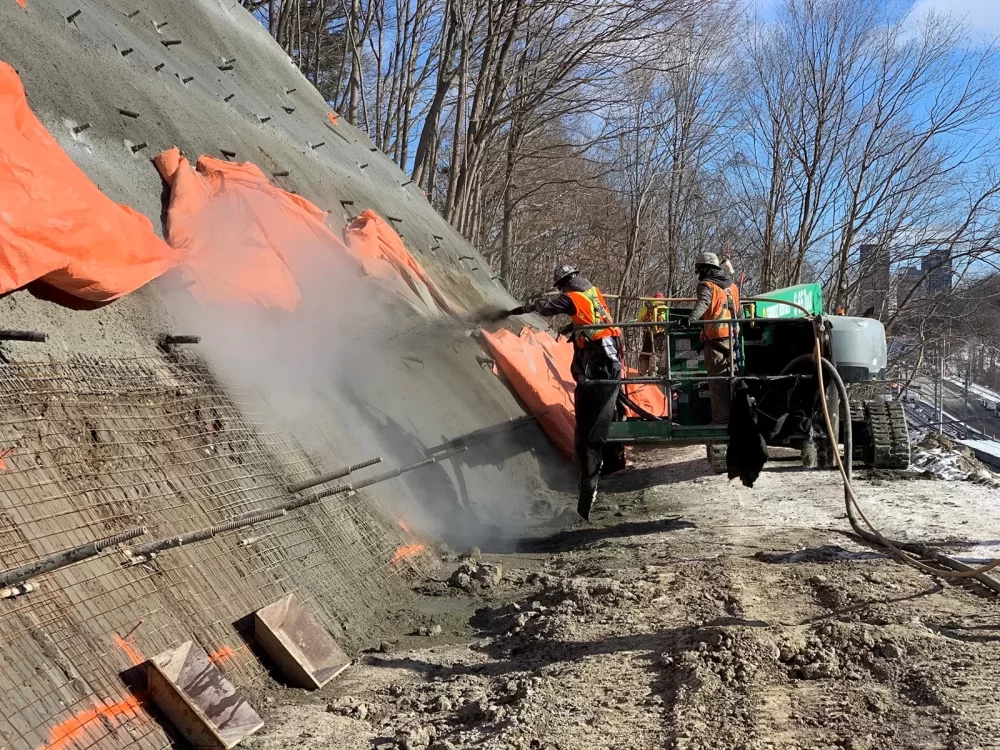
Applications of Shotcrete
The uses for shotcrete in geotechnical and structural engineering are vast. From your backyard to major infrastructure, it’s a key technology for creating safe, stable environments.
Slope and Bluff Stabilization
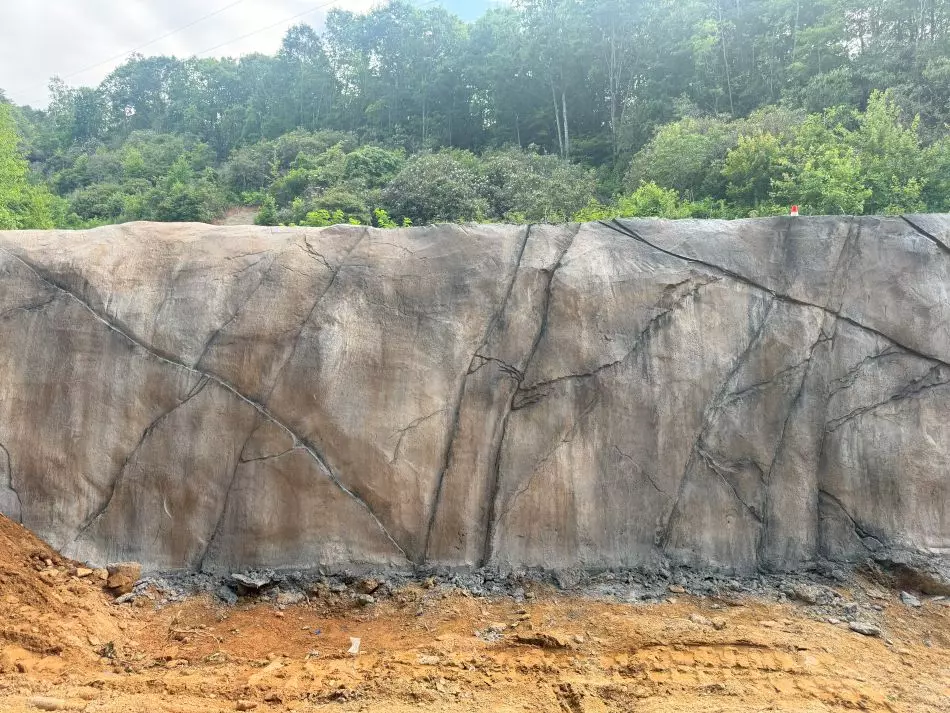
This is one of the most common applications in Calgary neighbourhoods built on hillsides. Shotcrete is applied directly to the cut face of an unstable slope to prevent soil movement, sloughing, and shallow landslides. It’s often used in combination with soil nails or rock bolts for deep-seated stability.
Erosion Control
Along creek banks, drainage channels, and shorelines, shotcrete provides a durable, scour-resistant lining. It’s used to protect infrastructure like bridge abutments and culvert outlets from the erosive force of flowing water.
Rockfall Mitigation
On rocky slopes prone to shedding loose material, a layer of shotcrete can “stitch” the rock face together, sealing cracks and preventing stones from detaching. This is crucial for safety along highways like the Trans-Canada through the Rockies and on steep, rocky residential lots.
Retaining Walls and Structures
Shotcrete is the ideal material for constructing cast-in-place retaining walls, especially those with curves, steps, or complex geometries. It allows for thicker, structurally reinforced walls to be built without the immense formwork required for traditional pours.
Soil-Nailed Walls
Soil nailing involves drilling and installing steel bars into the soil, then covering the face with a reinforced shotcrete layer. This creates a coherent, reinforced mass that acts as a gravity wall. It’s a top choice for deep excavations in tight urban spaces, such as for underground parking garages in the Beltline.
Tunnel, Mine, Bridge, and Highway Support
Shotcrete provides immediate ground support in tunnels and mines. It’s also used to repair and strengthen the undersides of bridge decks, repair dam spillways, and line drainage structures. Its rapid-set properties are lifesavers in infrastructure rehabilitation where downtime must be minimized.
From a residential garden wall to a massive civil project, shotcrete’s application is only limited by the need for a strong, adherent surface coating.
Shotcrete Techniques and Methods
Not all shotcrete is applied the same way. The method and mix design are chosen based on the project’s specific demands, accessibility, and required finish.
Wet-Mix vs. Dry-Mix Shotcrete
The two primary processes are wet-mix and dry-mix. In wet-mix shotcrete, all ingredients (including water) are fully mixed before being pumped to the nozzle and accelerated with compressed air. This method produces less rebound (wasted material), less dust, and allows for higher production rates. It’s the most common method for larger projects.
Dry-mix shotcrete involves pumping the dry ingredients to the nozzle, where water is added just before ejection. It offers easier start/stop capabilities and is better for small repair jobs or in remote areas where a ready-mix truck can’t reach. The choice depends on scale, location, and crew expertise.
Fiber-Reinforced Shotcrete (FRS)
Adding discrete fibers (steel, synthetic, or glass) to the shotcrete mix dramatically improves its toughness, impact resistance, and crack control. The fibers act as micro-reinforcement throughout the matrix. FRS is often used when welded wire mesh installation would be too difficult or time-consuming, or where enhanced ductility is needed.
Soil Nailing with Shotcrete
This is a complete system. Soil nails (long, grouted steel tendons) are installed in a grid pattern into the soil. A preliminary layer of shotcrete is applied, welded wire mesh is fastened to the nail heads, and then a final structural layer of shotcrete encases everything. This creates a composite structure that is exceptionally strong and stable.
Application Using Robots and Pneumatic Sprayers
Modern shotcrete application isn’t always manual. Robotic arms, often mounted on excavators, can apply material with incredible precision and consistency in hazardous or hard-to-reach areas. For most projects, skilled nozzlemen using pneumatic sprayers are the standard, using their expertise to control thickness, texture, and compaction.
Choosing the right technique is where a local expert like OmegaReadyMix adds immense value, ensuring the method matches the site’s demands.
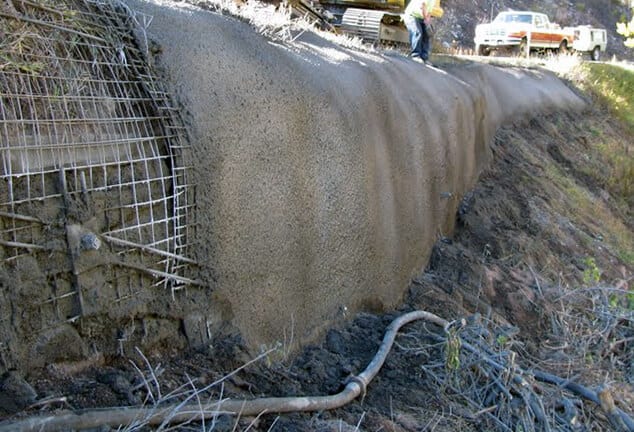
Shotcrete in Retaining Wall Construction
For building new retaining walls or facing existing ones, shotcrete offers unique design and performance benefits that go beyond mere function.
Design and Engineering for Retaining Walls
Every shotcrete wall starts with a proper geotechnical assessment and structural design. Engineers calculate the soil loads, hydrostatic pressure, and required reinforcement. The design will specify the wall thickness, reinforcement type (rebar or fiber), and drainage system. This engineering is non-negotiable for a safe, long-lasting wall, especially in Calgary’s reactive soils.
Structural Support and Load Transfer
The monolithic nature of a shotcrete wall means loads are distributed evenly. When combined with a tie-back or soil nail system, the shotcrete facing effectively transfers the earth pressures deep into the stabilized soil mass behind it. This creates a wall that moves with the ground in a controlled manner, rather than cracking under the strain.
Aesthetic and Sculpting Features
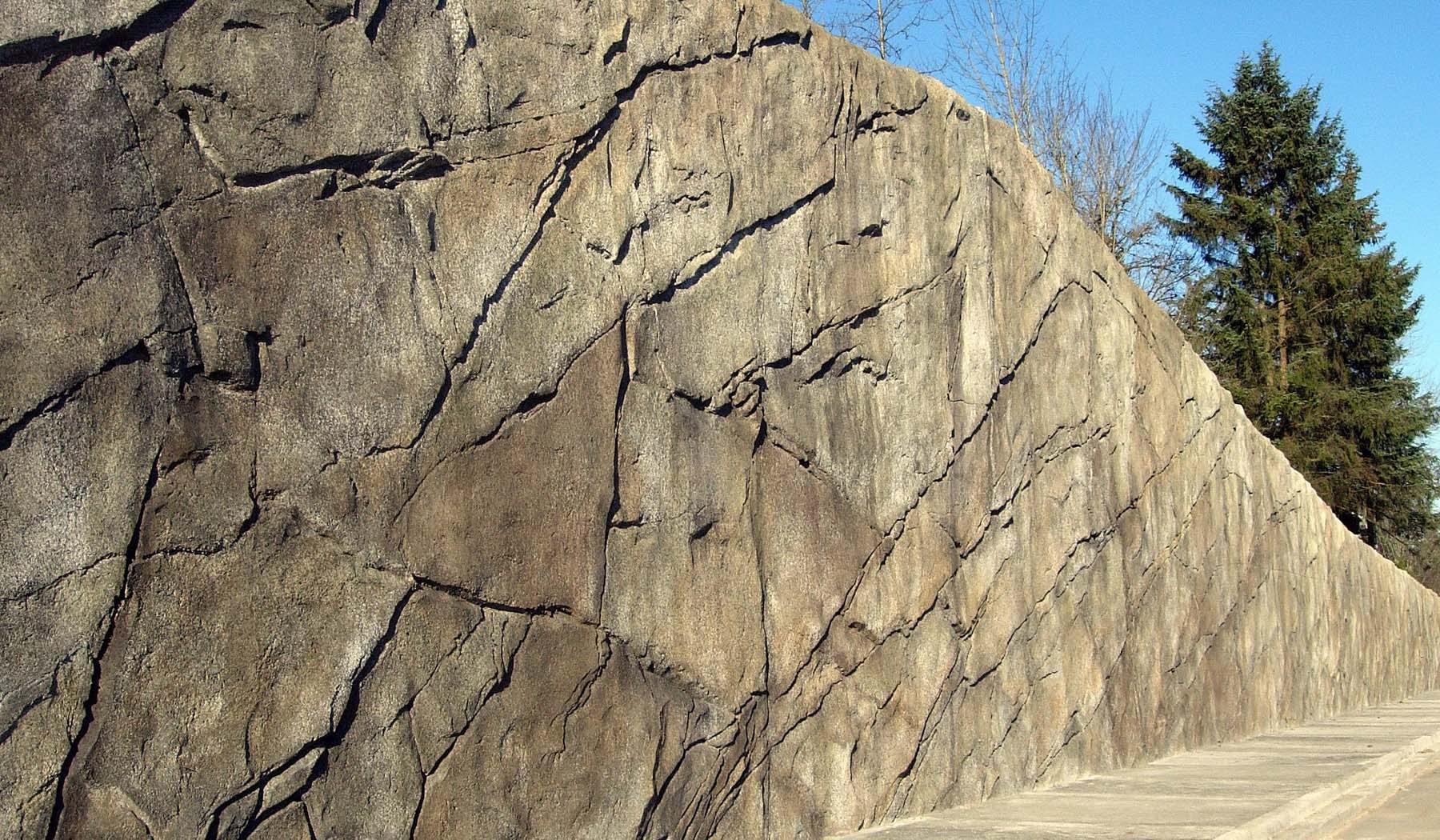
Shotcrete doesn’t have to look industrial. It can be tooled and textured while still plastic to mimic stone, brick, or stucco. It can be formed into curves, steps, and integrated planter boxes seamlessly. This allows for retaining walls that are not just structural elements but attractive features of your landscape design.
A well-designed shotcrete retaining wall is as much an architectural feature as it is a geotechnical solution.
Installation Process
Understanding the key stages of a shotcrete project helps you know what to expect and why each step is critical to the final outcome.
Site Preparation and Soil Removal
The first step is to excavate and create a stable working face. Loose material, vegetation, and debris are removed. The goal is to expose a firm, competent substrate for the shotcrete to bond to. Proper bench-cutting of slopes may be required to create a stable stepping profile.
Reinforcement and Facing
If designed, steel reinforcement (rebar or mesh) is installed and secured. For soil nail walls, the nail heads are prepared. The shotcrete is then applied in layers (typically 2-4 inches per pass) until the design thickness is achieved. The nozzleman works methodically to ensure uniform coverage and compaction.
Drainage Integration
This is perhaps the most overlooked yet critical step. Weeping tile or drainage board is installed behind the shotcrete facing before the final layer is applied. This collects groundwater and directs it to weep holes or drain pipes, relieving hydrostatic pressure that could otherwise push the wall over. No wall, shotcrete or otherwise, will last long without proper drainage.
Skipping proper drainage is the single fastest way to cause a retaining wall failure, no matter how strong the concrete is.
According to Concrete Alberta industry standards, proper air entrainment and curing are essential for concrete exposed to Alberta’s freeze-thaw cycles.

Shotcrete vs. Soil Nailing
These two terms are often mentioned together, but they serve different, though complementary, purposes. Knowing which to use—or when to combine them—is key.
When to Use Shotcrete Alone
Standalone shotcrete (often fiber-reinforced) is best for surface protection and stabilization. Use it when the primary concern is face erosion, weathering of rock, or sealing a stable soil or rock face to prevent raveling. It’s a fantastic solution for covering and protecting an otherwise sound slope that just needs an armor coat.
Combined Systems for Enhanced Stability
When the soil mass itself is unstable and needs internal reinforcement, soil nailing is introduced. The nails provide deep tensile strength, while the shotcrete provides the facing that connects the nail heads and handles the surface loads. This combined system is the gold standard for stabilizing deep, unstable slopes or for constructing tall, vertical cuts in soil.
Think of it this way: shotcrete treats the skin, while soil nailing treats the skeleton. For a major slope failure in communities built on old glacial till, you almost always need to treat both.
| Factor | Shotcrete Alone | Soil Nailing with Shotcrete |
|---|---|---|
| Primary Function | Surface armour, erosion control, sealing | Deep soil reinforcement & structural facing |
| Best For | Stable slopes needing protection, rockfall mitigation, aesthetic walls | Unstable soil slopes, deep excavations, tall retaining structures |
| Cost Implication | Lower (surface treatment only) | Higher (includes drilling, nails, grout) |
| Installation Complexity | Moderate | High |
| Project Depth/Height | Shallow to moderate | Moderate to very deep |
The table clarifies the core distinction. A shotcrete layer might be perfect for a sloped backyard in Coventry Hills that’s just starting to erode. But for a major cut required for a new foundation in Mount Royal, a full soil nail and shotcrete wall is likely the engineered solution.
For deep-seated instability, the combined system isn’t an option—it’s a necessity for long-term safety and performance.
Frequently Asked Questions
You’ve got questions, we’ve got straight answers. Here’s what Calgary property owners ask most about shotcrete.
How long does a shotcrete retaining wall last?
A properly designed, installed, and drained shotcrete wall can easily last 50 years or more. The key is in that word “properly.” The high-density, low-permeability concrete is incredibly durable against Calgary’s weather, but its lifespan is directly tied to the quality of the engineering behind it and the effectiveness of its drainage system.
Neglecting drainage can lead to failure in just a few years, while a well-built wall becomes a permanent part of your property’s structure.
Is shotcrete more expensive than a block retaining wall?
Upfront, a basic shotcrete wall often has a higher initial cost than a do-it-yourself block wall. However, when you factor in engineering, proper base preparation, drainage, and the far superior structural strength and longevity, shotcrete typically offers a better lifetime value.
For taller walls (over 4 feet) or any wall supporting a significant load, shotcrete or another engineered solution is not just recommended—it’s usually required by code and is the only safe choice.
Can shotcrete be applied in cold weather?
Yes, but it requires special precautions that a professional crew will manage. Accelerating admixtures can be used in the mix, heated water and aggregates may be employed, and the finished application will be covered with insulated blankets to ensure proper curing without freezing.
This is standard practice for Calgary concrete professionals who are accustomed to working within our limited warm-weather window and pushing beyond it safely.
Does shotcrete look ugly or industrial?
Not at all. While the grey, “as-sprayed” finish is functional for many applications, shotcrete can be easily finished. During the curing process, it can be textured, tinted, stained, or sculpted to resemble natural stone, patterned concrete, or stucco.
Many homeowners choose to have their shotcrete walls finished to complement their home’s exterior, turning a necessary structure into a landscape highlight.
Bottom line: with proper planning, shotcrete is a durable, versatile, and attractive solution.
Conclusion
Whether you’re dealing with a creeping slope in Dalhousie or planning a major commercial excavation, shotcrete offers a powerful, adaptable, and permanent solution for stabilization. Its combination of speed, strength, and seamless application makes it a smart choice for Calgary’s demanding soil and climate conditions. More than just sprayed concrete, it’s a engineered system that, when designed and installed correctly, provides peace of mind for decades.
Understanding the difference between surface protection and deep stabilization—and when you need a combined soil nail system—is the key to choosing the right fix. Don’t gamble with the stability of your property. For a solution that’s built to last, consulting with a local expert is the essential first step.
Ready to stabilize your slope or design a retaining wall with confidence? OmegaReadyMix has the local knowledge and technical expertise to assess your site and recommend the right shotcrete application for your needs. Get in touch for a professional evaluation and a quote on your next Calgary slope stabilization or retaining wall project.