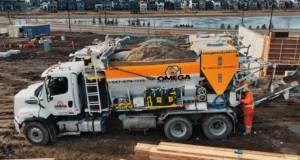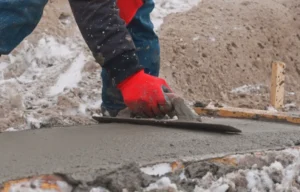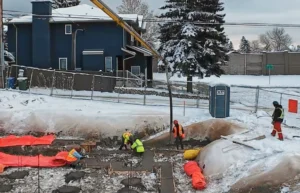

In Calgary’s fast-growing urban landscape, construction projects are increasingly taking place on tight, restricted, or hard-to-access sites. From inner-city infill homes and narrow alleyways to backyard renovations and basement pours, one common question comes up again and again: how do you get concrete exactly where it needs to go when trucks simply can’t access the site?
This is where concrete pumping for tight spaces in Calgary becomes not just a convenience, but a necessity. Modern concrete pumping technology allows contractors and homeowners to place concrete accurately, safely, and efficiently—even when access is limited to a narrow gate, a window opening, or a congested downtown site.
We work with builders, renovators, and homeowners across Calgary who face these exact challenges. With experienced operators, modern pump equipment, and reliable ready-mix coordination, concrete pumping transforms “impossible” pours into smooth, well-executed projects.
In this guide, we’ll explain why tight-access concrete projects are so common in Calgary, how concrete pumping works, and which pumping solutions are best suited for restricted spaces.
Why Tight-Access Concrete Projects Are Common in Calgary
Urban Infill and Redevelopment
Calgary continues to see strong growth through urban infill development, particularly in established inner-city neighborhoods. Older lots are being redeveloped into modern homes, duplexes, and multi-unit residences, often with minimal setbacks and limited staging areas.
In these environments, traditional concrete placement methods—such as direct chute discharge from a ready-mix truck—are rarely possible. Narrow lots, overhead power lines, neighboring structures, and city bylaws all restrict where heavy equipment can go.
- Zero-lot-line construction
- Laneway and alley-only access
- Limited street parking for concrete trucks
Residential Renovations and Backyards
Concrete pumping for tight spaces in Calgary is especially common on residential projects. Homeowners frequently need concrete placed in areas that are completely inaccessible to trucks, such as fenced backyards or interior basement spaces.
Typical examples include:
- Backyard patios and walkways
- Garage slabs behind existing homes
- Basement floors and underpinning work
Without pumping, these projects would require extensive manual labor, wheelbarrows, or even temporary demolition of fences and landscaping—adding cost, time, and risk to the project.
Commercial and Industrial Constraints
Tight access isn’t limited to residential work. Commercial and industrial sites in Calgary often face their own restrictions, particularly in downtown cores or active facilities where operations must continue during construction.
Concrete pumping allows crews to work efficiently while minimizing disruption, maintaining safety, and keeping projects on schedule—even when space is limited.
What Is Concrete Pumping and How It Solves Access Problems
How Concrete Pumping Works
Concrete pumping is a method of transporting ready-mix concrete from the delivery truck to the pour location using specialized pumping equipment. Instead of relying on gravity or manual placement, concrete is moved through hoses or articulated booms under controlled pressure.
The basic process includes:
- Ready-mix concrete is delivered to the pump.
- The pump moves concrete through a hose or boom system.
- Concrete is placed precisely where needed, even over long distances or obstacles.
This approach allows for continuous, controlled placement, which improves both efficiency and finish quality—especially in restricted-access environments.
Concrete Pumping vs. Traditional Placement Methods
On tight-access sites, traditional placement methods quickly become inefficient. Wheelbarrowing concrete through narrow paths or inside buildings increases labor costs, slows down pours, and raises the risk of segregation or cold joints.
| Method | Efficiency | Labor Required | Precision |
|---|---|---|---|
| Wheelbarrows | Low | High | Limited |
| Direct Truck Chute | Moderate | Low | Access-Dependent |
| Concrete Pumping | High | Low | Excellent |
For most restricted sites, pumping is the safest, fastest, and most cost-effective option.
Types of Concrete Pumps Used for Tight Spaces
Understanding the differences between a line pump vs boom pump for Calgary projects is essential for selecting the right equipment based on your site’s specific access limitations, reach requirements, and budget considerations.
Line Pumps for Narrow and Residential Access
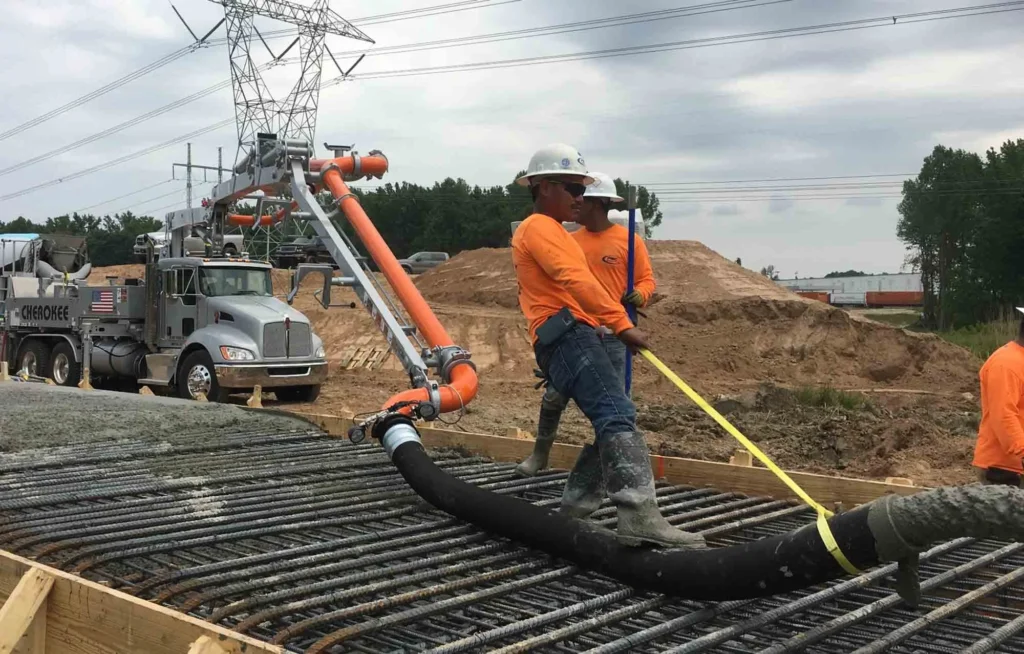
Line pumps are one of the most commonly used solutions for concrete pumping in tight spaces in Calgary. These pumps use flexible hoses that can be routed through gates, around buildings, or even into interior spaces.
Line pumps are ideal for:
- Backyard concrete pours
- Basement floors and foundations
- Sidewalks, pads, and smaller slabs
With hose lengths that can exceed 100 feet, line pumps provide exceptional reach without requiring large equipment on site. Their compact footprint makes them especially well-suited for residential neighborhoods.
Boom Pumps for Urban and Vertical Challenges
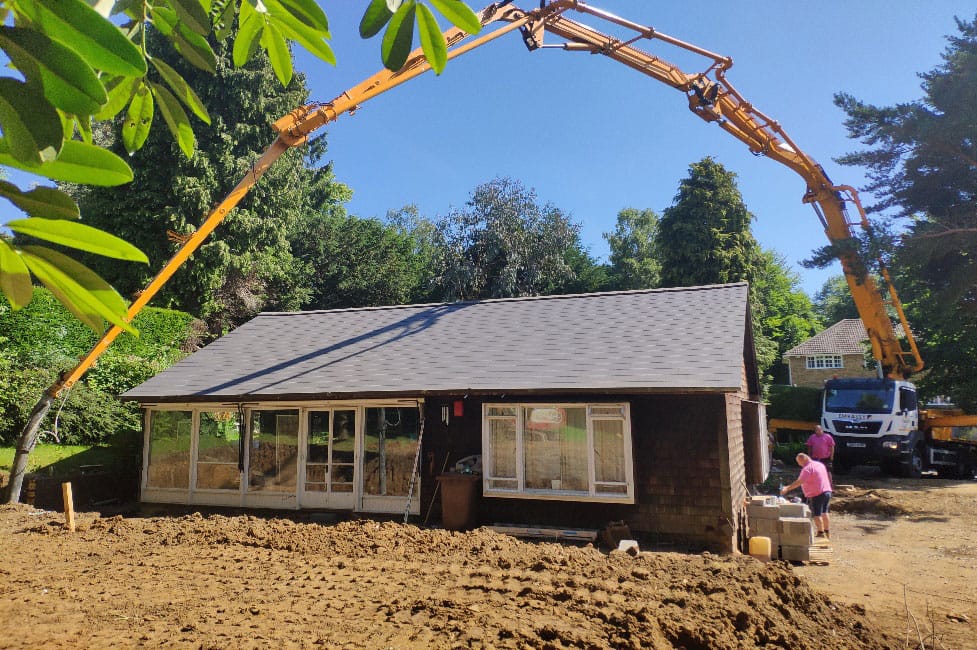
Boom pumps are truck-mounted concrete pumps equipped with articulated hydraulic arms. While often associated with large commercial projects, modern boom pumps are also used on tight-access urban sites where concrete must be placed over obstacles.
Boom pumps are particularly effective when:
- Concrete must be poured over houses or fences
- Vertical reach is required for multi-level structures
- Hose routing on the ground is limited
Compact boom pump models allow operators to work efficiently while maintaining precise placement, making them a valuable option for Calgary infill and redevelopment projects.
As one experienced concrete supervisor noted, “A properly selected pump can turn a high-risk, labor-heavy pour into a clean, controlled operation that finishes faster and safer.”
Common Tight-Space Concrete Applications in Calgary
Basement Floors and Underpinning Projects
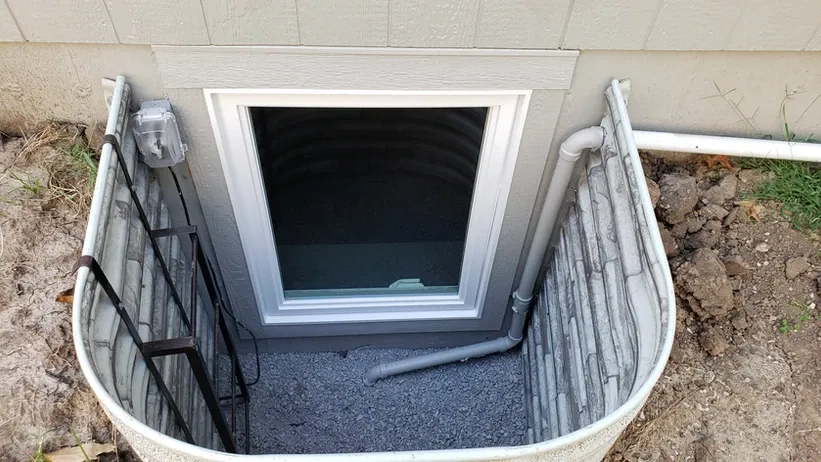
Basement construction is one of the most common reasons contractors rely on concrete pumping for tight spaces in Calgary. Whether it’s a new basement floor, structural underpinning, or interior foundation work, access is usually limited to stairwells, window openings, or temporary cutouts.
Concrete pumping allows material to be delivered directly to the pour location with minimal disturbance to the home. This reduces interior damage, limits cleanup, and ensures a consistent mix reaches every corner of the space—critical for structural integrity.
- Accurate placement through small openings
- Reduced vibration and disruption inside homes
- Improved finish quality and strength consistency
Backyard Patios, Walkways, and Concrete Pads
Many Calgary homes have fenced yards, landscaping features, or elevation changes that prevent trucks from getting close to the pour area. In these cases, concrete pumping is often the only practical solution.
Line pumps can route hoses through narrow side yards or over fences, allowing patios, sidewalks, hot tub pads, and garden features to be poured efficiently—without removing fencing or damaging landscaping.
Garages, Additions, and Laneway Homes
Detached garages and laneway homes frequently rely on alley access or shared driveways. Pumping concrete in these scenarios improves coordination and keeps projects moving, even when space is limited or neighboring properties are close by.
Key Benefits of Concrete Pumping for Restricted Access
Precision and Placement Control
Concrete pumping gives crews exceptional control over placement. This precision reduces waste, prevents over-pouring, and ensures forms are filled evenly—especially important for structural elements and finished surfaces.
Faster Pours and Lower Labor Requirements
According to industry data from the American Concrete Pumping Association, pumping can reduce placement time by up to 50% compared to manual methods on complex sites. Faster pours mean less labor, fewer delays, and lower overall project costs.
Improved Jobsite Safety
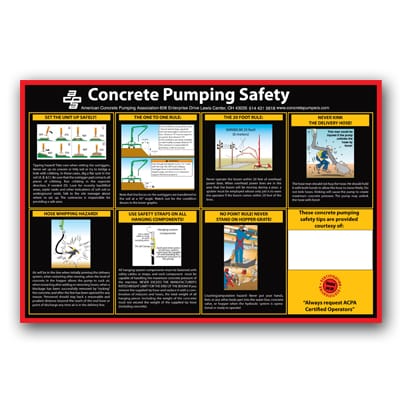
By minimizing manual handling of concrete, pumping significantly reduces strain injuries, trip hazards, and congestion on site. This is especially valuable on tight residential or urban projects where safety margins are already limited.
Calgary-Specific Considerations for Tight-Space Concrete Pumping
Weather and Seasonal Challenges
Calgary’s climate plays a major role in concrete placement planning. Cold temperatures, rapid weather changes, and seasonal freeze-thaw cycles all influence mix design and pumping performance.
Proper coordination ensures:
- Cold-weather mixes remain pumpable
- Set times are controlled during temperature swings
- Concrete reaches the forms in optimal condition
Urban Regulations and Site Logistics
Many tight-access pours take place in regulated areas that require traffic control, noise compliance, or coordination with neighboring properties. Experienced pumping crews help navigate these constraints while keeping the pour efficient and compliant.
How to Choose the Right Concrete Pumping Partner
Experience With Tight-Access Sites
Not all pumping jobs are the same. Tight spaces demand operators who understand hose management, mix behavior, and communication with finishers. Experience directly impacts quality and efficiency.
Equipment That Matches the Job
The right pump—whether a line pump or compact boom pump—makes all the difference. A professional provider assesses access, reach, volume, and site conditions before recommending equipment.
Coordination With Ready-Mix Supply
Successful pumping relies on consistent concrete delivery. Poor coordination can lead to cold joints, delays, or wasted material. An integrated approach ensures trucks, pumps, and crews stay in sync.
When you need a concrete pump in Calgary, choosing a provider with integrated ready-mix and pumping services ensures seamless coordination from delivery to placement, reducing the risk of delays and maintaining concrete quality throughout the pour
Project Planning Checklist for Tight-Space Concrete Pumping
Taking time to prepare your job site for concrete pumping ensures smooth operations, minimizes delays, and helps crews work safely and efficiently on tight-access projects.
- Confirm access points, gate widths, and hose paths
- Verify concrete volume and pump-friendly mix design
- Coordinate delivery timing to avoid cold joints
- Ensure finishers are ready before pumping begins
- Account for weather and temperature conditions
Proper planning is often the difference between a smooth pour and an expensive delay.
Cost Factors for Concrete Pumping in Tight Spaces
Concrete pump rental cost in Calgary varies based on equipment type, project duration, and site complexity, but understanding these factors helps contractors and homeowners budget accurately for tight-access pours.
Pump Type and Duration
Costs typically depend on the type of pump used, setup time, and total pumping duration. Line pumps are generally more economical for small residential jobs, while boom pumps offer speed and reach for complex sites.
Site Complexity
Long hose runs, vertical pumping, and challenging access can affect pricing. However, these costs are often offset by reduced labor and faster completion.
Why Pumping Often Saves Money Overall
While pumping may appear more expensive upfront, it frequently lowers total project costs by minimizing labor hours, reducing waste, and avoiding rework caused by poor placement.
Frequently Asked Questions About Concrete Pumping in Tight Spaces
Can concrete be pumped into a backyard with no direct access?
Yes. Line pumps can route hoses through narrow side yards, over fences, or around structures to lead concrete directly to backyard pour locations.
Does pumping affect the strength of concrete?
No. When properly designed for pumping, concrete maintains its strength and performance characteristics. In many cases, controlled placement improves overall quality.
How far can a concrete line pump reach?
Depending on the setup, line pumps can move concrete over 100 feet horizontally and vertically, making them ideal for tight-access residential and commercial projects.
Is concrete pumping safe in residential neighborhoods?
Yes. Professional pumping operations are designed to minimize disruption, reduce noise duration, and improve jobsite safety for workers and nearby residents.
Conclusion: The Smart Way to Pour Concrete in Tight Spaces
As Calgary continues to grow upward and inward, access challenges will only become more common. Concrete pumping for tight spaces in Calgary provides a proven, efficient solution that keeps projects moving—without compromising quality or safety.
From backyard patios and basement floors to urban infill and commercial sites, pumping transforms difficult pours into controlled, professional operations. With the right equipment, experienced operators, and proper planning, tight access is no longer a limitation—it’s simply another part of the build.
Get Started With Professional Concrete Pumping
If your project involves limited access, narrow spaces, or complex placement requirements, professional concrete pumping is the most reliable solution.
Contact our team today to discuss your project, review site conditions, and schedule concrete pumping services tailored to your needs. With the right expertise and equipment, even the tightest spaces can be poured with confidence.