
Fill-crete, also called flowable fill or controlled low-strength material, is a low-strength concrete, typically around 5 MPa, that pours like a thick liquid, levels itself, and needs no compaction. You order it when you have a void, trench, or gap that compacted granular backfill is hard to get right, and you want it filled solid, right the first time, with material you can still dig out later if you have to.
If you have never ordered it before, the name causes confusion. It is not “weak concrete” the way a bad pour is weak. It is engineered to be low-strength on purpose. Here is what it actually is, when a Calgary site needs it, and the questions to ask before the truck arrives.
1. What fill-crete actually is
Fill-crete is a mix designed to flow. Instead of a stiff, workable concrete that a crew screeds and finishes, this is a self-levelling, self-compacting material that finds its own level like water finding the low spot. It carries a deliberately low strength, in the range of 5 MPa, because its job is not to hold up a building. Its job is to fill a space completely and stay put.
That low strength is the feature, not a compromise. It means the material is dense and permanent where you need it, yet soft enough that a future crew can excavate it with normal equipment if a utility ever has to be exposed again. You get the certainty of a solid fill without locking future access away behind a slab of high-strength concrete.
2. Why compacted backfill is so easy to get wrong
Granular backfill, gravel or sand placed in lifts and compacted, is the default for a reason. It is cheap and it works when it is done properly. The problem is the phrase “done properly.”
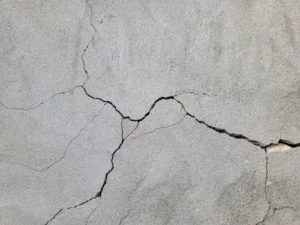
Backfill has to go in in thin layers, each one compacted before the next. Miss a lift, rush the compaction, or try to fill a narrow trench where a plate compactor cannot reach, and you leave voids you cannot see. Those voids show up months later as a sunken driveway, a dip over a service line, or a settled slab. Around a curved pipe, under an existing structure, or in a deep narrow trench, getting uniform compaction is genuinely hard.
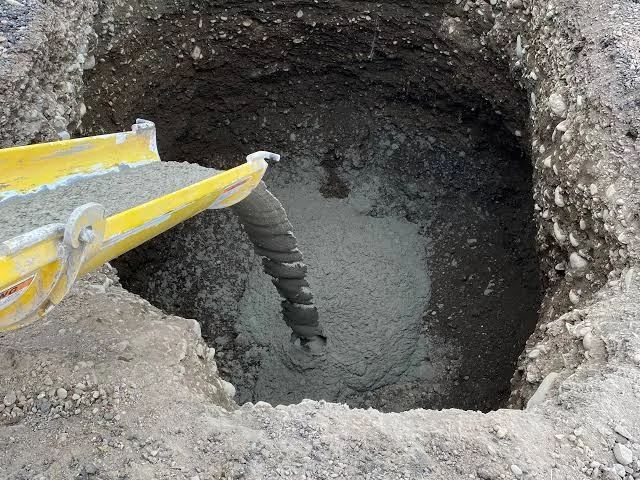
Fill-crete removes the compaction step entirely. It flows into every corner, under and around obstacles, and sets as one continuous solid. There is no lift to miss and no void to leave behind.
3. Where fill-crete earns its place on a Calgary site
The clearest cases are the ones where compaction is difficult or impossible:
- Abandoned utilities. Old pipes, tanks, or vaults being decommissioned get filled solid so they cannot collapse or become a void later.
- Trenches and narrow excavations. A service trench too narrow for a compactor gets filled in one pour instead of layer by layer.
- Under-slab and void fill. Gaps beneath a slab, behind a wall, or around a foundation get filled where a shovel and a compactor would struggle.
- Bridging over soft or awkward ground. Flowable fill gives a stable, uniform base without the guesswork of compacting variable soil.
In Calgary and the surrounding towns, Cochrane, Chestermere, Strathmore, Okotoks, this comes up constantly on utility work, municipal projects, and production-home sites where a builder needs a void filled before the next trade shows up.
4. Who actually buys it
Fill-crete is not usually a homeowner order. The buyers are people managing a schedule and a risk:
- Builders filling voids on production-home sites so the ground is stable and the timeline holds.
- Commercial general contractors dealing with old utilities, deep fills, or ground that has to be right before structural work starts.
- Utility and municipal crews decommissioning pipes and vaults, or backfilling in tight corridors where compaction equipment does not fit.
What they have in common is that they cannot afford a callback. A settled fill means digging it back up, and that is the outcome flowable fill is bought to avoid.
5. Placing it: pour, pump, or both
Because fill-crete flows, it can be discharged straight from the chute into an open trench or void, or it can be pumped to reach a spot the truck cannot back up to. For tight, deep, or awkward placements, a line or boom pump moves the material exactly where it needs to go. Our sibling company, Omega 2000 Cribbing, handles the placing, pumping, and structural side, so a single job can be supplied, delivered, and placed under one roof.
We run our own fleet of mixer trucks and our own cement supply, with real batching capacity, not a broker moving someone else’s product. That matters on a fill-crete order because volume and timing are the whole game: you want the void filled in one continuous pour, not started and stalled.
Flowable fill solves one type of placement challenge—filling voids completely without compaction. Structural concrete placements bring a different challenge: keeping the pour continuous so cold joints never form. If you’re placing insulated concrete forms, read our guide on Filling ICF Walls Without a Cold Joint to learn how truck scheduling, pump coordination, and pour sequencing keep an ICF wall structurally continuous.
6. The questions to ask before you order
Fill-crete is simple to order once you know the four things that define it. Ask your supplier, whoever it is, these before the truck arrives:
- What strength am I getting? For most void and trench fill, roughly 5 MPa. Confirm it matches what your engineer or spec calls for.
- How flowable is it? It should self-level and self-compact. If you are filling around obstacles, say so, so the mix is right for the geometry.
- What is the set time? Ask when it will be firm enough to work over or backfill on top of. This drives your schedule.
- Can it be excavated later? At low strength, yes. If there is any chance a utility gets exposed again, confirm it stays diggable.
If a supplier cannot answer all four plainly, that is your answer about the supplier.
Proof from a recent ten-day stretch
In a recent ten-day stretch we batched, delivered, and placed more than 1,100 m³ of concrete across roughly 80 separate pours, including Saturday work, for residential, commercial, municipal, institutional, and industrial jobs in the same week. Fill-crete was part of that mix: flowable fill placements up to 70 m³ on a commercial site, plus around 25 m³ of builder void-fill. That came off our own batch plant with two cement silos, fed by near-daily bulker deliveries, and out on our five-truck ready-mix fleet, with pours running from 5:00 am starts to evening. Builders’ concrete testers were accommodated on site throughout.
FAQ
What is fill-crete? Fill-crete, also known as flowable fill or controlled low-strength material, is a low-strength concrete, typically around 5 MPa, that flows like a thick liquid, levels itself, and requires no compaction. It is used to fill voids, trenches, and gaps solidly and permanently.
How is fill-crete different from regular concrete? Regular structural concrete is high-strength and stiff, mixed to be worked and finished, and it holds up buildings. Fill-crete is deliberately low-strength and self-levelling. Its job is to fill space completely, not to carry structural loads, and it can be dug out later if needed.
When should I use flowable fill instead of granular backfill? Use flowable fill when compaction is hard to get right: narrow or deep trenches, around obstacles or curved pipes, abandoned utilities, and under-slab voids. Compacted gravel works when done in proper lifts, but flowable fill removes the compaction step and the settlement risk that comes with getting it wrong.
Can fill-crete be dug up later? Yes. Because it is low-strength, roughly 5 MPa, it can be excavated with normal equipment if a buried utility ever has to be exposed again. That is one of the main reasons it is chosen over higher-strength material for backfill.
How much fill-crete can Omega Ready Mix supply in one pour? We have placed flowable fill up to 70 m³ on a commercial site and around 25 m³ for builder void-fill in a recent ten-day stretch, supplied from our own batch plant and five-truck fleet. Volume and continuous placement are exactly what our own supply is set up for.
Who typically orders flowable fill in Calgary? Builders, commercial general contractors, and utility and municipal crews. Homeowners rarely order it directly. It is bought by people managing a schedule and a settlement risk, who need a void filled right the first time.
Get a quote or schedule a pour
Have a void, trench, or decommissioned utility to fill? Tell us the volume, the location, and how soon you need it, and we will confirm the mix, the flow, and a placement window, often next-day or same-week. Because we batch on our own plant and run our own trucks, we can size the load and the timing to your site.
Need Flowable Fill That Eliminates Settlement?
Whether you’re backfilling a utility trench, filling an abandoned pipe, stabilizing an under-slab void, or preparing a commercial site, we’ll recommend the right flowable fill mix and coordinate delivery so the entire placement happens in one continuous pour.
Omega Ready Mix supplies engineered fill-crete (flowable fill/CLSM) backed by:
- Approximately 5 MPa excavatable flowable fill
- Self-levelling, self-compacting mixes that require no mechanical compaction
- Reliable placement for trenches, utility corridors, voids, and under-slab fills
- Pumping and placement support through Omega 2000 Cribbing
- Our own batch plant, cement supply, and ready-mix fleet for dependable scheduling
- Fast service throughout Calgary and surrounding communities
Before your pour, we’ll confirm the required strength, flow characteristics, placement method, estimated set time, and future excavation requirements so the material matches your project’s engineering and construction schedule.
Contact Omega Ready Mix today to discuss your project, receive a project-specific quote, and schedule flowable fill delivery from our own plant and fleet.